
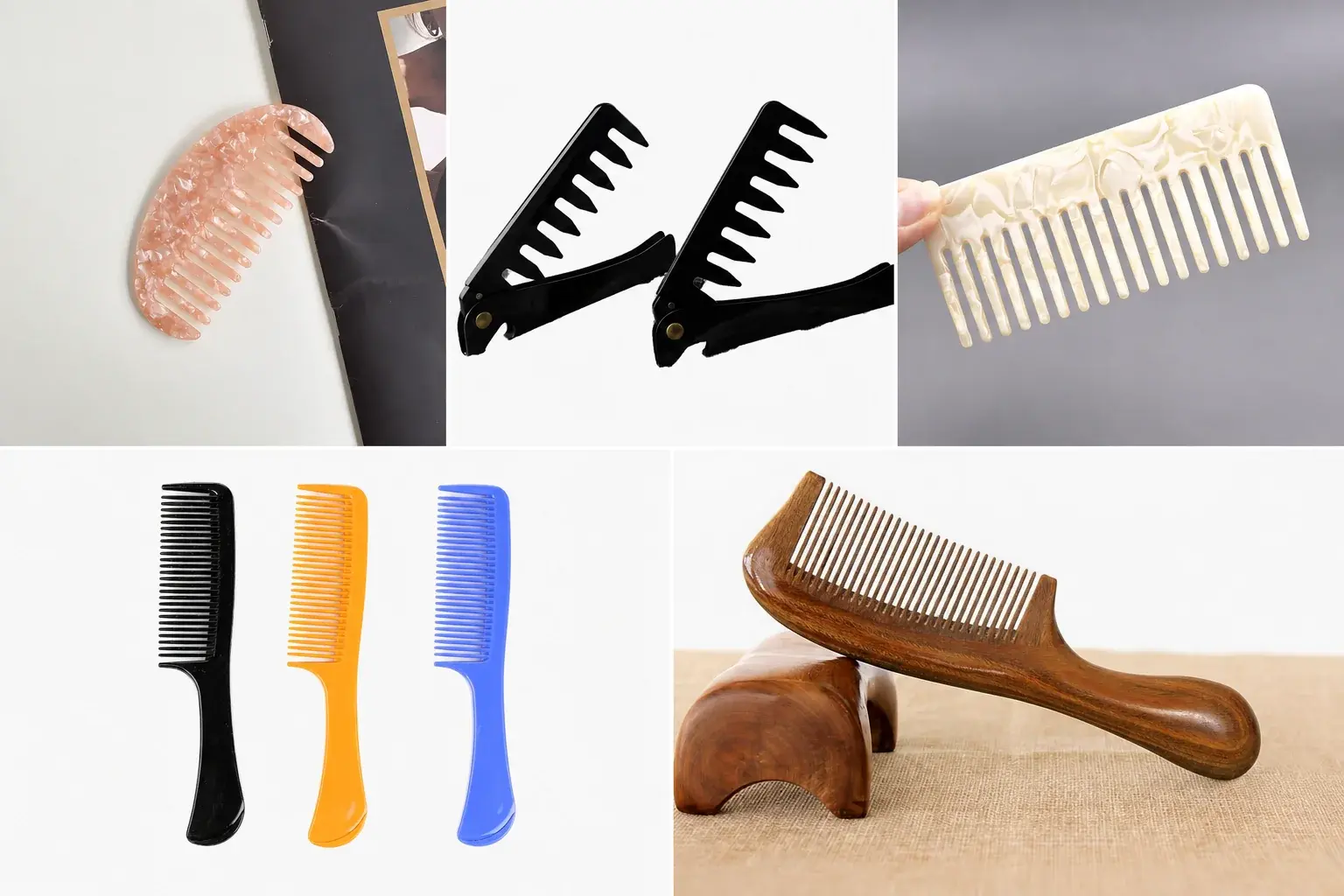
Put two supplier quotes side by side and the total price usually gets attention first. That total becomes useful only after both documents describe the same finished product. One supplier may have priced an available molded comb with one printed logo and a plain sleeve. Another may have allowed for new tooling, several logo versions, a printed box, and additional inspection. The cheaper line can be answering a smaller question.
The buyer's first job is to make every supplier quote the same product brief. The second is to place each response in a comparison sheet with identical rows. Keep missing information blank and mark it for clarification. Silence on tooling, packaging, testing, or delivery scope gives no evidence that the item is included.
Once the rows match, price differences become informative. They may reflect a different material, production route, sample plan, quality scope, or commercial assumption. Before the rows match, the buyer cannot tell which difference created the lower total.
Begin with one versioned RFQ
Send every supplier one versioned request for quotation. Use the same drawings, files, quantities, destination, and requested timing. If the specification changes while quotes are being collected, issue a new revision to every supplier so older and newer scopes do not end up in the same table.
The RFQ should identify the following product details.
- Comb type and intended use
- The drawing or reference version
- Overall dimensions, tooth zones, and tooth layout
- Material, color reference, finish, and surface
- The logo method, artwork version, position, and colors
- The packaging format and pack count
- The quantity for every product, color, logo, and package version
A supplier may suggest a different specification that lowers cost or shortens development. Keep that proposal as a clearly labeled alternative. An existing plastic comb and a newly tooled design cannot share one unqualified price row because they do not contain the same development work.
Make material names specific
General labels such as “plastic,” “wood,” and “acetate style” leave too much room for interpretation. Ask each supplier to state the plastic resin or the basis on which the material will be selected. A quote that names the resin can be checked against color, finish, function, and any document requirement. A quote that says only plastic cannot.
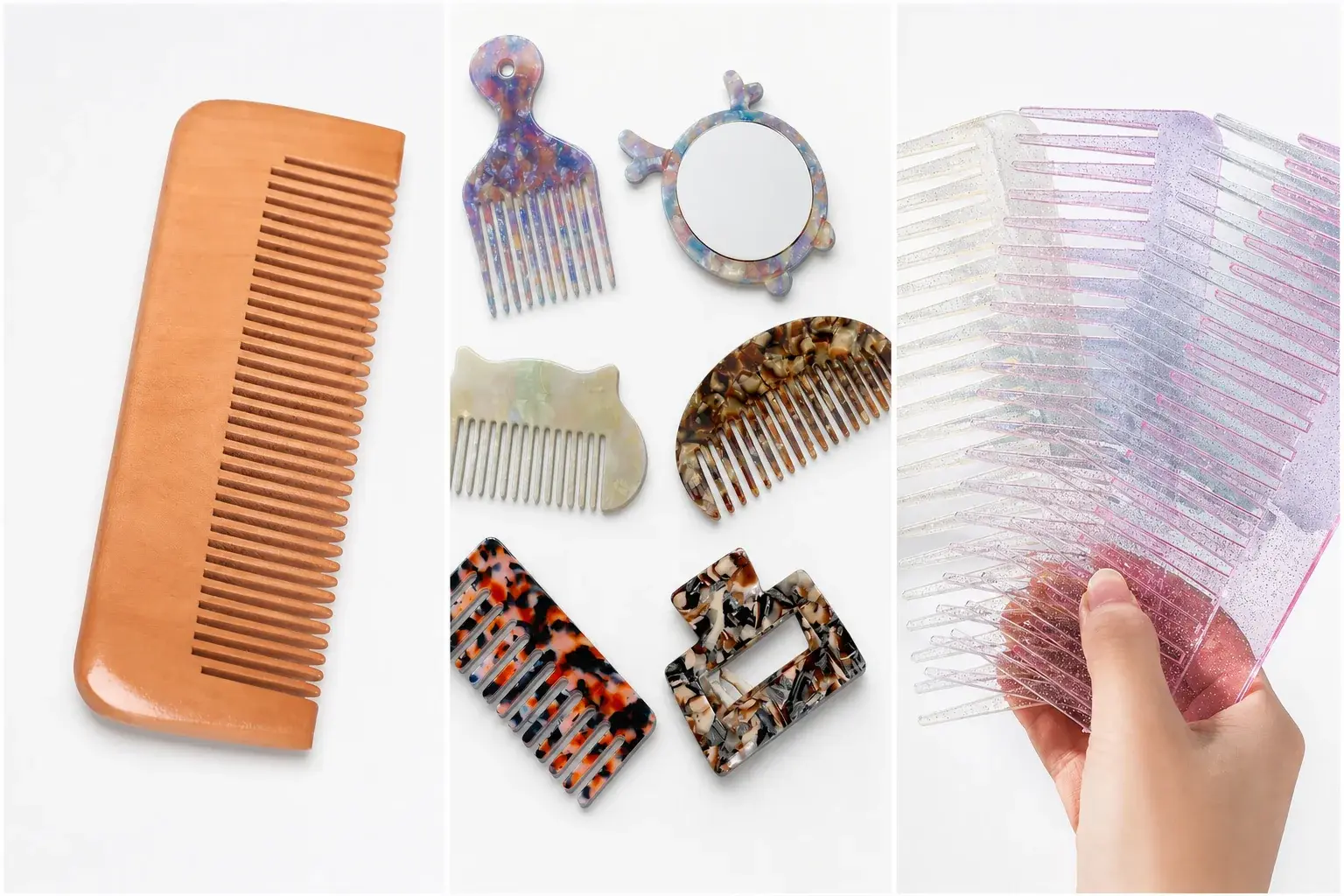
Cellulose acetate follows a sheet-cut and finishing route. Its quote should reflect the selected sheet, cutting, tooth machining, sanding, and polishing. Ordinary injection-molded plastic uses a different material form and process. The acetate and plastic comparison explains why two similar-looking combs can carry different production scopes.
Wood and bamboo also need precise descriptions. Record the material, accepted grain or appearance range, surface treatment, tooth finishing, and branding method. The wood and bamboo guide shows the distinctions that belong in the quote. If the project includes recycled-content, market, or compliance requirements, list the requested document or test scope on its own line.
Separate the comb from development work
Find out whether each supplier is pricing an existing shape, a modified option, or a design that requires new tooling. Put the piece price and development work on separate rows. That prevents a low unit price from hiding an undefined mold, and it prevents a tooling charge from being mistaken for part of every repeat order.
Record the following details where they apply.
- Drawing, engineering, or design work included
- Mold, cutting tool, fixture, or other tooling scope
- Tooling ownership or control terms where applicable
- The sample type and number of revisions included
- Events that create another charge or schedule review
- Any product change introduced during sample development
Tooling prices and schedules are project-specific. Compare what each charge produces, which product specification it supports, and what happens when the drawing changes. A lower tooling line may cover less work, fewer revisions, or a different product. The quote needs to say.
Ask what the sample will prove
“Sample included” is incomplete. One sample may confirm size and basic function while using an available color. Another may include the final material, finish, logo, and packaging. Use the sample approval checklist to name the features that the proposed sample will prove.
Record sample cost, delivery scope, inputs required from the buyer, revision conditions, approval method, and whether a later production-intent sample is needed. Ask which party pays for another sample when the buyer changes artwork and which party handles it when the first sample misses the approved file. These are different causes and should remain visible.
LuxoComb's confirmed starting points are an MOQ from 50 pieces, a 15-day sample lead time, and a 28-day production lead time after sample approval. Special material, structure, logo, packaging, version count, testing, and later specification changes can alter the project-specific quantity or schedule. Compare other quotes with the same level of detail. Record the sample type, schedule start point, day basis, approval dependency, and exclusions.
Count every branding version
Check the logo method, color count, size, position, and number of artwork versions in every quote. Printing and laser engraving, foil stamping, embossing, debossing, and molded branding use different preparation and interact with the comb surface differently.
One printed logo in one position is one scope. Two positions, several print colors, regional artwork, store-specific logos, or individual names create another. The total comb quantity may stay the same while the number of setups grows. Put quantity per artwork beside the total so each supplier prices the same version mix.
Also confirm whether artwork review, logo sampling, setup, and any agreed durability check are included. A line that says custom logo gives no answer to those questions.

Price the package as part of the product
List the unit pack, printed components, labels, barcode, inserts, pouch or case, inner quantity, carton specification, and carton marks. Then confirm whether packaging artwork setup and specifications, physical mock-ups, printed samples, assembly, and packing are included.
“Box included” may refer to a plain stock box, a custom printed folding carton, or a gift box with an insert. Those products have different materials and preparation. Ask for the package dimensions, material description, print scope, and quantity per artwork version. Keep package cost separate if its minimum quantity differs from the comb quantity.
Hotel and promotional combs often depend on individual packing and version count, while a retail kit may include several components from different sources. The retail, hotel, and promotional packaging guide shows the questions specific to each route. For kits, name every component and the party supplying it.
Define the inspection evidence
Ask what the supplier will check and which approved sample, drawing, or artwork will control the inspection. LuxoComb's confirmed quality scope can include incoming material inspection, in-process inspection, and final inspection. Relevant checks may cover dimensions, tooth spacing and length, tooth-tip smoothness, burrs, surface, color, logo position and clarity, folding function, packaging, and quantity. Use the quality inspection checklist to place the same requested checks in every RFQ.
Keep agreed factory checks separate from third-party inspection, laboratory testing, and certification. A buyer who needs a particular AQL level, test standard, report scope, or outside inspection should name it and confirm the responsible party. The quote should state whether it is included, excluded, or waiting for a separate price.
Evidence matters because “quality inspection included” can mean a routine factory check or a documented inspection against named criteria. Ask what record will be available and when the buyer must approve any exception.
Compare one delivery scope
Use the same destination and requested delivery scope for every supplier. Record the shipment point, packing configuration, included and excluded charges, and the timing basis. Payment and trade terms also need direct confirmation from each supplier because they have not been standardized by the product specification.
Separate the dates. A sample completion estimate, sample approval date, bulk production completion, shipment date, and required arrival date describe different moments. A short production figure cannot guarantee an arrival date when sample approval, tests, packaging, or transport remain open.
Material sourcing, tooling, revisions, quantity, branding, packaging, testing, and transport can all change the final schedule. The cost and lead-time guide explains those dependencies. Compare the assumptions attached to each date before comparing the number of days.
Build the comparison sheet
Use one row for each item and one column for each supplier. Copy the supplier's wording into the sheet where a term matters, then add a status such as matched, alternative, missing, or excluded. This prevents a vague answer from being silently converted into a yes.
| Quote item | What to record | Why it matters |
|---|---|---|
| Product | Drawing revision, material, dimensions, teeth, finish, quantity | Shows whether the same comb and version mix are priced |
| Development | Existing shape, drawing work, tooling, samples, revisions | Separates recurring piece cost from project work |
| Branding | Method, colors, positions, artwork versions, setup | Exposes differences hidden by a custom logo line |
| Packaging | Unit pack, printing, labels, inserts, assembly, cartons | Shows what the packed product actually contains |
| Quality | Criteria, approved reference, records, tests, outside inspection | Defines the checks and evidence included |
| Delivery | Destination, shipment point, included charges, date basis | Aligns delivery and schedule assumptions |
Read across one row at a time. If Supplier A is missing the packaging print scope and Supplier B proposes a different resin, resolve those differences before ranking totals. A colored status cell is useful only when the note beside it explains the issue.
Close open items before selection
Finish the comparison with a short list of open items for each supplier. Ask focused questions about the missing or different rows. The answers may change the price, and that is useful. A revised quote with a complete scope is safer to compare than an attractive total built on assumptions.
Before choosing, confirm these five points.
- The quoted product and version quantities match the RFQ
- Development, tooling, and samples have a defined scope
- Branding and packaging include every required version
- Quality checks, documents, tests, and outside services are identified
- Delivery scope, timing basis, exclusions, and commercial terms are explicit
If the approved sample or specification later changes, reopen the affected rows and request an updated quotation. Review LuxoComb's confirmed manufacturing and quality scope, then send the same RFQ through the contact page for a project-specific response.