

Wood and bamboo are often grouped together as natural material options for a private label comb. That description is convenient, though it is too broad for a purchase decision. A material name on a quote does not tell you the exact wood, the bamboo construction, the finished tone, the tooth profile, or the way a logo will appear.
LuxoComb supports custom wooden and bamboo comb projects. The useful comparison begins with the product that must be made. Define the shape, dimensions, teeth, finish, branding, packaging, and any material claim, then review how each proposed material meets that brief.
Neither material automatically delivers greater durability, a more premium result, or a stronger environmental claim. Those judgments depend on the selected material, construction, processing, use conditions, and documents available for the order.
Define the material before comparing it
“Wood” is the beginning of a specification. The selected species or material must be confirmed because grain, tone, and the appearance after sanding and finishing can differ. Record the approved material name and the physical reference used during sampling.
“Bamboo” also needs a fuller description. Confirm the actual bamboo material and construction proposed for the comb. Visible fiber, tone, construction lines, thickness, and the response to sanding or engraving belong to that specific option.
If the supplier has not yet confirmed an exact material, keep the project at the comparison stage. Request suitable options for the intended product, then compare samples. A broad label should not quietly become the production specification.
Begin with the comb geometry
Start with the comb format. A wide-tooth comb, fine-tooth comb, pocket comb, beard comb, hotel comb, and promotional comb place different demands on the material. Overall length, thickness, handle shape, cutouts, hanging holes, and tooth geometry all influence feasibility.
Tooth spacing alone does not complete the drawing. Define tooth length, root shape, tip profile, side profile, and the transition into the spine or handle. A compact wide-tooth comb leaves more material around each tooth than a long fine-tooth layout. The two designs therefore need separate review even when their outside dimensions look similar.
Ask the manufacturer to review the drawing against each proposed material. Approve critical dimensions and tooth geometry on a physical sample. Material selection and shape approval belong in the same decision because changing one can require changes to the other.
Approve an appearance range
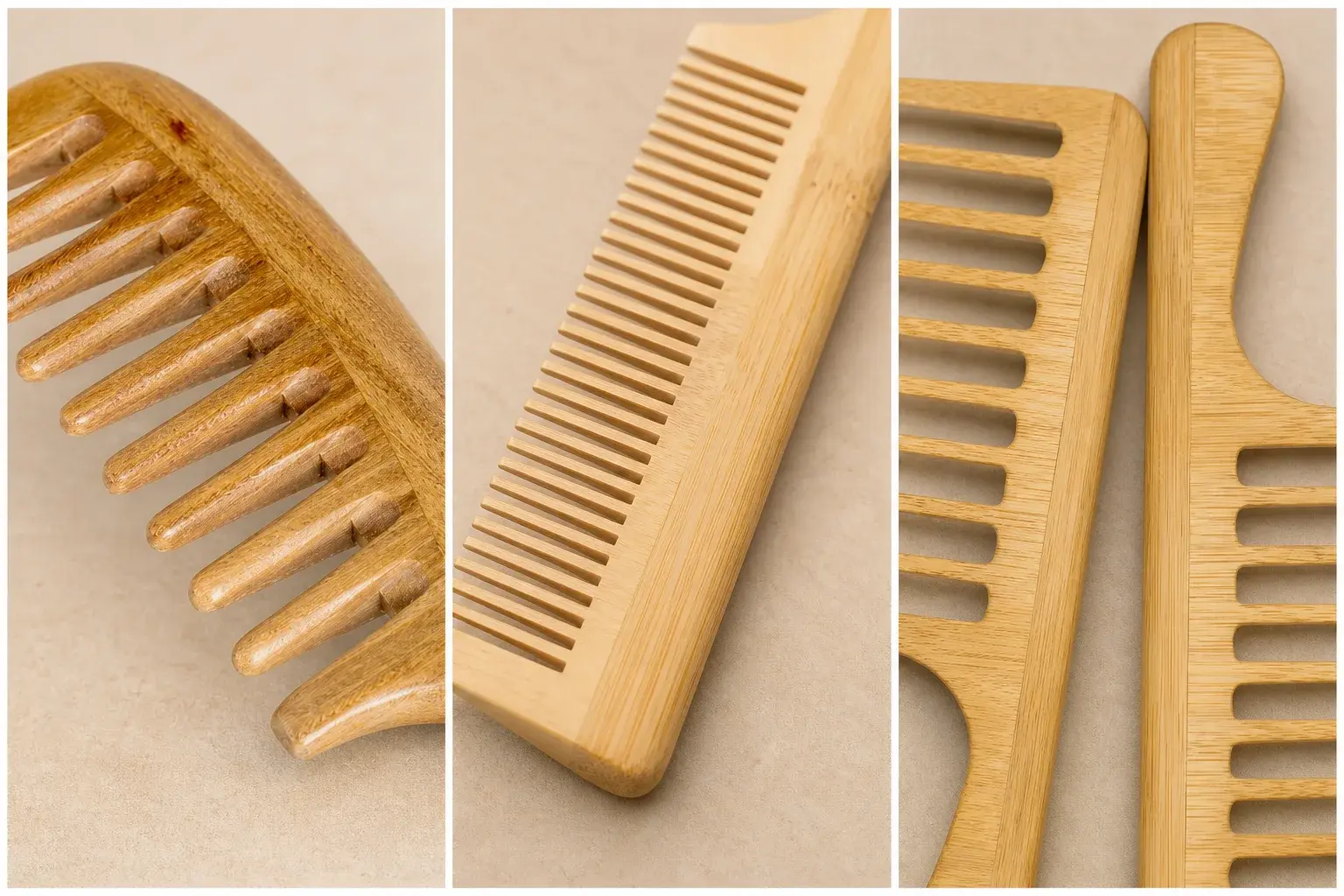
Wood brings the grain and tone of the selected material. Bamboo brings its own fiber direction, tone, and construction character. Cutting direction, sanding, surface treatment, engraving, and comb shape can change how these features appear on the finished piece.
A single screen image cannot show the full production range. Review a physical material sample or a finished comb, then record the grain, fiber, tone, and surface variation that the project can accept. Representative samples or clearly labelled photographs can help define the boundary.
| Approval point | Wood comb | Bamboo comb |
|---|---|---|
| Material reference | Selected wood and approved reference sample | Selected bamboo material, construction, and approved sample |
| Appearance range | Accepted grain, tone, and natural variation | Accepted fiber, tone, construction lines, and variation |
| Geometry | Dimensions, grain direction, teeth, and edge profile | Dimensions, construction direction, teeth, and edge profile |
| Surface | Sanding and the selected oil, coating, or other finish | Sanding and the selected natural-looking or coated finish |
| Branding | Artwork, placement, contrast, and surface fit | Artwork, placement, contrast, and surface fit |
| Evidence | Requested source or material documents when available | Requested source or material documents when available |
The table is an approval guide. It does not create a universal performance ranking because the result still depends on the actual material and finished product.
Inspect the parts that touch hair and hand
A comb still has to be comfortable to hold and pass through hair. Inspect the tooth tips first, then follow both sides of every tooth down to the roots. Continue around the spine, outside edges, handle transitions, cutouts, and hanging holes.
Check the sample for cracks, chips, splinters, rough areas, unintended tool marks, and warping. Give separate attention to the place where a narrow tooth meets the thicker body and to every change in the outside profile.
Use the approved sample and photographs to define the expected tooth tips, edge rounding, and surface. A phrase such as “smooth finish” gives little help unless the buyer and inspector can see what it means on the selected material.
Choose the finish with the material
Sanding establishes the contact surface and prepares the comb for its chosen finish. Oil, coating, and natural-looking surface options can alter tone, gloss, feel, and logo contrast. Approve the material after the full finishing route has been applied because an unfinished sample cannot represent the final appearance.
Wooden comb planning also needs to account for moisture-related risk and the proposed storage and packaging conditions. Any moisture target, conditioning method, or test must be confirmed for the selected material and order. A general value copied from another product has no reliable authority for the current project.
For bamboo, inspect how the proposed construction appears at the teeth, edges, and broad logo area. The finished sample should show whether visible fiber and construction lines remain within the approved appearance range.
Approve branding on the finished surface
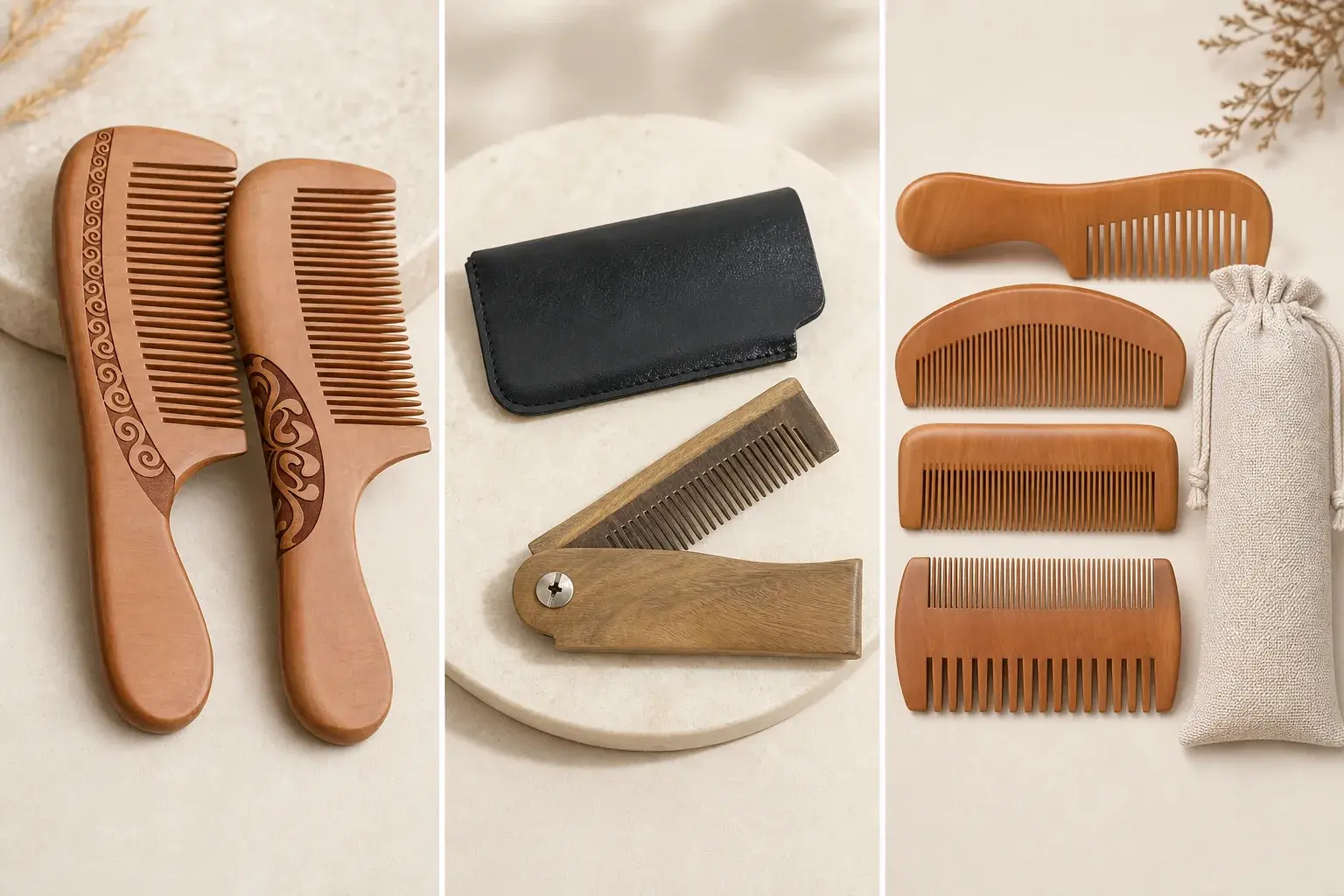
Laser engraving can be considered for suitable wood and bamboo surfaces. The result depends on the exact material, grain or fiber direction, finish, artwork, mark size, depth, and placement. Natural variation can also change contrast from one piece to another.
Prepare clean vector artwork and mark the proposed size and position on the drawing. Place small text and fine details where the surface gives them enough room. Approve the actual mark on the finished comb, then keep that artwork version and sample with the order references.
Printing, foil stamping, or another branding method may also be reviewed where suitable. Confirm the method against the selected surface and request any required adhesion or appearance check before production.
Make packaging part of the material decision
Packaging has to protect the teeth and finished surface through handling and shipment. Check whether the comb can move against a card or box and whether the sleeve presses the teeth or marks the finish. Review fit, contact points, insertion, removal, and the position of any seal or closure with the packed sample.
The sales channel then shapes the pack format. A beard or pocket comb may use a fitted sleeve or pouch. A gift range may need a box, case, or kit. Hotel and promotional projects may place more weight on individual packing, labels, pack count, and repeat-order consistency.
Confirm storage and transport conditions when they may affect the material or finish. The packaging specification should identify the unit pack, inner quantity, carton quantity, product orientation, and tooth protection.
Separate material evidence from appearance
A natural-looking surface does not prove a source, certification, composition, or environmental benefit. Those claims need documents that name the material, supplier or reporting party, relevant scope, and order where applicable.
If FSC information, material declarations, laboratory testing, or another document matters to the project, state the exact request before sampling. Availability is subject to the selected material, supplier, destination market, and required scope. A physical sample answers appearance and construction questions. It cannot replace documentary evidence.
The same caution applies to packaging. Paper content, recycled claims, reduced-packaging goals, and certification requests should be written into the brief and reviewed with the proposed pack materials.
Compare finished samples on equal terms
Choose wood when a confirmed wood material, its grain and tone range, the approved finish, and the required tooth geometry support the product brief. Include moisture-related handling, branding, and packaging in the sample review.
Choose bamboo when the confirmed bamboo material and construction, visible fiber, finish, teeth, branding, and packaging suit the same brief. The decision should refer to the actual bamboo option shown in the sample.
When appearance is the main question, compare finished samples with the same outside dimensions, tooth layout, logo size, and packaging direction. Holding the rest of the brief steady makes the material difference easier to judge. Record the accepted sample, appearance range, drawing revision, and artwork version after the choice is made.
Prepare a brief that can be quoted
A useful product brief gives the manufacturer enough information to review both materials against one product. Include the following points.
- Product type and intended use
- Overall dimensions, thickness, handle, and cutouts
- Tooth spacing, tooth length, root, and tip profile
- Proposed wood or bamboo material and construction
- Accepted grain, tone, or fiber range
- Sanding, surface finish, and gloss direction
- Logo file, method, position, and size
- Unit packaging, tooth protection, and pack count
- Quantity, destination, and required timing
- Material, source, testing, or packaging evidence requests
- Physical sample approval points
Review the full custom comb material range, then compare the dedicated wooden comb and bamboo comb project pages. A complete brief lets the supplier explain which points can be held constant and which need material-specific sampling.