

A message that says “make this comb with our logo” can begin a conversation. It cannot support a dependable quotation. The manufacturer still has to guess whether the photograph controls the size, whether the shape already exists, which material creates the appearance, how the logo should be applied, and what kind of package will hold the finished product.
Those guesses are expensive because they produce different combs. One supplier may quote an existing molded shape in a simple sleeve. Another may allow for a new mold, a custom color, and a printed retail box. The two totals will look comparable on a spreadsheet even though the quoted products have little in common.
A useful product brief removes that ambiguity. It tells the supplier what the comb must do, what you have already decided, and which choices still need a proposal. It can begin with a marked photograph or physical sample. A finished technical drawing can come later when the project needs one.
Begin with the job the comb has to do
A product name gives only a rough direction. A cutting comb and a hotel amenity comb can have a similar length, yet the buyer will judge them by different details. The cutting comb needs useful tooth zones, straightness, handling, and a material suited to the intended salon conditions. The hotel comb has to fit its unit pack, carry the required label information, and arrive in the quantities needed for distribution or replenishment.
Write down the user, setting, and primary grooming task before choosing the surface color or logo method. These facts give the supplier a reason for each later decision.
- Who will use the comb and for which task
- Whether it is for professional, retail, hotel, travel, gift, or promotional use
- Whether it will meet dry hair, wet hair, facial hair, heat exposure, or another stated condition
- Whether it will be sold alone, placed in a room kit, or packed with other grooming items
- Which destination-market documents or tests must be reviewed
This first paragraph of the brief often narrows the relevant custom comb formats before anyone spends time discussing colors that belong to the wrong construction.
Turn every reference into a change list
A photograph is useful when it shows what attracted you to the product. It becomes risky when the supplier has to decide which parts of the image matter. “Similar to this” might refer to the outline, tooth layout, material pattern, handle, size, or only the general mood.
State whether the project uses an existing comb, modifies a physical reference, or needs a new shape. Mark the features that must stay and the ones that must change. If the body should remain the same while the teeth become wider, say so. If the photograph shows the right silhouette but the final product needs a folding cover, that structural change belongs near the top of the brief.
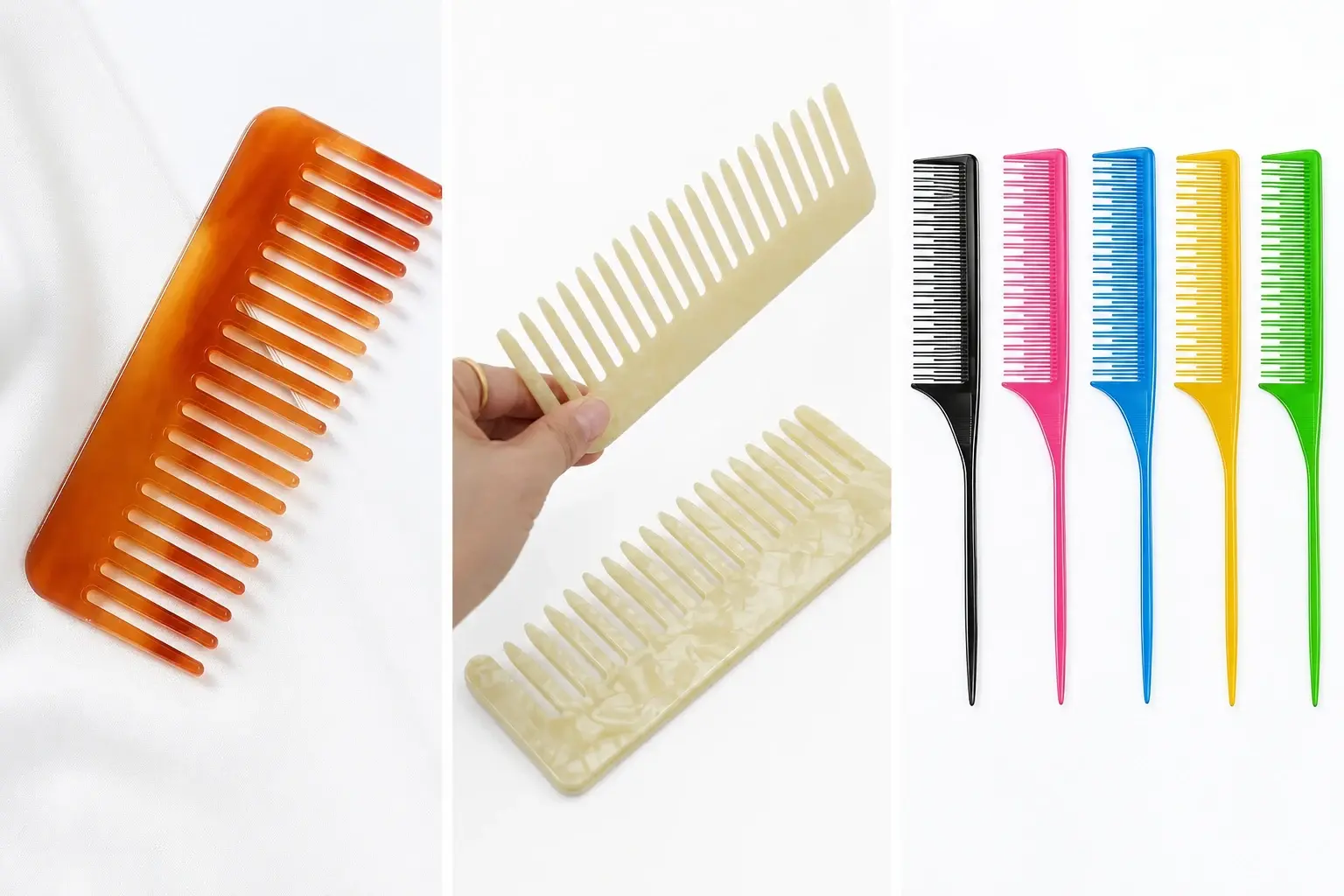
Dimensions need units and clear measurement points. Record the overall length, width, thickness, handle, tooth-zone length, tooth length, and tooth spacing that affect use or packaging. Fine, medium, wide, and mixed teeth are helpful descriptions, though the drawing must carry the important measurements. The guides to comb shape, size, and handle and tooth spacing show how to make those details explicit.
Describe the requirement before naming a material
If the material is fixed, name it and attach the reference that controls it. If the material is open, explain what the choice has to achieve. Appearance, rigidity or flex, contact with wet hair, expected heat exposure, finish, color, pattern, available thickness, documents, and price direction can all change the recommendation.
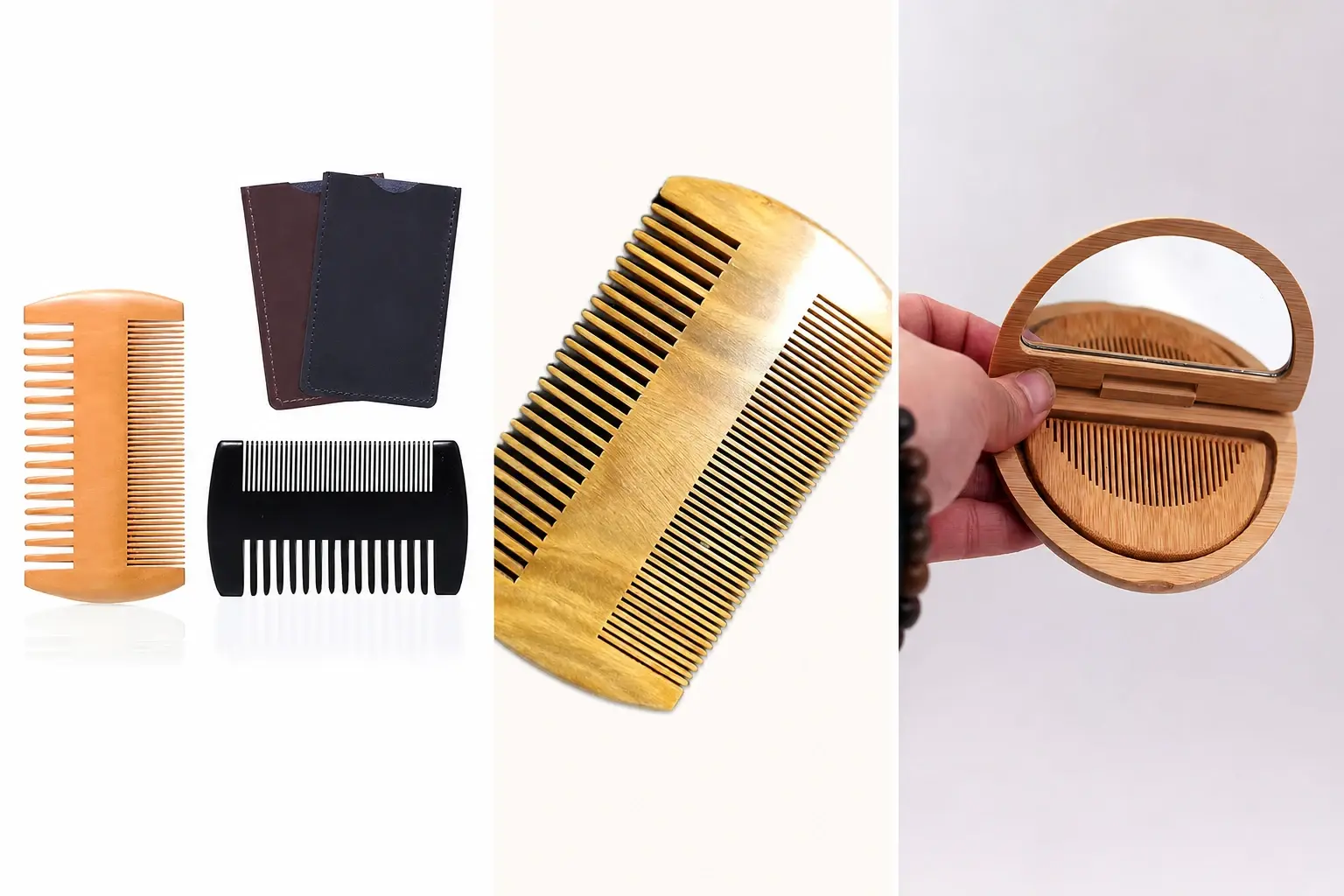
Wood, bamboo, injection-molded resins, and cellulose acetate follow different production routes. Acetate begins as sheet that is cut, machined, sanded, and polished. An injection-molded comb begins with resin and a reviewed mold. Wood and bamboo bring natural variation and their own shaping, sanding, tooth-tip, surface, and moisture-related questions. The acetate and molded plastic comparison and wood and bamboo comparison explain those choices in detail.
Claims about recycled content, material origin, or destination-market compliance need an exact request. Name the market and the evidence you expect. A general request for an eco material or all certificates gives the supplier no reliable standard to quote against.
Let the artwork meet the real surface
Attach the original logo artwork and state the intended size, color, position, and orientation. A small comb may offer several blank areas on a drawing, but some sit beside tooth roots, curves, polished edges, molded texture, pivot parts, or packaging contact points. Those areas do not accept every mark equally well.
Screen, pad, and UV printing can add color where the surface and artwork allow it. Laser engraving creates a different effect. A raised or recessed molded mark can affect tooling. Foil and other finishes need their own material and sample review. If you want the supplier to recommend a method, mark the process as open and describe the result you want. The guide to preparing logo artwork covers the production files and placement information that make this review possible.
Treat packaging as a fitted part of the product
“Retail box” and “individual packing” sound specific until production has to buy the material and fit the comb. The supplier still needs to know how the pack opens, how it protects the teeth and finished surface, which artwork and labels it carries, how many combs go inside, and how the unit packs move into inner and shipping cartons.
State whether you need a sleeve, card, paper box, gift box, pouch, case, individual hotel pack, or another reviewed format. Add the barcode, label, insert, pack count, and carton-mark requirements that apply. The packaging brief guide covers the full specification.
Final pack dimensions should follow a finished product reference when fit is important. A tight sleeve can mark a polished surface. A loose insert can let teeth strike the box. A holding tab can cover the logo that everyone approved on an empty dieline.
Make the quantity and date countable
A total quantity can hide several production versions. Five hundred combs split across five colors, two logos, and two packaging languages do not create the same setup as five hundred identical combs. List the quantity for each product, color, artwork, and packaging version. Ask for separate price breaks when you are genuinely considering more than one order quantity.
LuxoComb publishes an MOQ starting at 50 pieces, a 15-day sample reference, and a 28-day production reference after sample approval. These figures need the complete brief around them. Material sourcing, a new mold, sample revisions, special packaging, tests, documents, and delivery requirements can change the final terms. The quotation should confirm the relevant scope, schedule start point, and exclusions. The guides to custom comb MOQ and cost and lead-time factors explain those dependencies.
Give the destination and the date the order must arrive. If the combs are tied to a launch, hotel opening, event, or promotion, add the approval deadlines that sit before that date. “Needed in September” gives far less planning value than an arrival date, destination, and the date by which the sample and packaging artwork must be approved.
Mark every important choice by status
A brief becomes easier to quote when the supplier can see where a proposal is welcome. Three labels are enough.
| Status | Meaning | Example |
|---|---|---|
| Fixed | A requirement the proposal must follow | Overall length, tooth layout, or approved logo |
| Preferred | The current direction, subject to feasibility or sample review | Preferred material, color, finish, or pack style |
| Open | A choice for which the supplier should propose an option | Resin, logo method, mold route, or protective insert |
These labels also expose conflicts. A fixed Pantone color cannot share the same line with “supplier may choose any suitable material” because the selected material and surface can change the color result. The supplier can raise that conflict before quotation, well before it reaches the sample.
Put the working brief on one page
The attachments can be detailed. The main brief should still give one quick view of the project. Before sending it, check that a reader can find each of these items without searching through an email chain.
- Product use, user, and sales or distribution setting
- Comb type and the exact purpose of each reference image or sample
- Drawing version, units, key dimensions, tooth layout, handle, and components
- Fixed material or the requirements an open material choice must meet
- Color, pattern, transparency, texture, edge, and finish
- Logo artwork, size, color, orientation, position, and preferred effect
- Packaging structure, artwork, labels, barcode, inserts, and pack counts
- Quantity for every color, logo, language, and packaging version
- Destination, required arrival date, and intermediate approval dates
- Required documents, tests, samples, or inspection arrangements
- Fixed, preferred, and open status beside every unsettled choice
Send the brief and attachments together through the contact page. LuxoComb can then review feasibility, quotation scope, drawing needs, materials, color, sampling, production, inspection, and packing within the custom comb project process.
Decide what the sample will have to prove
The brief continues to matter after the quotation. It tells both sides what the drawing and sample must resolve. Material appearance, dimensions, tooth geometry, smoothness, color, logo position, function, and packaging fit may require different references or approval stages.
Record the approved drawing, artwork, color, product sample, and packaging version. If a sample is accepted with a change, update the written requirement as well. A signed sample and an old drawing should never compete for control when bulk production begins. The sample approval checklist explains how to close those decisions.