
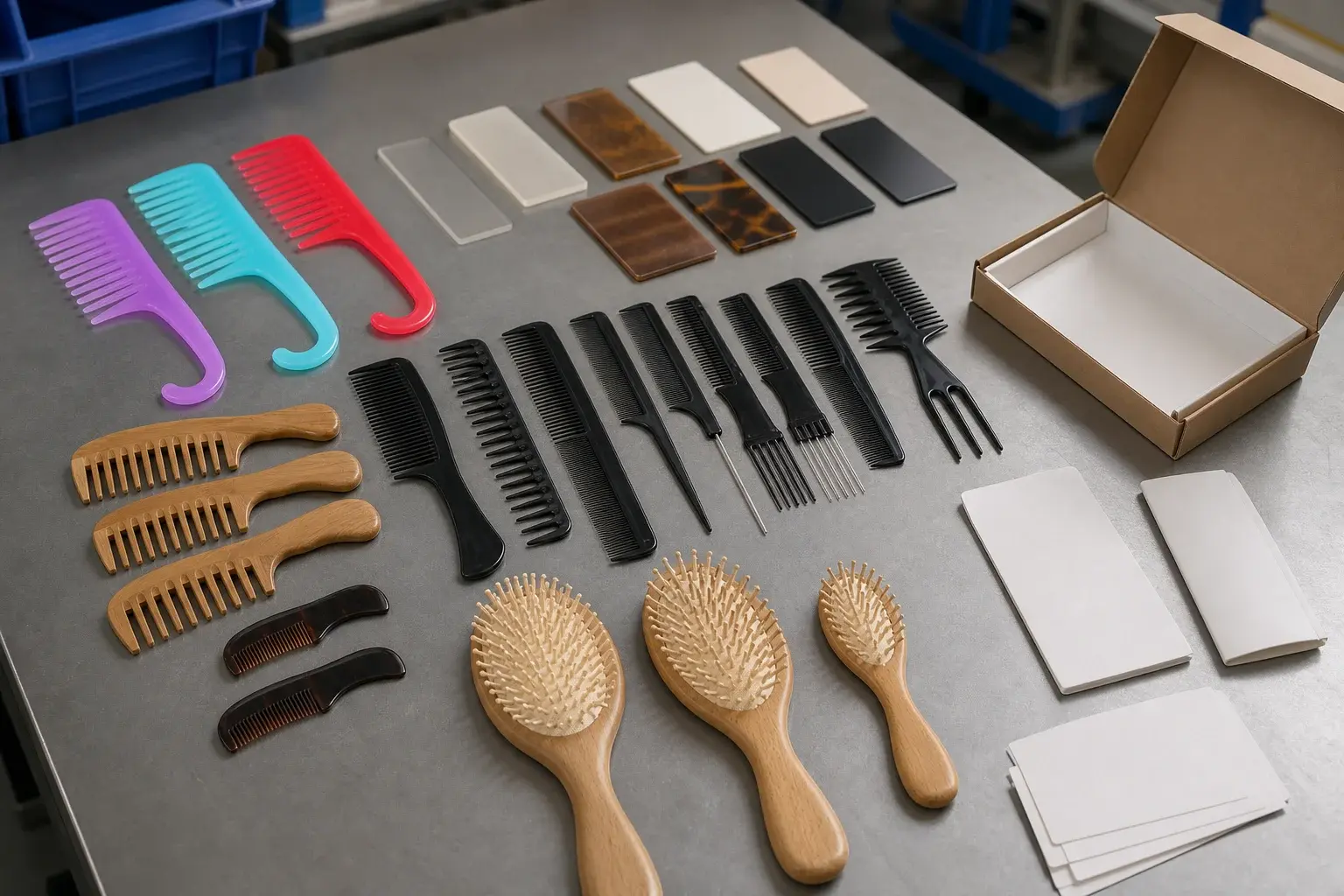
Two requests can describe the same number of combs and still lead to very different estimates. One may use an available shape, one color, one printed logo and a plain sleeve. The other may divide the quantity across several colors, add a new tooth layout, use two artworks and place every version in a fitted retail box.
The total piece count has barely explained the job. Cost and lead time begin to make sense when the estimate describes one complete configuration and shows what has to happen before it can ship.
Start with one defined scenario
Set the estimate conditions before comparing the result. Name the comb format, material, dimensions, tooth layout, color, branding, packaging, quantity for every version, approval stages, required evidence, inspection scope, destination and arrival date.
Mark undecided items as open and ask the supplier to label the option used for the estimate. An available shape and a newly developed shape should remain separate scenarios. The same applies to plain packaging and a custom printed box. Combining both directions under one total produces a number that nobody can reliably use.
Read published figures as starting references
LuxoComb publishes an MOQ starting at 50 pcs, a 15-day sample reference and a 28-day bulk production reference after sample approval. These figures give a buyer a place to begin planning. The quotation still needs to confirm the selected product scope, whether the count uses business or calendar days, the event that starts each period and any work outside the reference.
A project with an available material and approved artwork may follow a shorter path than one that needs new tooling, several sample revisions, a destination-market test and printed packaging. Keep the published figures beside the project schedule, then let the confirmed scope explain any difference.
Work backward from the required arrival date
Begin with the date the finished order must reach the destination. Work backward through transport, packing, bulk inspection, production, sample approval, artwork approval, drawing review and material preparation. This exposes the decisions that the buyer and supplier must close before production can begin.
A requested September delivery is too loose for an event project. The useful input is the destination, required arrival date and any fixed launch, hotel opening or distribution handoff. The schedule can then distinguish finished production, shipment and arrival. Those dates describe different points in the order.
Material changes the route as well as the input
Wood, bamboo, injection-molded plastic and cellulose acetate enter production in different forms. The estimate may need to account for a species or grade, sheet pattern and thickness, resin and color, surface finish, recycled-content request or supporting material evidence.
The route changes with the material. Acetate is cut from sheet, machined, sanded and polished. An injection-molded comb uses reviewed resin and tooling before later finishing or branding. Wood and bamboo need material-specific shaping, tooth cutting, sanding and finishing. A material change can therefore alter preparation, geometry review, sampling and finishing work along with the material input.
Separate available geometry from new development
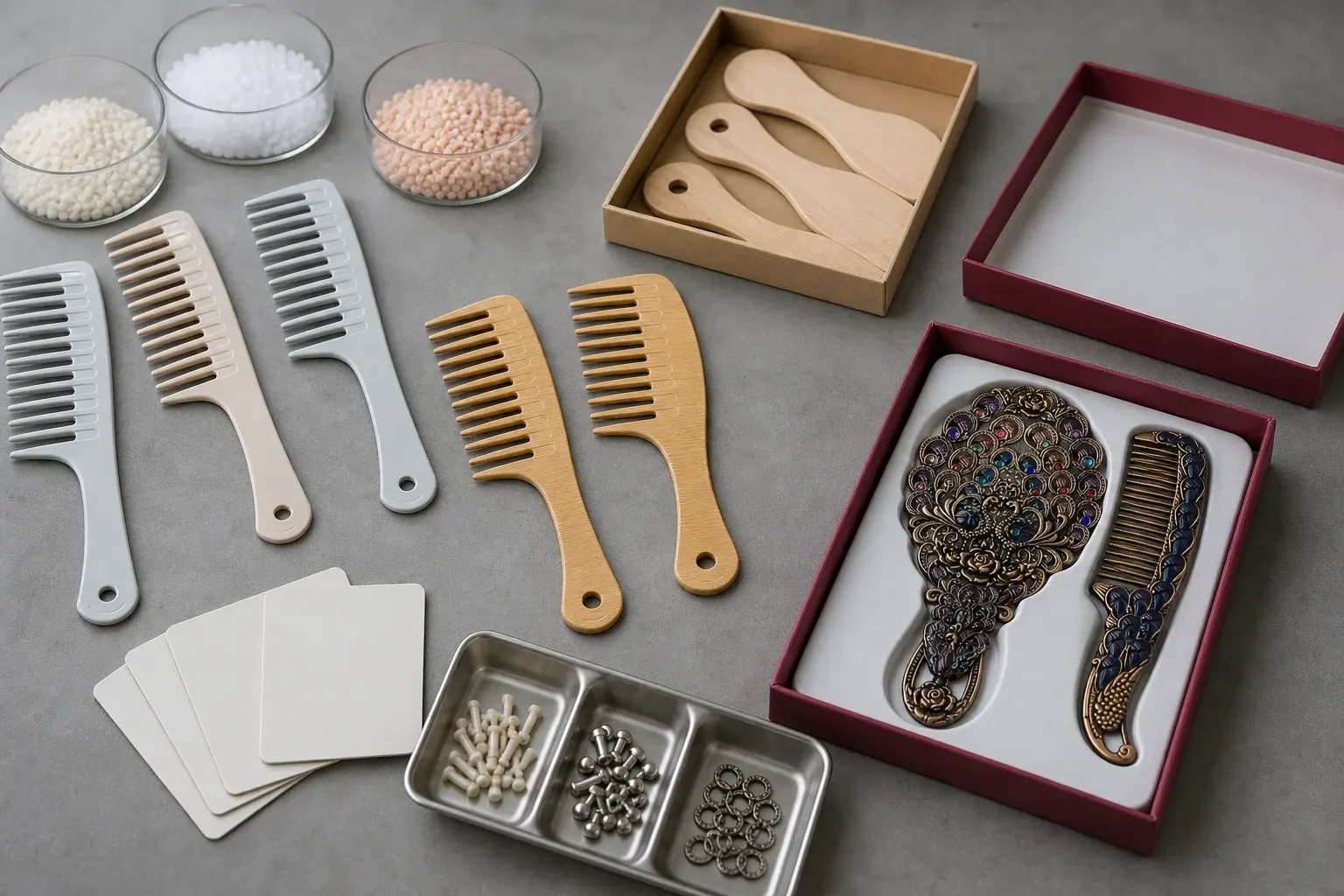
An available reviewed shape can remove some structural development. The material, color, logo and package still need review, though the basic geometry already has a production route. A new outer profile, tooth layout, handle, folding assembly or molded mark may add drawing, feasibility, tooling, sample and revision stages.
New development is not limited to injection molds. A fresh acetate, wood or bamboo profile can require a controlled drawing, process setup, machining or shaping, finishing trials and sample review. Use the tooling decision guide when a molded structure changes, and keep the development charge separate from the production piece price.
Count the dependencies created by complexity
A larger comb can use more material. A fine tooth zone may require different geometry and finishing control from a wide tooth zone. Curves, holes, tails, textures, mirrors, pivots, covers and fitted components can add operations or new checks. Tight critical dimensions also need a method that production and inspection can repeat.
The useful question is what each feature changes. A folding cover adds components, assembly, movement and closed-fit review. A decorative cutout may affect the drawing and process setup. A mirror can change the package depth and contact protection. Keep features that serve the product, then show their dependencies in the estimate and schedule.
Split the quantity into real production versions
A total quantity hides the production groups inside it. Divide the order by product shape, material, color, logo, language, retailer and package. A shared comb body may run as one group while branding or packaging separates later. Another order may split at the material or color stage.
The MOQ review should identify the step that sets the practical minimum. For cost and timing, the estimate also needs to show which setups can be shared and which repeat for every version.
| Project input | Single configuration | Split configuration | Estimate question |
|---|---|---|---|
| Product | One reviewed shape | Several shapes or assemblies | Which drawing and setup belong to each version |
| Color | One material and color group | Several color groups | Which preparation and approvals repeat |
| Branding | One artwork and position | Several logos, languages or positions | Which artwork setups and samples are separate |
| Packaging | One plain or printed pack | Several structures, labels or language versions | Which minimums, proofs and packing lines apply |
Put approval time on the schedule
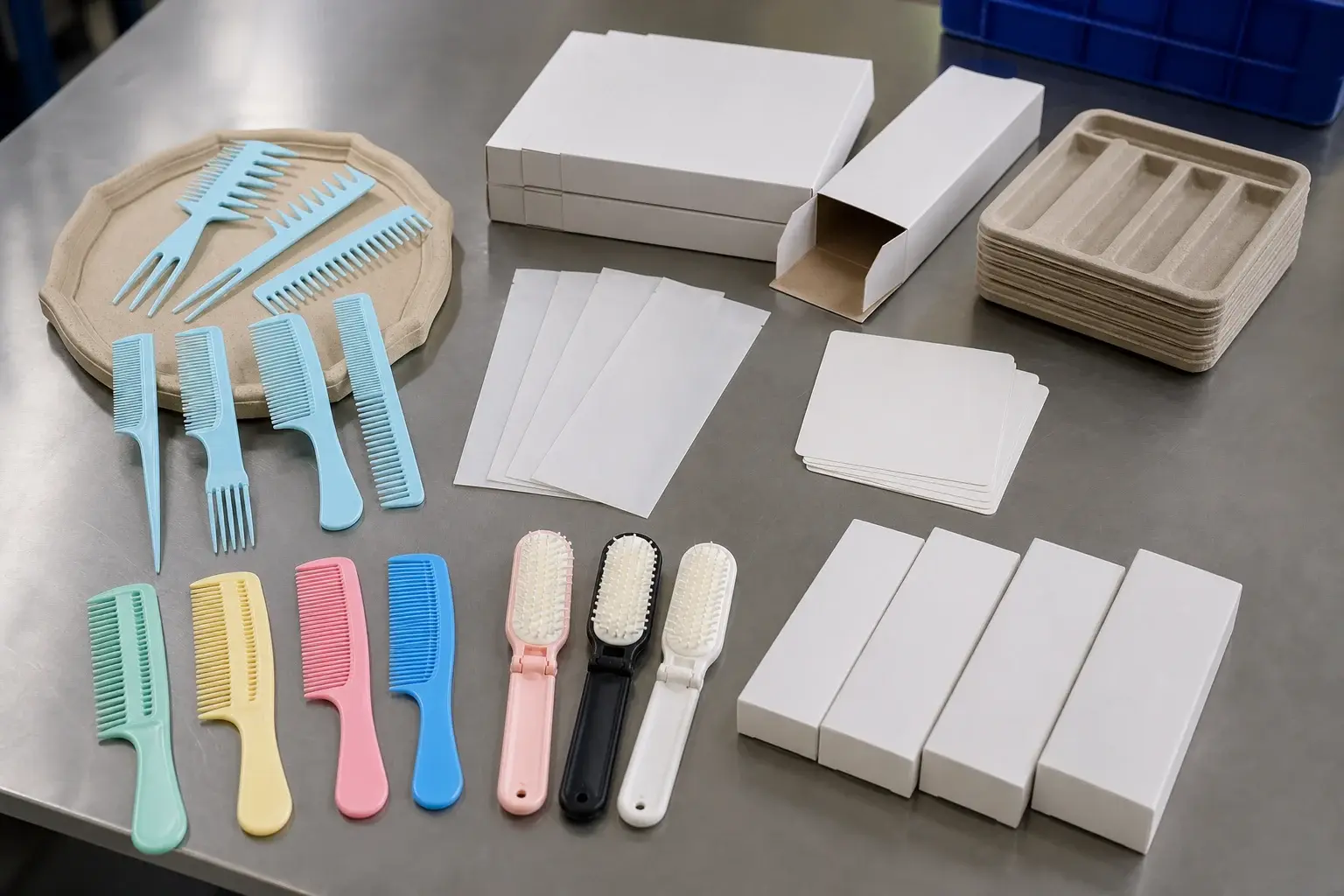
Part of the project clock sits between submissions and decisions. The supplier may send a drawing, material reference, color sample, branded sample, packaging mockup or packed sample. Each item needs a named reviewer, a clear decision and a return date.
Record whether the result is approved, conditionally approved or requires revision. Consolidated feedback helps the next sample answer one set of comments. Separate messages from several reviewers can reopen points that another person believed were closed.
Place each change at the stage it reaches
A change has a different effect depending on when it arrives and what it touches. Correcting a logo file before the branded sample may stay within artwork preparation. Moving a molded logo after tooling review can reopen geometry and tool work. Changing package text may affect artwork, while changing the insert can require another fit sample.
Keep a change log with the request, revision, affected item, decision, cost effect, schedule effect and new approval needed. Ask for an updated estimate when the approved scope changes. The original total and date should not continue as though the project were still the same.
Define branding before the surface is approved
Printed branding, laser engraving, foil and molded marks use different files, surfaces and production steps. The number of colors, positions and artwork versions also matters. Provide the original artwork, target size, orientation, position and required effect while material and geometry are still under review.
A second logo position can create another setup and another inspection area. A molded mark can reach back into tooling. A late surface change may alter how printing or engraving appears. The estimate should name the branding method used for each version and the sample that will approve it.
Give packaging its own project line
Packaging scope includes the contact layer, unit pack, inner pack and master carton. Structure, material, printing, finish, dieline, insert, barcode, labels, pack count and artwork versions can each affect the estimate.
Approve the comb version and structural fit before final printed packaging. A finished comb can wait while artwork, labels or an insert remain open. The schedule should show product and packaging work separately, then identify the point where both are ready for packing.
Name tests, documents and inspection before quotation
A request for all certificates gives no usable scope. State the destination market, product, material, claim, standard or document requested and the party that must receive the result. A material declaration, recycled-content record, laboratory test and third-party inspection answer different questions.
Confirm the sample, laboratory or inspection party, report holder, timing and acceptance reference where they apply. These items may add external coordination or wait for a defined production stage. Put them on visible estimate and schedule lines so they do not appear after sample approval as unplanned work.
Separate production, shipment and arrival
A production completion date does not tell the buyer when the order will arrive. The plan still needs final inspection, packing, handoff, transport, customs or importer steps and delivery to the named destination. The applicable commercial terms and transport option require separate confirmation.
Urgency changes the planning discussion. It does not remove material preparation, sample approval or agreed quality checks. If the arrival date cannot support the full first choice, compare a simpler available shape, fewer versions, a confirmed material or a less complex pack as separately labeled scenarios.
Make the estimate readable line by line
Ask the estimate to separate the production piece, development or tooling, samples, branding, packaging, tests, documents, inspection and delivery scope where applicable. Each line should state the configuration, quantity, included work, exclusions, approval point and condition that can trigger review.
The schedule should use the same divisions. Material preparation, drawing or tooling, sampling, approval, bulk production, inspection, packing and delivery should connect in a visible order. This makes a later change easier to place and keeps a single delay from turning the whole project into guesswork.
Compare scenarios with one variable changed
When the budget or deadline needs adjustment, create controlled alternatives. Keep the product and quantity stable while comparing an available shape with new geometry. Keep the comb stable while comparing a plain sleeve with a fitted printed box. Keep material and packaging stable while comparing one artwork with several regional versions.
One changed variable shows what creates the difference. Several changes at once can still be quoted, though the buyer will learn little from the comparison. The guide to comparing supplier quotes can be used after every supplier receives the same scenario and exclusions.
Prepare the estimate brief
Bring these inputs together before requesting the final quotation and schedule.
- Product use, format and marked reference
- Current drawing, dimensions, tooth layout and components
- Material, color, finish and evidence requirements
- Available geometry, modified shape or new development route
- Quantity for every product, color, logo and packaging version
- Branding method, artwork, size, position and approvals
- Packaging levels, structure, artwork, labels and pack counts
- Sample stages, decision owners and feedback dates
- Tests, documents and inspection scope
- Destination, required arrival date and transport questions
- Fixed, preferred and open decisions
Use the product brief guide to prepare the inputs and the LuxoComb project process to place them against development, sampling, production and packing stages.