
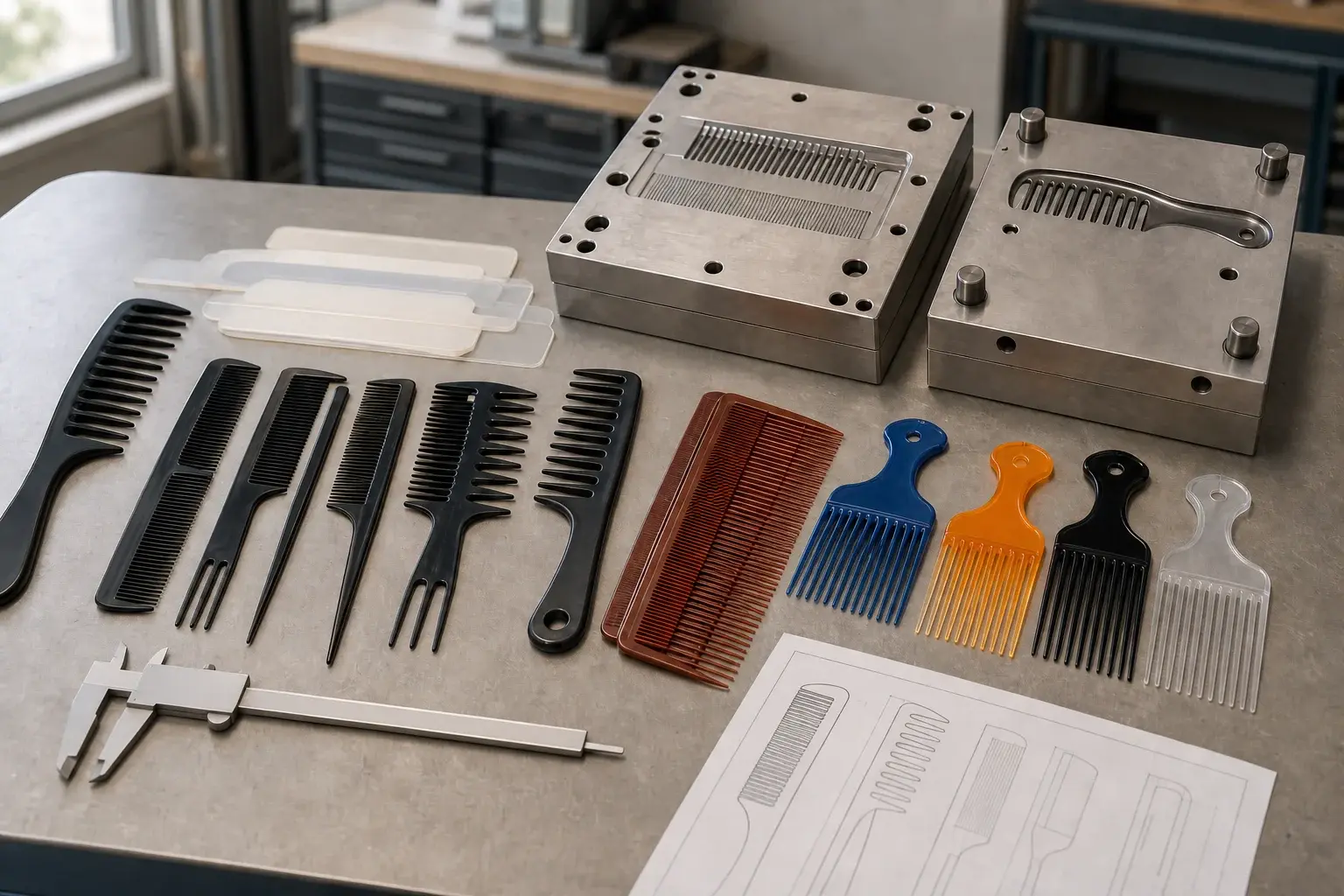
A custom comb needs a new mold when the fixed geometry cannot be made from a reviewed existing tool. The answer usually sits in the profile, dimensions, teeth, handle, openings, molded surface or assembly. A new color, printed logo or package can often stay outside the main product mold.
That sounds simple until a buyer sends a photograph and asks for the same comb with a few changes. One change may be cosmetic. Another may alter the part itself. The useful question is which requested feature already exists in the available tool and which one forces the molded geometry to change.
Confirm that the part is injection molded
New injection tooling applies to an injection-molded plastic comb. Cellulose acetate combs are cut and machined from sheet. Wood and bamboo follow their own shaping and finishing routes. Those products may need drawings, fixtures, cutting setups and samples, though a plastic injection mold is not their default production tool.
Choose the production route before asking for a mold quotation. If material and process are still open, compare them first through the production-route guide. A mold discussion has little value when the buyer may later choose a sheet-cut or wood product.
Start with the closest available tool
Ask the supplier to identify the closest available product and compare it with the requested comb. The comparison should use a dimensioned drawing, a marked physical reference or both. A catalog image can help locate a similar format, though it cannot prove the dimensions or tool details behind that format.
Place the two versions beside each other feature by feature. Review overall length, width, thickness, tooth zones, handle, tail, curves, openings, texture and any moving or assembled parts. If the available product meets every fixed structural requirement, the project may continue through material, color, surface branding and packaging review without new main-product tooling.
Mark which requirements are fixed
A buyer often has a mixture of fixed needs and preferences. The comb may require a particular tooth spacing and overall length while the hanging hole and handle end remain open. Mark those differences on the brief. They determine whether an existing option is acceptable or merely looks similar.
Use three clear labels for each feature. Fixed means the supplier must match the controlled requirement. Preferred means an alternative can be reviewed. Open means the supplier can propose a suitable option. This prevents a small flexible detail from pushing the project toward new tooling and prevents a critical feature from being quietly replaced by an available shape.
Check the overall envelope and thickness
The outer profile is the easiest difference to see, yet the side view matters just as much. Compare length, maximum width, body thickness, local thickness changes, corners and end shapes. Show front, side and section views where the form cannot be understood from one outline.
A request to make a comb slightly longer or thicker may affect the molded part even when the photograph still looks familiar. The supplier has to compare the controlled dimensions with the available tool. Descriptions such as small, large or slim cannot carry that decision.
Treat tooth geometry as structural
The mold forms the main tooth layout of an injection-molded comb. A change to spacing, length, thickness, taper, tip, root, transition or the number of teeth may affect the tool. Fine, wide and mixed tooth labels are helpful for product selection, though they do not define measurable geometry.
Put the important tooth dimensions and measurement points on the drawing. Compare each zone with the existing molded sample. A tool may match the outer length while its teeth remain unsuitable for the intended use. That is a structural mismatch, even if the two combs share the same general silhouette.
Review handles, openings, curves and assemblies
Handles, tails, hanging holes, cutouts, ribs, curves and local texture belong to the product geometry when they are formed in the mold. A fixed change to any of these features needs tooling review. The same applies to a folding cover, pivot, mirror holder or another component whose fit depends on the molded part.
Assembly can spread one change across several pieces. A new pivot location may alter the comb, cover and movement path. A different mirror size can affect the holder and package. Name every component and identify which dimensions control their fit before treating the request as one small modification.
Separate molded details from surface decoration
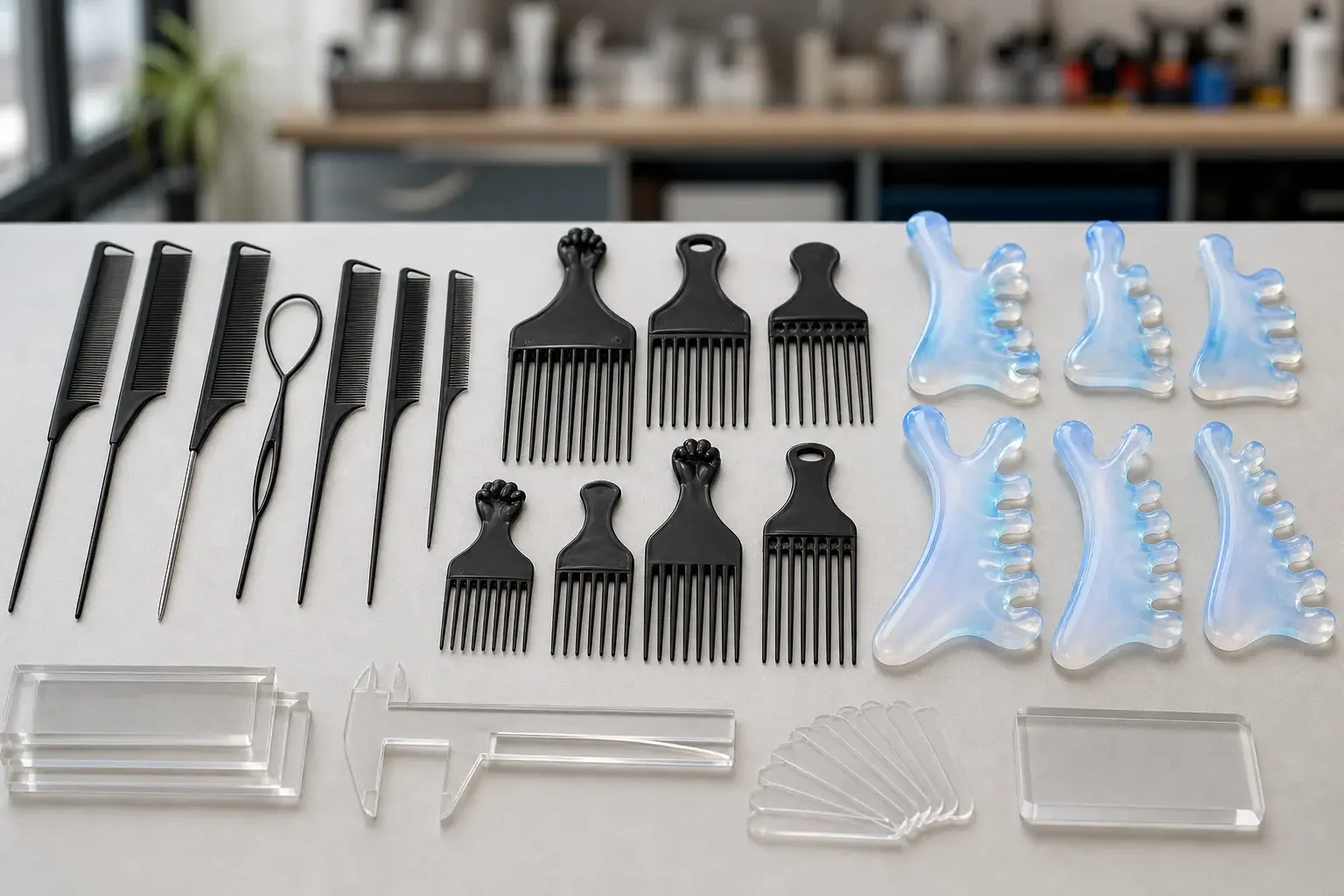
A raised or recessed logo becomes part of the molded geometry. It may require a tool insert, modification or a new mold review. Molded texture, grip features and decorative relief should also appear on the drawing before the tooling scope is closed.
A printed logo, suitable laser mark or label is applied after the main shape has been formed. These methods usually begin with artwork, material and surface review. They can still need samples and their own setup, yet they do not automatically change the main product mold. Decide which kind of branding is requested before comparing tooling quotes.
Use color and packaging as separate decisions
A resin color change can often use the same product geometry. The selected resin, surface texture, gloss and viewing conditions still need approval because they affect the finished appearance. A special visual effect tied to material behavior or geometry needs separate feasibility review.
Packaging normally follows the finished part. A bag, sleeve, backing card, box or insert can be developed around an approved comb without changing its mold. Check the actual molded sample inside the pack. A holding tab, insert or closure can press against the teeth, cover the logo or reveal that the requested package needs a different fit.
Compare the request with three tooling paths
The review may lead to an existing tool, a possible modification or new tooling. The supplier needs the actual drawing and tool information before confirming the route.
| Requested change | Possible path | Evidence needed |
|---|---|---|
| New resin color on the same product | Existing geometry may remain usable | Resin, color and surface sample |
| Printed logo on an available area | Later branding operation may be sufficient | Artwork, position and branded sample |
| Raised or recessed molded mark | Insert, modification or new-tool review may apply | Dimensioned logo geometry and tool review |
| New tooth layout or outer profile | Modified or new tooling may apply | Controlled drawing and geometry comparison |
| New folding or assembled structure | Component and tooling review may apply | Assembly drawing, function and fit requirements |
| New package around the same comb | Main product geometry may remain usable | Approved comb and package-fit sample |
The table gives planning directions. The manufacturer's review of the drawing, material and available tooling provides the project answer.
Decide whether the business case supports new tooling
A structural difference can justify new tooling only when the product plan can support the development work. Compare expected order quantities, likely repeat orders, product life, number of color or regional versions and the value of the unique feature. An available shape may be sensible when it already performs the intended job and the difference carries little value for the customer.
A distinctive tooth layout, handle, function, assembly or branded geometry may justify development when it matters to the product. Keep that judgment inside the actual forecast and quotation. No general article can promise that one quantity, price point or payback period works for every comb.
Put tooling terms in the quotation
The phrase custom mold does not define what the tooling charge includes. Ask for the supported drawing revision, tool scope, samples, included revisions and the events that create another cost or schedule review. Separate the development or tooling charge from the production piece price.
Ownership or control, storage, maintenance, modification, replacement, confidentiality and exclusivity need written project terms where they matter. They should not be inferred from who paid an invoice or from the words OEM, ODM or private label. Confirm the responsible parties and any limits in the commercial documents.
Approve the drawing before tooling work
The drawing should identify the material direction, controlled dimensions, tooth zones, handle, openings, molded surface, branding geometry, assembly interfaces and revision. Mark reference-only dimensions separately from critical requirements. Record any supplier feasibility change on a new revision and return it for approval.
A physical sample or rendering can help the buyer understand proportions. It does not replace the controlled drawing. The drawing tells production what to make and inspection what to measure. Approval should also name the tooling scope tied to that revision before the work begins.
Review the first molded sample by feature
The first molded sample should be checked against the stage it represents. Review material direction, overall dimensions, tooth geometry, straightness, surface, relevant parting or gate areas, burrs, function and fit with any component. Confirm which color, texture, branding and package details are already representative.
Do not approve the sample from the front outline alone. A comb can match the expected silhouette while the thickness, tooth roots, tips, handle feel or assembled movement still needs correction. Use marked close views and a sample approval record to separate approved features from open items.
Record what happens when the drawing changes
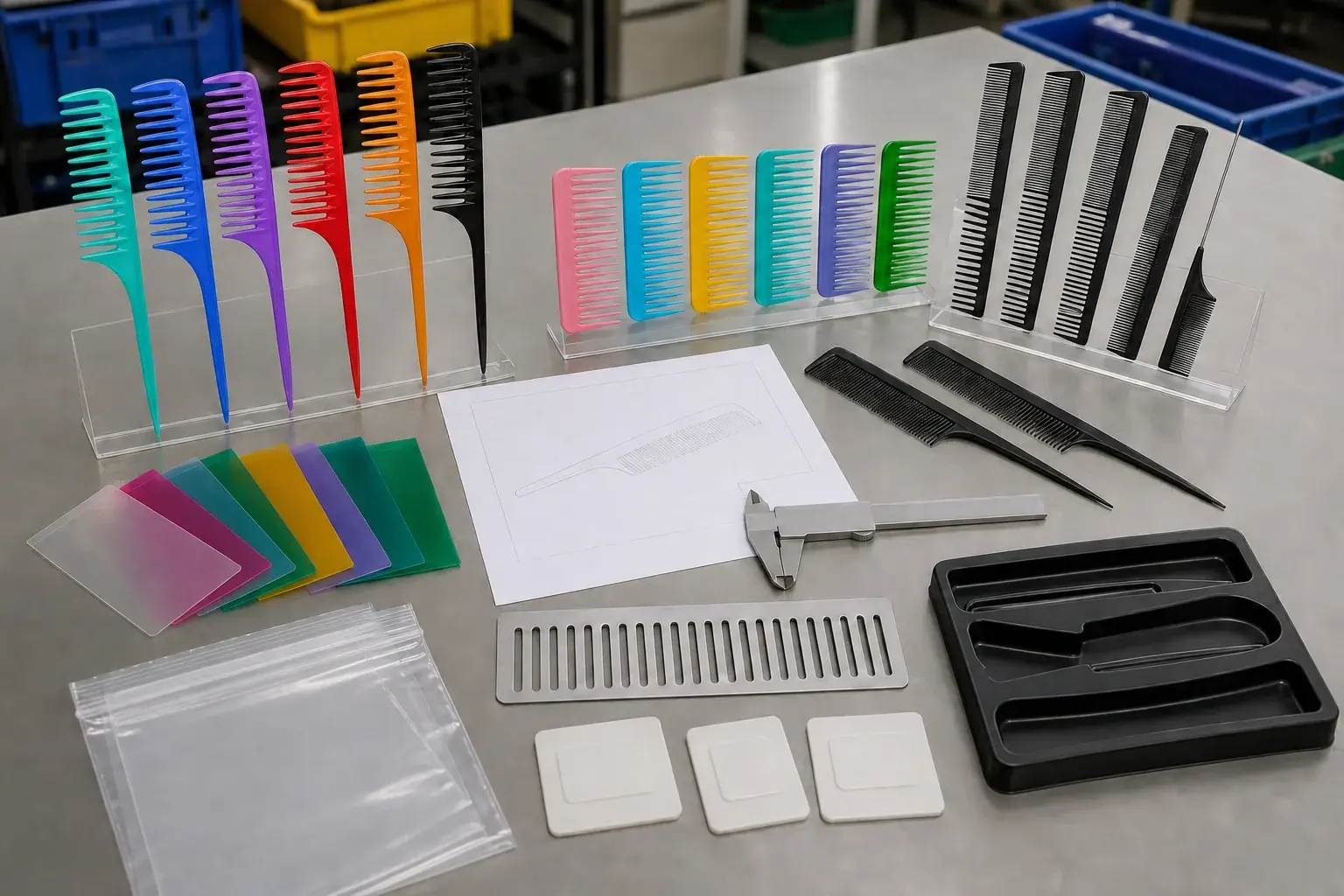
A change after drawing or sample approval can reopen the tool review. Identify the feature, revision, cost effect, schedule effect and sample needed before work continues. A color or print revision may stay in a later stage. A geometry or assembly revision can reach back to the tool.
Keep rejected samples and obsolete drawings clearly identified so they do not return as repeat-order references. The final production record should connect the current drawing, approved molded sample, color, branding, assembly and package.
Prepare a mold-review package
A useful review package lets the supplier compare the desired product with available options without guessing.
- Intended use and product type
- Dimensioned drawing, CAD data where available or marked physical reference
- Fixed, preferred and open features
- Overall dimensions, tooth geometry, handle and structural details
- Material, color, surface and functional direction
- Assembled components and required fit
- Molded and surface branding requirements
- Quantity scenarios and expected repeat orders
- Packaging, destination, tests, documents and requested timing
- Confidentiality, ownership, control or exclusivity points for review
The supplier can then state whether an existing product, a possible modification or new tooling fits the brief. Ask for alternatives to remain separately labeled so an available-shape quotation is not confused with the fully custom design.