
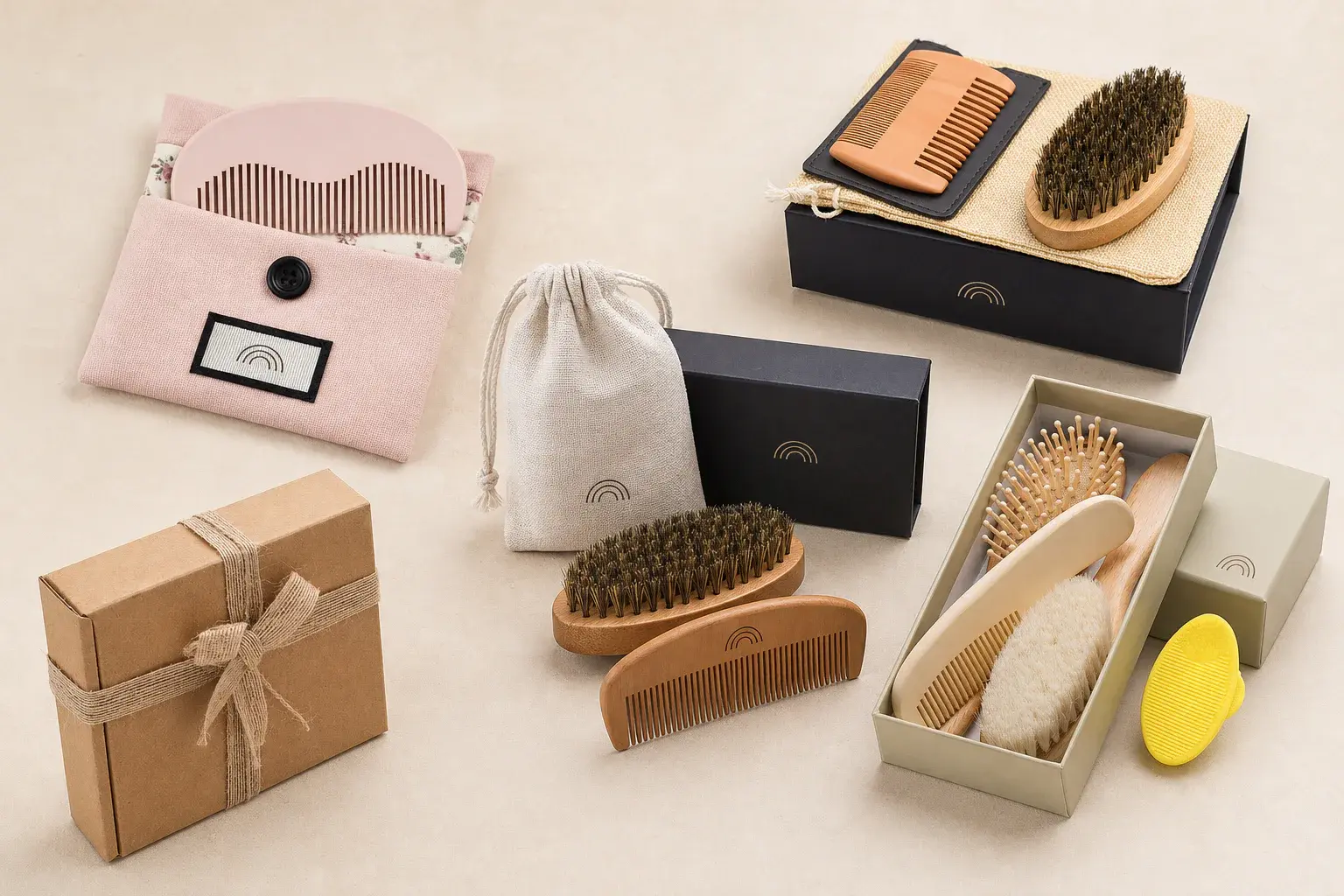
“Gift box” sounds like a packaging brief until someone has to quote it. The supplier still does not know the box size, material, insert, print, closure, unit count, barcode, inner pack or shipping carton. Two quotations can use the same pack name and describe very different work.
A useful custom comb packaging brief follows the product from the comb surface to the master carton. It shows what touches the comb, what the customer receives, how units are grouped and what is shipped. It also says which parts have been decided and which need a packaging proposal.
Begin with the channel and the job of the pack
State where the packed comb will go. Retail display, ecommerce fulfilment, hotel amenities, salon use, travel, gifting and campaign distribution put different pressure on the package. The channel packaging guide compares those priorities in detail.
Then describe what the pack must do. It may protect tooth tips and a polished surface, keep several grooming tools together, carry a barcode and market text, create individual handling separation, hang from a retail fixture or present a gift set. A package can do several of these jobs, though the brief should identify the ones that control the design.
Freeze the product version before sizing the pack
Packaging fit depends on the approved product. Attach the comb drawing or identify the physical sample that controls the dimensions. Include every component in a set, such as a brush, mirror, scissors, pouch, care card or insert. A nominal comb length cannot define the space needed around a wide handle, long tooth tips or a folding cover.
Record the product material, surface finish, logo location and any area that needs contact protection. If the comb design is still changing, mark the packaging dimensions as provisional. Final pack size and fitted inserts should follow the version that production will use.
Define all four packaging levels
Write each packaging level on its own line. The first level touches or directly protects the product and may be a sleeve, pouch, case, wrap, tray or insert. The unit pack is what one customer, guest or recipient receives. An inner pack groups units for handling. The master carton carries the agreed total and shipping information.
State whether each level is plain, printed, labeled, sealed or supplied by another party. A finished retail box can look correct while the order still lacks an inner count, divider or carton mark. Keeping the levels separate exposes those gaps before sampling.
Specify the product contact layer
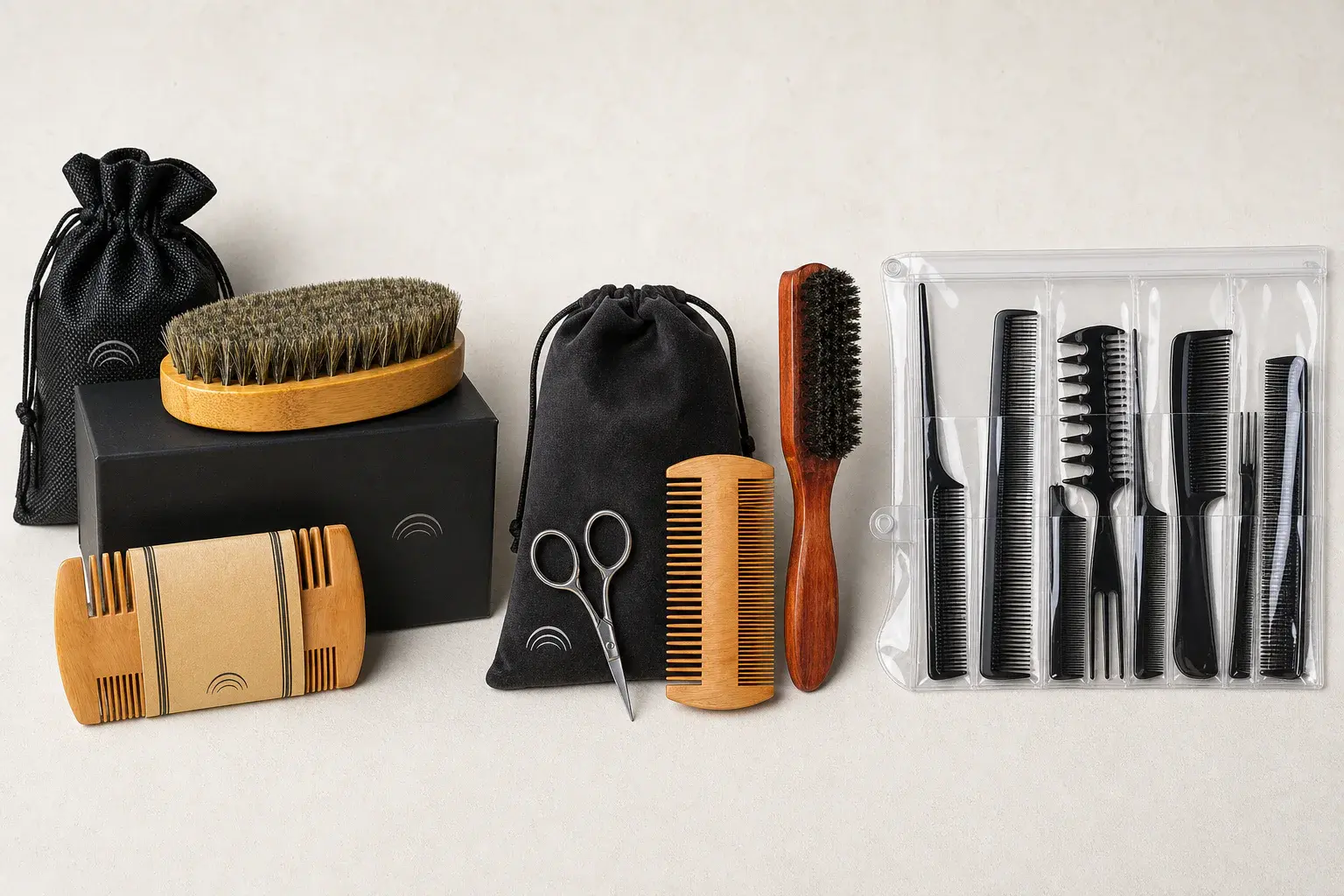
The first contact layer deserves its own decision because it can protect or damage the finish. A fitted pouch may rub a printed logo during insertion. A rigid tray may hold a comb securely while placing pressure near the tooth roots. A loose box may allow polished edges to strike the sides during handling.
Name the material direction, internal size, opening, closure and any divider or soft contact area. For a sleeve or case, describe how the comb goes in and comes out. For a set, show which components touch. The physical fit sample should confirm these relationships before decorative print becomes the focus.
Describe the unit pack as a structure
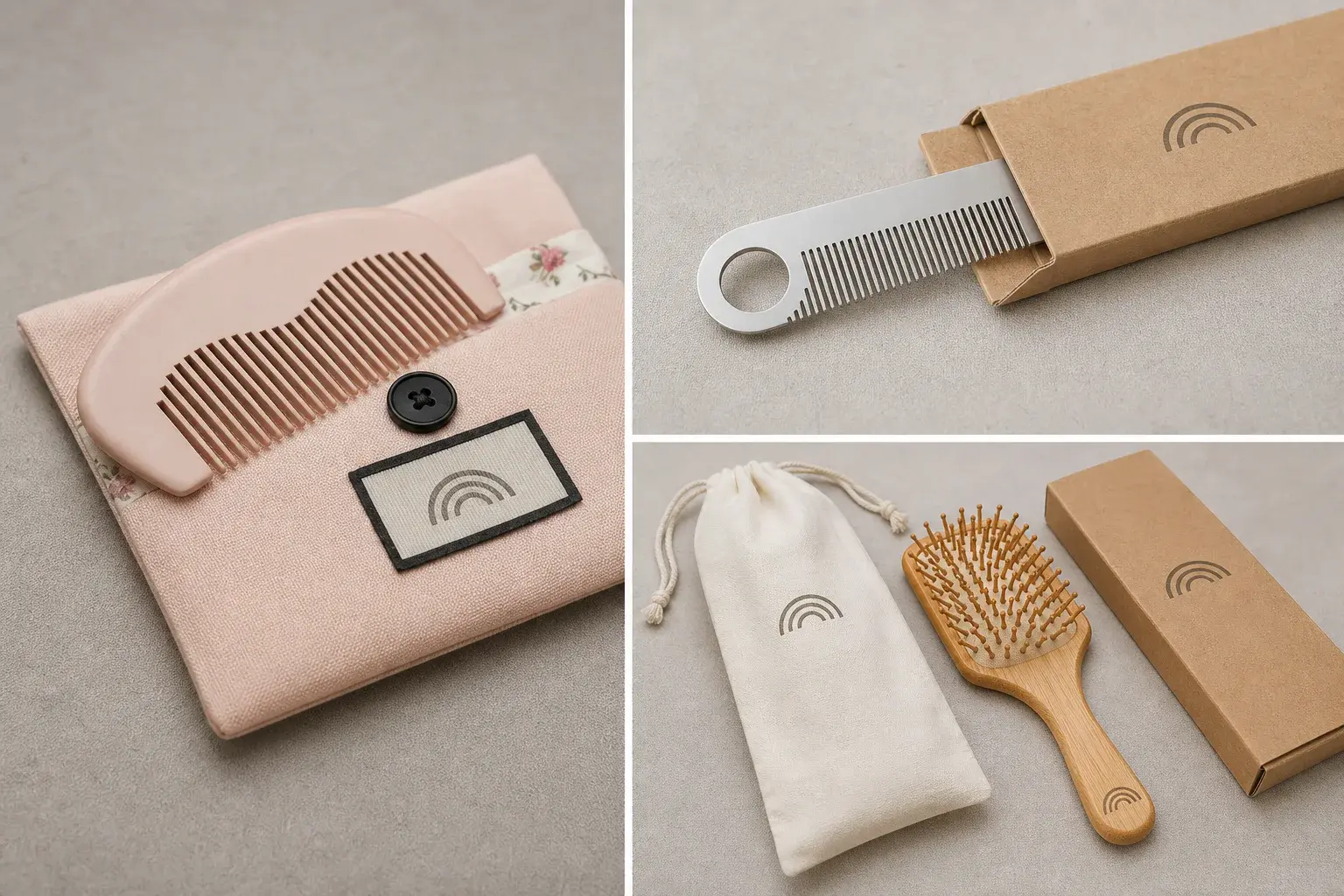
Choose a direction such as an individual bag, paper sleeve, backing card, pouch, protective case, paper box, drawer box or gift set. Add the details that make the name usable. These include the material, dimensions, opening, closure, display hole, window, insert, visible product area and the side presented to the customer.
A retail unit may need space for product information and a barcode. A hotel unit may need compact individual packing and a clear replenishment count. A gift set needs every component located and protected. The brief should describe the actual structure without turning a pack style into a claim about hygiene, sustainability or performance.
Define inner packs and master cartons
Record how many unit packs go into one inner pack and how many inners go into one master carton. If units are loaded directly into the carton, say so. Add the assortment by color, product or artwork version, along with the required orientation, dividers, protective material and carton marks.
The finished unit pack and order quantity influence the carton dimensions and weight information. Keep unconfirmed carton details open during the first brief, then update them after the packed product is known. Delivery or pallet requirements should also be identified for review when they apply to the order.
Show product orientation and clearance
Mark which face points toward the customer and where the handle, teeth and logo sit inside the pack. Check space around tooth tips, polished edges, pivots, mirrors, coated surfaces and printed branding. A holding tab or insert should not cover the approved logo unless that view has been accepted.
Open and close the package with the product inside. Insert and remove a fitted comb. Check whether a folding comb can move or open unintentionally. The pack needs enough control to protect the product without bending teeth, trapping a mechanism or pressing a finished surface.
Turn the structure into a controlled dieline
A structural drawing or dieline should identify the finished dimensions, folds, cut lines, glue areas, windows, openings and insert relationships that matter to the pack. Give the file a revision and connect it to the current comb version. This allows the structural sample and printed artwork to refer to the same shape.
Confirm the file format and production requirements with the packaging supplier. Bleed, trim, fold and safe areas belong to that agreed template. When the structure changes, update the dieline before approving new artwork. Otherwise the design team may continue working on a shape that no longer fits the product.
Supply complete packaging artwork
Provide the brand files, final text, color references, linked images, fonts in the requested form and any separate finish or foil layers. Include the correct dieline revision and make the artwork version visible. The buyer should identify who approves legal, retailer and destination market content.
Check every panel. Front artwork may look finished while a side panel still carries an old product name or address. Small flaps can contain version information that is easy to miss on a flat screen. Review the assembled printed sample as well because folds, seams, windows and closures change how panels meet.
Control labels, barcodes and variable data
List every item that can change between packed versions. This may include the product label, SKU, barcode, language, importer or market label, seal, lot or date information where required and the carton label. State who supplies the data, where it goes and which version uses it.
Give each retailer, language, region and artwork combination its own identifier and quantity. One comb body may be shared across the order while the packaging splits into several production versions. That split can affect setup, packaging minimums, packing instructions and the checks required before release.
Give counts for every version
A total order quantity is not enough when products and packs vary. Show the units per product color, logo, language, retailer and package. Then show units per pack, packs per inner and inners per carton. If a carton contains an assortment, write the composition.
Use the same names on the artwork list, packing instruction and carton record. Similar phrases can still describe different totals. Finished combs, unit packs, inners and cartons all need their own count so production and inspection know which number they are confirming.
Keep material and environmental claims tied to evidence
Packaging appearance cannot prove a material or environmental claim. A kraft color does not establish recycled content, certification or recyclability. A reduced pack also needs to protect the comb through the intended handling and distribution route.
Write the exact claim the market requires and the evidence expected for the specific construction. Paper, ink, coating, adhesive, window, label and other components can affect what the finished package supports. Keep unverified certification marks, percentages and broad environmental language out of production artwork until the applicable evidence has been reviewed.
Approve structure, print and packed product in stages
Begin with the product version and structural fit. An unprinted mockup can show size, opening, closure, insert location and how the comb sits. It cannot approve production color, finish, text or barcode data.
Review the dieline and artwork as a separate decision. Then inspect the printed sample for the chosen material, color, finish, folds, labels and variable data. Finish with the complete packed product so tooth protection, movement, presentation, unit count and closure can be judged together.
Record what each approval covers. A message that says packaging approved is too broad when the reviewer has only seen a plain box or a screen proof. Keep the approved dieline, artwork and packed sample with the sample decision used for production.
Build the packaging brief on one page
The main brief should give the supplier one quick view of the project. Detailed drawings and artwork can remain as attachments.
| Brief section | Information to provide | Reference to attach |
|---|---|---|
| Purpose | Channel, user, pack job and destination | Channel requirement or buyer notes |
| Product | Comb version, components, material, finish and logo | Drawing and approved product sample |
| Pack levels | Contact layer, unit pack, inner pack and master carton | Structure references or pack examples |
| Structure | Dimensions, orientation, closure, insert and protection | Dieline and fit mockup |
| Artwork | Text, colors, barcode, labels, finishes and versions | Production artwork and data list |
| Packing | Counts, assortment, carton marks and delivery needs | Packing configuration and carton record |
| Approval | Structure, print and packed product decisions | Controlled samples and dated approvals |
Use the brief to request suitable custom comb packaging options, then send the complete product and packaging files through the contact page. Exact materials, dimensions, print requirements, packaging minimums, carton configuration and approval methods remain specific to the order.