
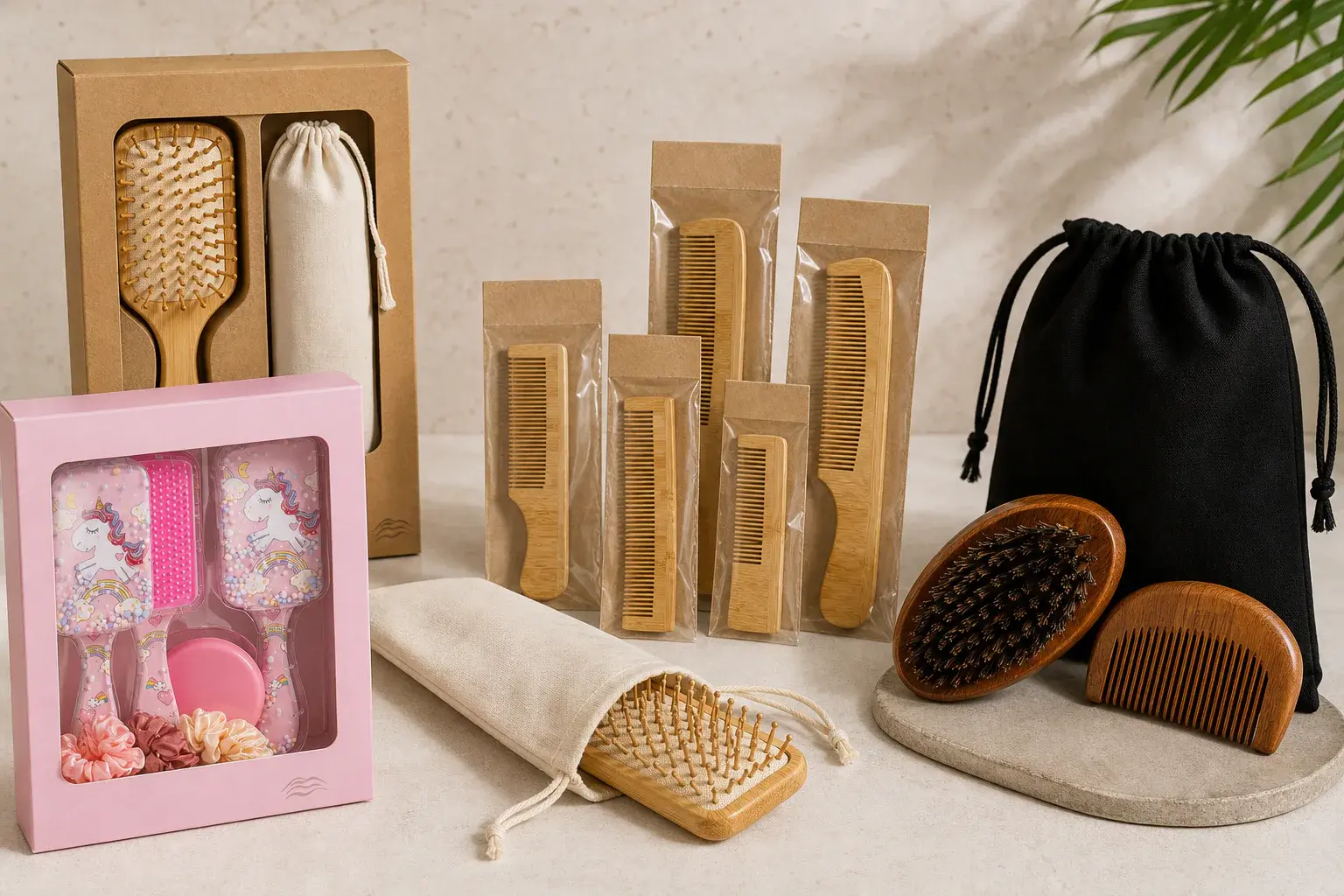
A paper sleeve can be sensible for a retail comb, a hotel amenity or a promotional giveaway. The shape of the pack tells you very little by itself. Its job changes with the person who receives it, the information it carries, the way units are handled and what happens when the first order runs out.
Retail packaging has to meet a shopper and a sales channel. Hotel packaging becomes part of an amenity and replenishment system. Promotional packaging works inside a dated distribution plan. Those differences should guide the structure, artwork, counts and approval process before anyone chooses a material because it looks attractive.
Start with the channel task
Begin by following the packed comb after production. Record who receives it, how it will be distributed, whether each unit is handed out or sold, what information must remain visible and where the stock goes next. Quantity by version, destination and required arrival date also belong in this first discussion.
This route exposes practical differences that a list of package styles can hide. A window box may help a shopper see an acetate comb, yet add little value inside a closed hotel amenity kit. A simple pouch may be welcome at a branded event, though it could leave a retailer without space for a barcode or market text. The channel task gives each option a useful context.
Make retail packaging work before it decorates
Retail packaging has several jobs at the same time. It protects the teeth, surface and decoration, presents the comb in the intended sales setting and gives the channel a workable unit to receive, count, display and deliver. A gift box, sleeve, card, bag, pouch or case can all be appropriate when the structure supports those jobs.
Review the pack with the actual comb. Check its orientation, the space around the teeth, the points where the product touches a card or insert and the route used to remove it. A tight tab can mark a polished surface. A loose insert can allow a comb to move during delivery. A window may reveal the product well while leaving the printed logo partly hidden. These details are easier to correct before artwork approval.
Give retail information a place
Retail artwork usually carries information beyond the brand mark. The approved product name, barcode, SKU, market text, buyer content and any required importer or distributor details need a defined position. When several colors, kits, languages or retailers are involved, the file list should show exactly which information belongs to each quantity.
Small packaging creates an obvious space limit. Establish the final content before shrinking text or adding another label. A clean front panel can remain simple while a back card, sleeve panel or separate insert carries the operating information. The choice depends on the selling route and the buyer's confirmed requirements.
Review retail display and delivery together
A pack prepared for a shelf, hanging display, ecommerce shipment or gift set will face different handling. Define how the unit stands or hangs, whether the product must remain visible and how units sit inside an inner pack and shipping carton. A box that looks stable on a table may move inside a large carton. A pouch that suits gift presentation may need an identification card for warehouse picking.
Material and finish also change the contact risks. A polished acetate comb, a printed plastic comb and an engraved wooden comb can respond differently to rubbing, pressure and trapped dust. The retail review should cover both the appearance presented to the customer and the protection maintained through delivery.
Treat the hotel comb as a packed amenity item
For production, a custom hotel comb should be specified as a packed amenity item. The working specification should join the comb, logo, unit package, amenity kit position, unit count, carton marks and replenishment reference. If one of those records is separated from the others, a later order can repeat the right comb inside the wrong pack.
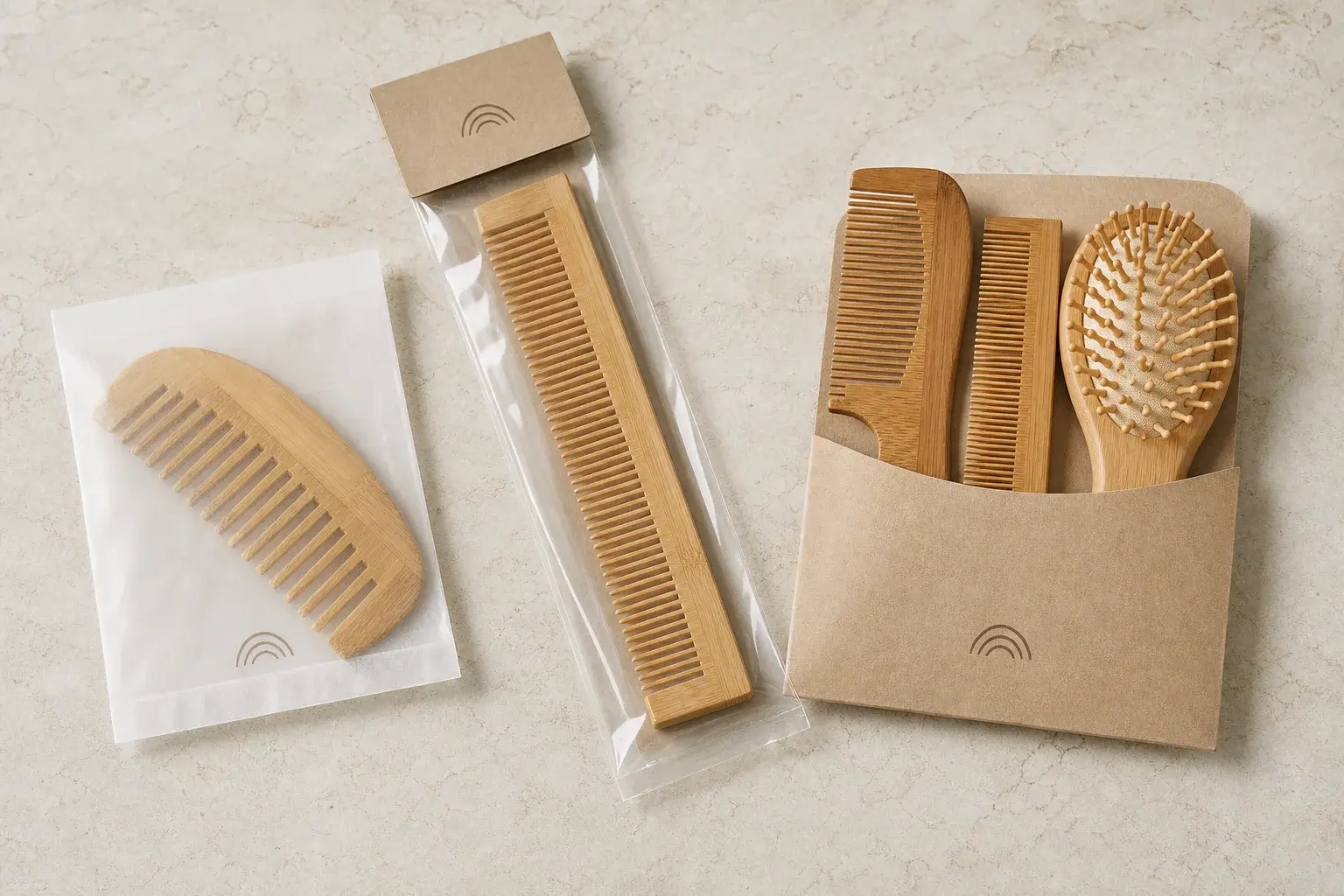
Hotels may use a paper sleeve, clear bag, printed wrapper, carton or another compact unit pack. The right structure depends on how the item enters the amenity set, how staff handle it and what the property has approved. A photograph can show the appearance, though it cannot define the dimensions, closure, material or artwork version needed for production.
Define individual hotel packaging in plain language
Individual packaging means one comb is separated in its own pack. The specification can state the structure, material, dimensions, seal or fold direction, print area and label. This language gives the buyer and supplier something concrete to review.
The presence of a bag or sleeve does not by itself prove a broad hygiene, sanitary, regulatory or performance claim. Any such statement needs the material, process, test or handling evidence that directly supports it. Clear wording is especially useful when hotel teams, amenity assemblers and regional buyers use the same file.
Build hotel packaging for replenishment
Hotel stock is usually replenished after the opening order. Keep the approved comb, logo position, package dimensions, artwork, labels, unit count, inner count and carton marks under a controlled version. The purchase order can then refer to that record and note any deliberate change.
A repeat custom comb order should use retained production references and current approved files. An old sample or catalog image may help identify the project, yet it may miss later changes to the wrapper, property name or packing count. Replenishment becomes easier when the pack record is treated as part of the product.
Plan promotional packaging backward from distribution
A promotional comb may be handed out at an event, included in a mailer, paired with another product or placed in a campaign gift. Work backward from that moment. Record the distribution method, required arrival date, destination, product and logo versions, unit or bulk packing choice and any other items packed with the comb.
The schedule should include artwork approval, sample review when required, packing and delivery. A dated campaign has little room for an unclear version list. If several sponsors, markets or event dates share one order, show the quantity for every artwork and the carton identification needed at the destination.
Decide where the campaign message belongs
The comb and package do not need to carry the same amount of information. A simple logo on the product can remain useful after the event, while a card, sleeve, sticker or box carries the campaign name, sponsor list, date or instructions. This split can keep the decoration area readable and give temporary campaign content a suitable place.
Check the message at its finished size. A detailed design that looks clear on screen may become crowded on a narrow comb or small sleeve. The final proof should identify the artwork file, color reference, print position and quantity attached to that version.
Compare the complete cost of promotional packing
Compare promotional options on the complete packed configuration. Include the material, structure, printing, labels, assembly, quantities by version, inner packs, cartons and delivery route. A low unit price for one component can give a misleading picture when extra assembly or separate shipments are added later.
Cost control can come from a simpler structure, fewer artwork versions, a different unit count or a more efficient carton configuration. Keep the protection requirement visible during that review. Teeth, surface decoration and included components still need to arrive in the approved condition.

Compare channel priorities side by side
| Decision | Retail | Hotel | Promotional |
|---|---|---|---|
| Main pack task | Protect, present and carry product information | Support individual amenity handling and replenishment | Support distribution and campaign identity |
| Important inputs | Display route, barcode, SKU, market text and retailer version | Unit pack, seal direction, kit position, count and property version | Distribution method, required date, sponsors, artwork quantities and destination |
| Common version split | Retailer, region, language, color or kit | Hotel brand, property, amenity set or replenishment order | Event, sponsor, market, date or campaign message |
| Approval focus | Fit, appearance, information, display and delivery protection | Product, individual pack, label, count and reorder reference | Artwork, unit or bulk pack, distribution configuration and delivery plan |
Keep protection common across all three channels
Channel priorities differ, yet every pack has to protect the actual product through its intended route. Test the fit with the selected comb and any insert, card, pouch or accessory. Open the pack, remove the product, return it when that reflects use and check the areas that touch teeth, edges, surfaces and decoration.
Place the approved unit inside the planned inner and shipping carton as well. The custom comb packaging brief should describe these levels, the count at each level and the delivery conditions already known. This keeps a presentation decision connected to the way the order will travel.
Keep packaging claims inside the evidence
Appearance does not establish a material or environmental claim. A paper component may include coatings, inks, adhesives or windows that affect how a complete pack is described. A clear bag cannot be identified fully from a photograph. Claims about recycled content, certification, recyclability or reduced material need exact supporting information and review for the destination where they will be used.
Discuss packaging material and sustainability requests as written requirements. Name the component, requested claim, evidence, destination and any buyer standard. This gives the project team a defined question and keeps sales language within what the records can support.
Approve each channel pack in stages
Start with the finished product dimensions and the parts that require protection. Review an unprinted structure for fit and handling. After the structure is fixed, approve the dieline and artwork version. Then review the printed result, labels, barcode where applicable and the complete packed product.
These approvals answer different questions. Structure approval covers fit. Artwork approval covers content and placement. A printed sample covers the produced appearance. The packed product brings the comb, package and assembly together. Record which stages apply to the project and retain the approved reference used for production.
Decide whether one pack can serve several channels
One pack can serve several channels when product protection, information, unit handling, artwork, counts and destination requirements agree. This can be practical for a standard branded pouch that is distributed through several routes with the same contents.
Separate versions are clearer when retail labels, hotel property artwork, campaign messages, closures or packing configurations differ. Keep the shared product specification where possible, then give each package version its own name, artwork, quantity and carton identification. The result is easier to approve and easier to replenish.