
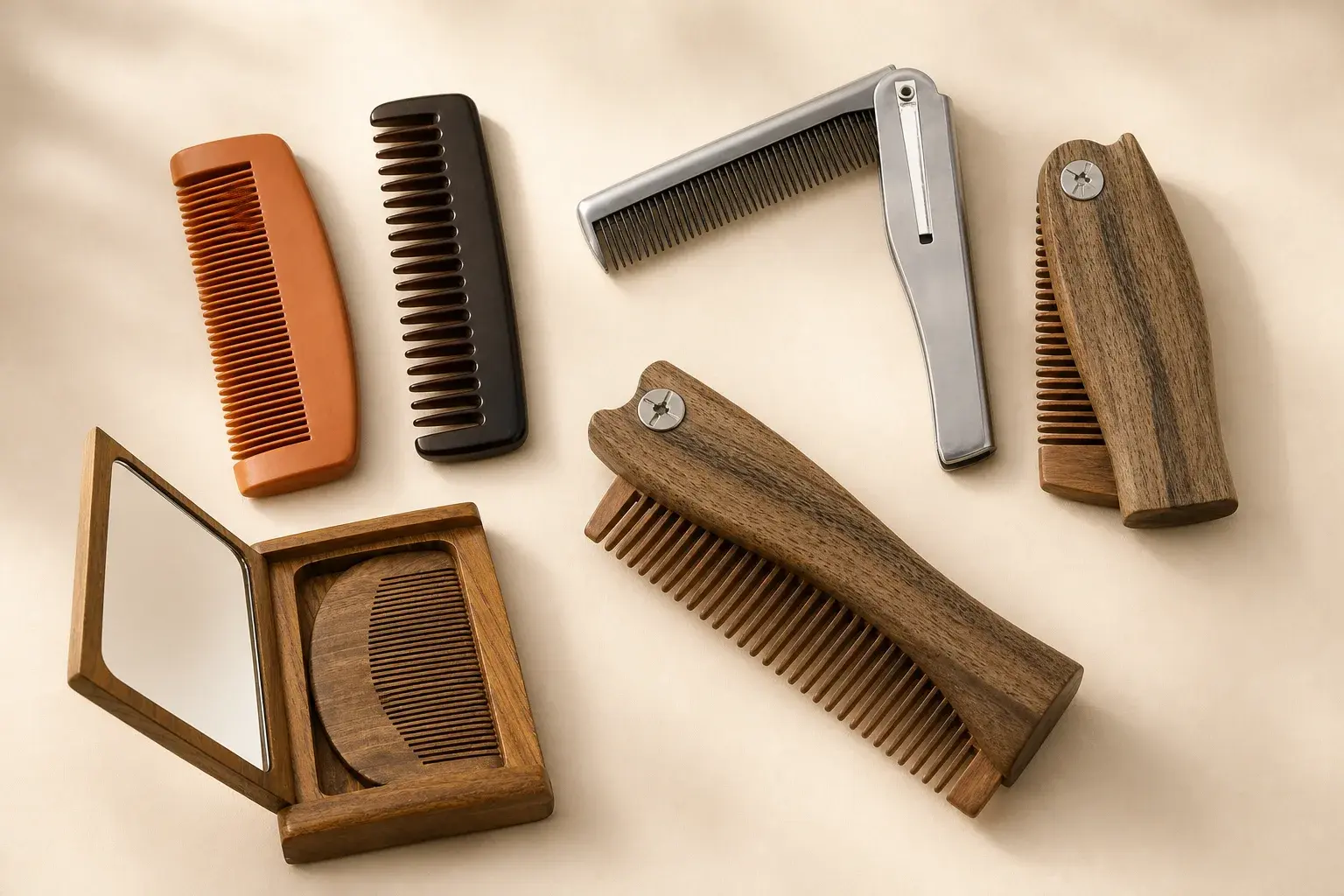
Two combs can occupy a similar space in a travel kit and still create very different development work. A pocket comb keeps a fixed compact body and uses a sleeve, case, pouch, or pack to protect the teeth. A folding comb adds a cover or handle that moves around a pivot and protects the tooth section when closed.
The choice reaches beyond appearance. A fixed comb needs enough usable tooth length inside the carry envelope and a protector that fits the finished body. A folding product needs those decisions plus open and closed dimensions, clearances, stop position, alignment, opening feel, assembly, and inspection of every moving relationship.
Both formats can work in travel, grooming, gift, retail, or promotional ranges. The right brief follows the protection method and the work the user expects from the finished product.
Define the carry envelope before choosing the format
Start with the maximum length, width, and thickness available in the pocket, pouch, travel case, retail box, or grooming kit. Add the orientation and removal space. A compact dimension that fits the pack on paper can still be awkward when fingers need to grip and remove the product.
Then reserve the usable tooth length. State whether the comb needs fine, wide, or mixed teeth and which grooming task leads the brief. The handle, end profile, pivot, mirror, logo, case opening, and protective clearance all compete for the same limited space.
Measure the complete carry product. For a fixed comb, this may mean the comb inside its sleeve or case. For a folding comb, it means the closed assembly inside the unit pack.
Treat a pocket comb and protector as one carry product
A pocket comb has a fixed compact body. Its teeth remain exposed unless a sleeve, pouch, case, card, box, or kit provides protection. This keeps the comb construction simple, though it makes protector fit part of the user experience.
Define the comb length, width, thickness, tooth map, edges, material, branding area, and grip. Define the protector material, internal size, seams, closure, insertion direction, removal area, and branding in the same brief.
Approve the pair on one sample set. Insert and remove the comb, check tooth clearance, and see which finished surfaces touch the protector. The comb can meet its drawing while the sleeve remains too tight, too loose, or difficult to use.
Treat a folding comb as a moving assembly
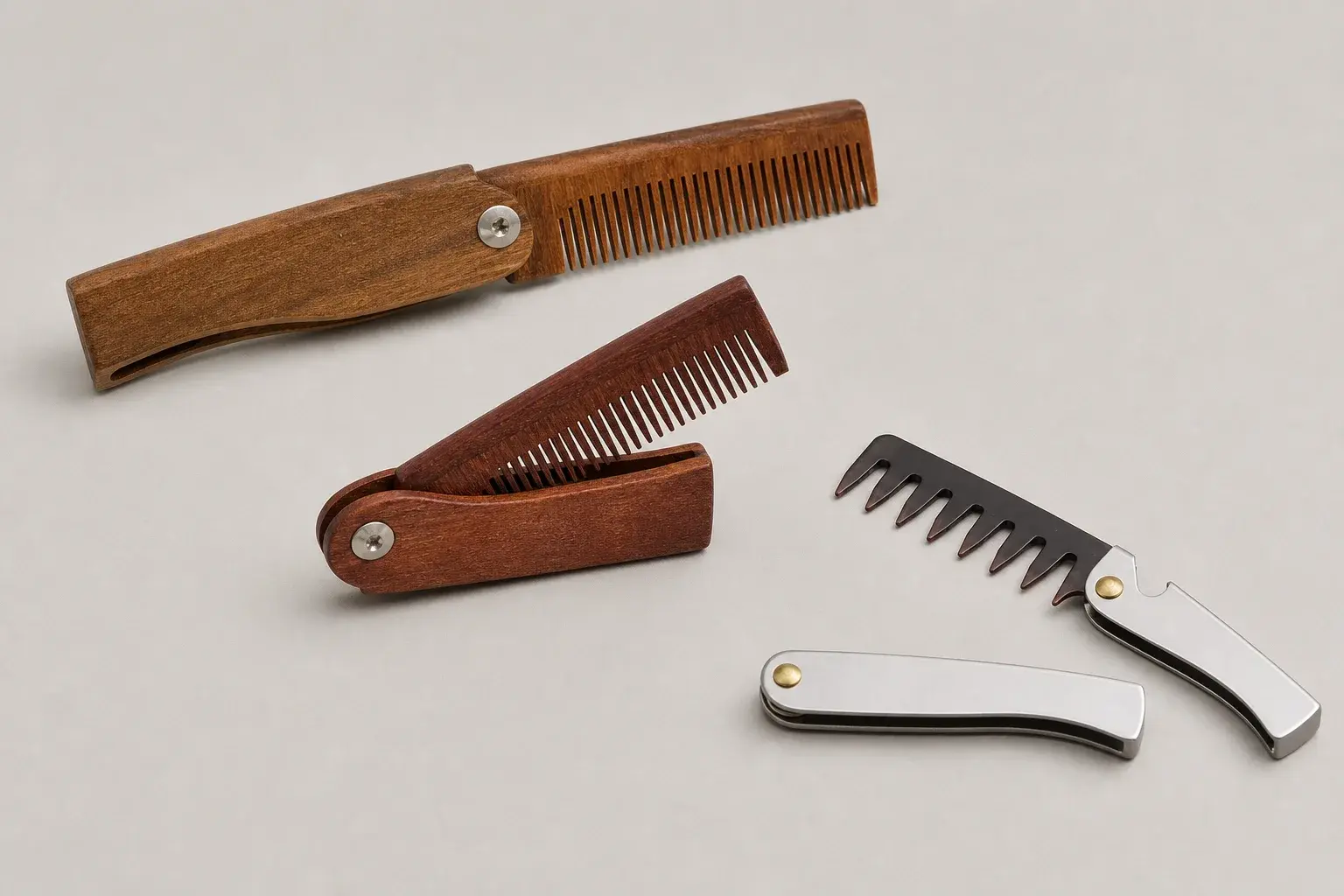
A folding comb includes a comb section, handle or cover, pivot, and the mating surfaces that control movement. Optional mirrors, inserts, decorative parts, or separate materials add more relationships to the assembly.
The sample needs to open, stop, align, close, and protect the teeth in the agreed way. Review visible gaps, unwanted movement, inner and outer edges, contact points, fasteners, and the surfaces revealed in each position.
A flat drawing communicates dimensions and geometry. The physical assembly carries opening resistance, stop feel, fit, balance, and movement. These checks belong together before cosmetic details become the main approval topic.
Draw the open and closed states separately
One overall length cannot describe a folding product. The open drawing should mark the working length, handle alignment, usable tooth area, pivot position, and intended stop position. The closed drawing should show folded length, width, thickness, and clearance around the protected teeth.
Add the component relationship around the pivot. Show how the comb enters the handle or cover, where surfaces approach each other, and whether any tooth can contact the enclosure during movement or in the final closed position.
The pocket format needs a different paired drawing. Show the fixed comb inside its proposed protector and mark the internal fit, insertion direction, seams or closure, exposed removal area, and any outer kit limits.
Compare the development work behind each format
| Decision | Pocket comb | Folding comb |
|---|---|---|
| Compact structure | Fixed comb body | Comb and cover or handle joined by a pivot |
| Tooth protection | Separate sleeve, case, pouch, or pack | Closed assembly plus any outer pack |
| Critical drawings | Comb and paired protector fit | Open state, closed state, pivot, stop, and clearances |
| Physical sample focus | Working length, edges, insertion, removal, and fit | Those product checks plus movement, alignment, and assembly |
| Branding views | Comb, protector, and outer pack | Closed exterior, open interior, comb section, and outer pack |
The table helps scope the brief. Exact tooling, component, tolerance, test, quantity, and timing decisions remain project-specific.
Protect usable tooth length inside the compact body
Closed size is easy to compare because it fits neatly into a specification table. The user works with the open comb and its available teeth. Record both dimensions and keep enough length for the named grooming task.
A fixed pocket comb may devote most of its body to teeth and spine. Its protector sits outside that body. A folding comb spends part of the open length on the handle, pivot, overlap, stop, or optional mirror. The handle may improve grip and tooth protection, though it can also reduce the tooth area available within the same carry envelope.
Choose the fine, wide, or mixed tooth layout before finalizing the outside size. Test the proportions on a physical sample, especially when the concept also asks for a large logo, mirror, long handle, or several tooth zones.
Define the pivot, stop, and tooth clearance
The pivot position affects closed size, open alignment, handle length, tooth coverage, and balance. The stop position determines where the comb settles during use. Clearance keeps the comb section, teeth, handle, fastener, and any mirror surround from interfering with one another.
Mark these points on the assembly drawing and compare them with the physical sample. Open and close the product through its intended path. Check alignment at the working position, tooth coverage in the closed position, visible gaps, fastener condition, and unwanted movement.
If the order needs a torque, cycle, or repeated-operation requirement, define the method, conditions, sample scope, and acceptance rule before production. One hand sample can show the immediate feel and function. It cannot support an undeclared life-cycle claim.
Match materials to the complete construction
Pocket combs can be reviewed in selected wood, bamboo, cellulose acetate, and plastics according to the design. Folding projects may use molded plastics, acetate, wood, metal fasteners, mirrors, or other confirmed combinations. Suitability depends on the component geometry and assembly route.
List the material and finish of every part. Review molded surfaces and color with the selected resin and tooling route. Review acetate sheet, machining, edge polish, and assembled relationships together. Review wood grain, surface finish, pivot area, and any attached hardware on the complete product.
Mixed materials can move, wear, and appear differently around the joint. Any durability or compatibility conclusion needs order-specific evidence. The custom materials page helps identify the exact option, finish, and documents that should follow the project.
Review mirrors and added components as part of the assembly
An optional mirror changes the internal space, visible surfaces, fixing method, pressure points, pack, and inspection route. Mark its size, position, surround, orientation, and attachment on the drawing. Check it in both open and closed views.
Apply the same discipline to inserts, decorative plates, cases, and other attached pieces. Record the material, fit, edge condition, visible gap, alignment, and the evidence used for approval.
Inspect the complete sample after assembly. An individually approved comb insert, handle, or mirror does not show how those parts align or whether one component places pressure on another.
Place branding across the use states
A pocket comb can carry branding on the spine or body, and its sleeve, case, pouch, card, or box can carry a second artwork. Mark each version and method separately. Keep tooth roots, edges, grip, seams, and closures clear.
A folding comb presents different surfaces while closed and open. The outer handle or cover may carry the first visible logo. Inner surfaces, the comb section, mirror surround, and outer pack may add further placements. Show how the artwork reads in the intended closed orientation.
Approve every placement against the correct part, material, color, and process. A print sample does not approve later engraving, and an isolated flat part does not show how the logo aligns on the finished assembly.
Build the unit pack and kit around the approved product
A folding cover protects the teeth only inside the assembled product. The unit pack still has to protect the exterior, pivot, mirror, artwork, and any exposed edge. Check pressure points, insertion, removal, orientation, and movement inside the pack.
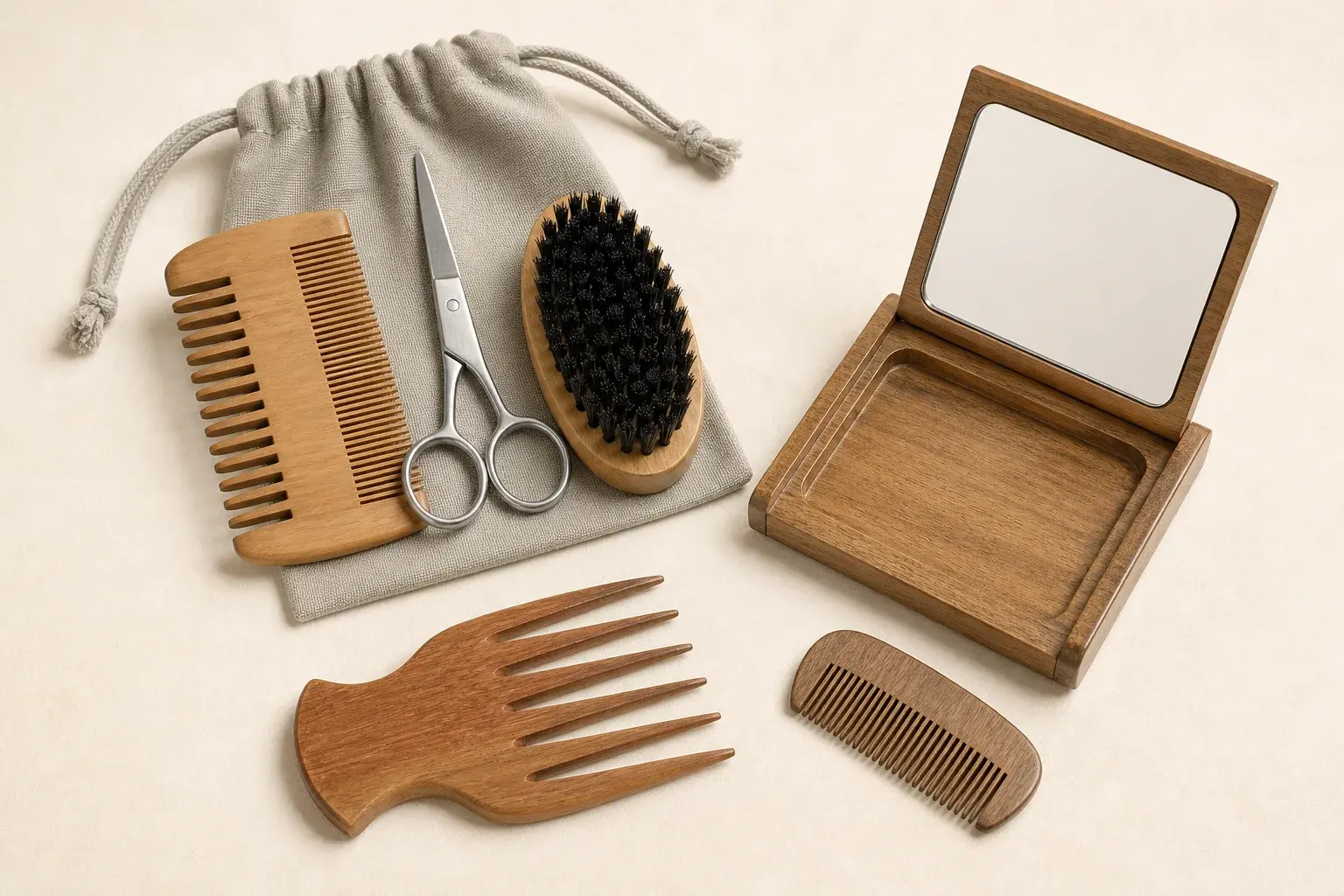
For a fixed pocket comb, the sleeve or case may be part of the sold product. The outer pouch, card, or gift box then has to fit the approved pair. For a grooming kit, list every item, protector, insert, label, artwork version, orientation, and count.
Approve structure and print in clear stages. A plain mock-up can show dimensions, opening, closure, and product fit. The printed sample carries artwork, color, labels, barcode data, and finished material. The packaging brief keeps unit, inner, and carton requirements separate.
Approve the physical sample through a complete use sequence
For a pocket comb, inspect dimensions, tooth zones, tips, roots, edges, surface, branding, and straightness where relevant. Insert it into the protector, remove it, and confirm that the fit follows the approved direction without catching or damaging the product.
For a folding comb, add opening, stop, alignment, grip, closing, tooth protection, component fit, visible gaps, unwanted movement, and any mirror or insert check. Repeat only the operation defined by the approved method. A formal repeated-use result needs a stated sample scope and acceptance rule.
Keep the identified sample with the open and closed drawings, artwork, material references, package specification, photographs, and written decision. If the pivot, thickness, tooth layout, mirror, logo, or pack changes, review the affected relationships again.
Choose the compact format from the work it creates
Choose a fixed pocket comb when the project benefits from a simple compact body, a generous tooth area for its size, and a separate protector that can be approved with the comb.
Choose a folding comb when the integrated cover, handle, opening action, or optional mirror is part of the intended product. Plan for assembly drawings, pivot and clearance review, physical function checks, and protection of the complete closed product.
When both concepts fit the range, compare them using the same carry envelope, grooming task, tooth layout, material direction, branding needs, kit contents, and approval scope. The differences will then appear in the product structure and work required to prove it.
Prepare the compact-comb brief
Send the intended use, maximum carry dimensions, usable tooth length, tooth layout, fixed or folding direction, material preference, protector or pivot concept, mirror option, quantity, artwork, kit list, packaging, destination, and required documents.
For a pocket project, include the comb and protector drawing. For a folding project, include open and closed views with pivot, stop, alignment, clearance, and component details. Mark fixed, preferred, and open points so feasibility changes remain visible.