
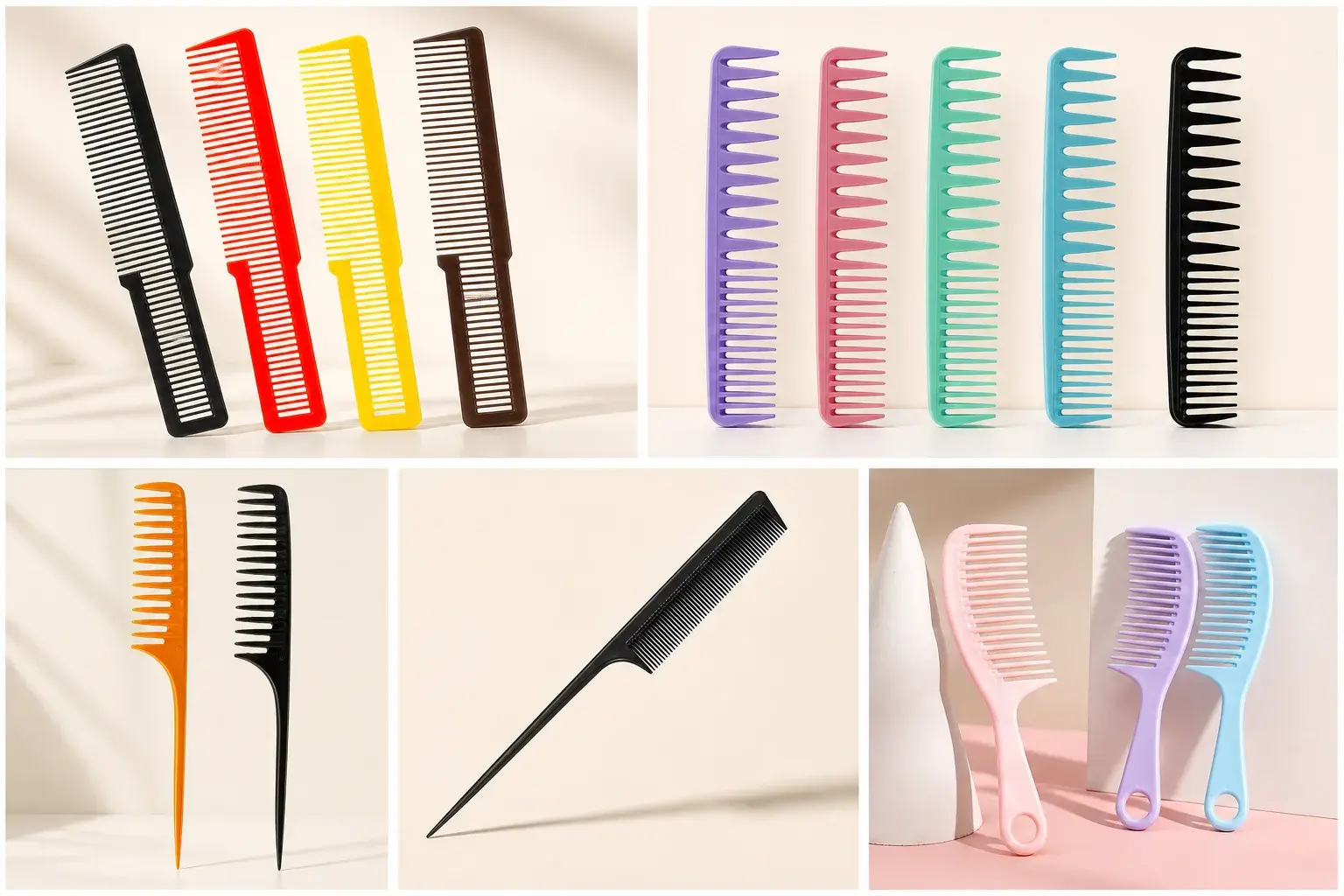
Resin selection often begins in the wrong place. A buyer sees ABS, PP, PS, nylon, or POM on a material list and asks which one is best. The useful answer depends on the comb that has to come out of the mold, the way it will be used, and the evidence required for that order.
LuxoComb lists ABS, PP, PS, nylon, POM, and recycled-plastic directions for project review. These names identify material families or sourcing directions. They do not settle the exact grade, mold fit, dimensions, tooth behavior, color, surface, testing, or destination-market requirements.
Begin with the finished product. Once the brief describes the comb clearly, the manufacturer can review suitable resin options and explain what still needs a sample or test.
Begin with the job the comb must do
A cutting comb, tail comb, wide-tooth comb, detangling comb, folding comb, hotel comb, and promotional comb place different requirements on a molded part. Their teeth, handles, pivots, surface, branding, packaging, and expected use can differ.
Write down where the comb will be used and what it must do there. Record professional or general grooming use, dry or wet conditions where relevant, expected heat or product contact, the required tooth pattern, the handling direction, any assembly, and the functional check that will decide whether the result is acceptable.
Words such as “strong,” “flexible,” and “heat resistant” leave too much open. Name the part that must flex, the condition it will meet, and the result it must retain. If the use condition is still unknown, keep the material choice provisional.
Describe behavior through the product
Rigidity and flexibility are properties of the finished design as well as the selected resin. A long, narrow tooth does not respond like a short, thick tooth made from the same material. The spine, handle, openings, and transitions also influence how the comb feels and returns after use.
Describe the intended action. A detangling structure may need controlled movement in a defined area. A cutting comb may need straightness and consistent tooth behavior along its length. A folding comb adds pivot movement, alignment, and closed fit to the review.
Approve these points on a physical sample with an agreed action. If the project needs material data, confirm the exact grade, test method, specimen, and whether the value describes raw material or the finished part. A family name alone cannot replace that scope.
Review the drawing, mold, and resin together
Tooth length, spacing, thickness, root shape, and the outside profile belong in the material review. The drawing tells the supplier where the part is thin, where it changes section, where it must remain straight, and which dimensions control use.
A new structure needs mold feasibility review. The manufacturer can then consider the drawing, proposed resin, parting details, surface, and any assembled components as one product. Engineering decisions should follow that project review.
For an existing mold, ask which resin or resin range has already been reviewed. A proposed substitution can change molding, dimensions, surface, color, or function, so the supplier needs to decide whether the part must be sampled and checked again.
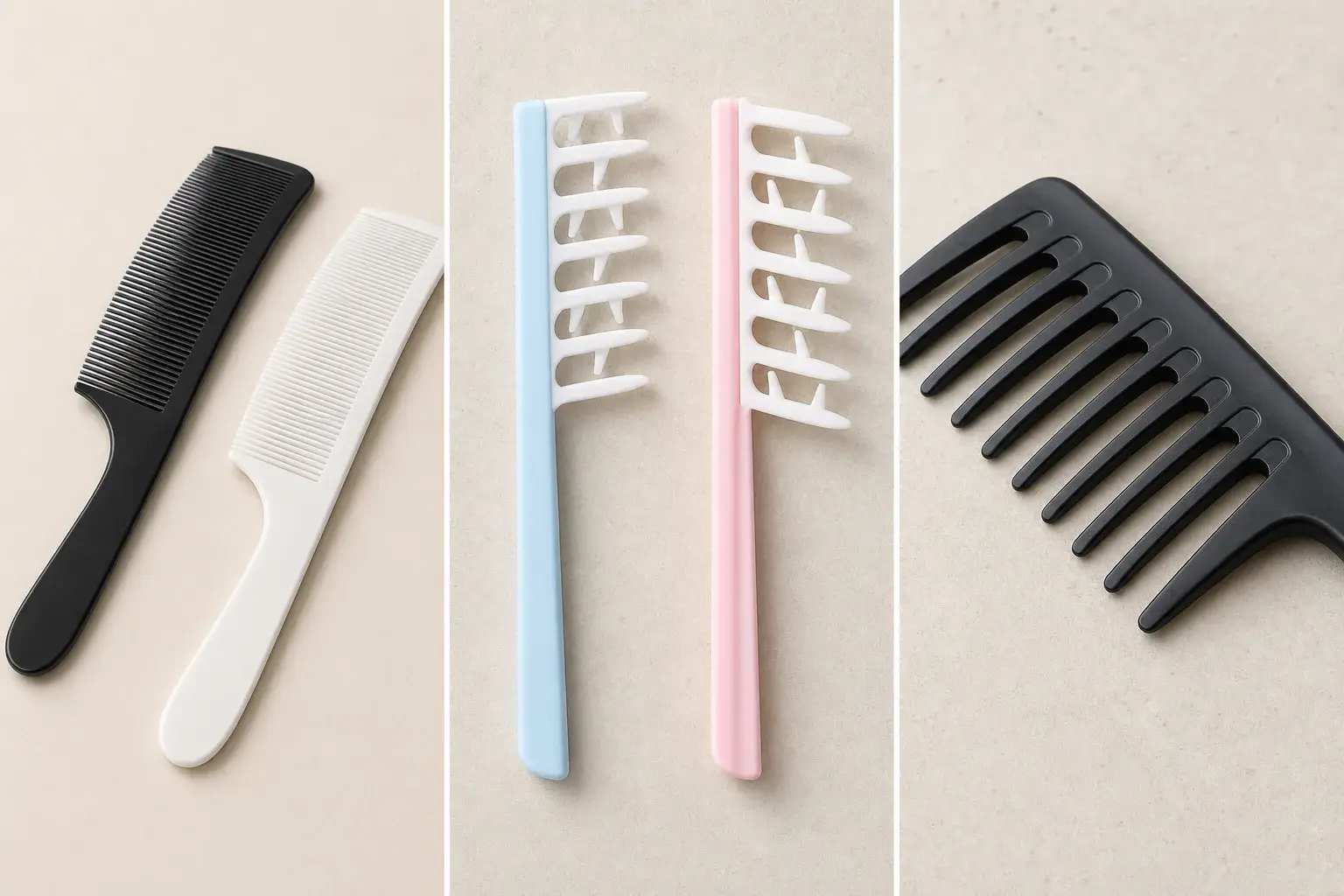
Turn heat and product contact into conditions
Professional comb projects may need material options reviewed for heat exposure. Identify the likely source, expected temperature when known, distance, duration, and whether the exposure repeats. This gives the supplier a condition to assess and a starting point for any required test.
Product contact needs the same care. Name the salon products, cleaners, oils, water conditions, or other substances that matter to the intended use. A broad request for chemical resistance does not identify what the comb will touch or how long the contact lasts.
General resin data should not become a finished-comb guarantee. The result can also depend on the exact grade, color preparation, geometry, molding, aging, and test method. Agree any required test for the selected product and destination market.
Approve color and surface on the selected grade
Color and surface approval come after the material direction has been narrowed. Define the Pantone or physical color reference, solid or transparent direction, gloss, texture, and the viewing reference used for approval.
The same color preparation can look different when the resin, thickness, gloss, or texture changes. Approve color on the proposed material and molded surface. Keep the approved sample, color reference, resin identification, and finish with the order record.
Recycled-plastic directions add another question. Review the achievable appearance and the documents behind any recycled-content claim. The available evidence and color range depend on the proposed material, supplier, order, and requested scope.
Match branding to the finished surface
Screen printing, pad printing, and UV printing place artwork on the surface. Foil stamping, laser engraving, and other methods need their own surface and sample review. A molded-in logo belongs to the product geometry and can affect the mold decision.
Provide vector artwork with final size, position, color, and orientation. Check whether texture, curvature, openings, or the tooth field reduce the usable mark area. Approve the logo on the selected resin and finish.
If the order requires an adhesion, abrasion, or other durability check, agree the method and result before production. An improvised check at final inspection has no approved basis.
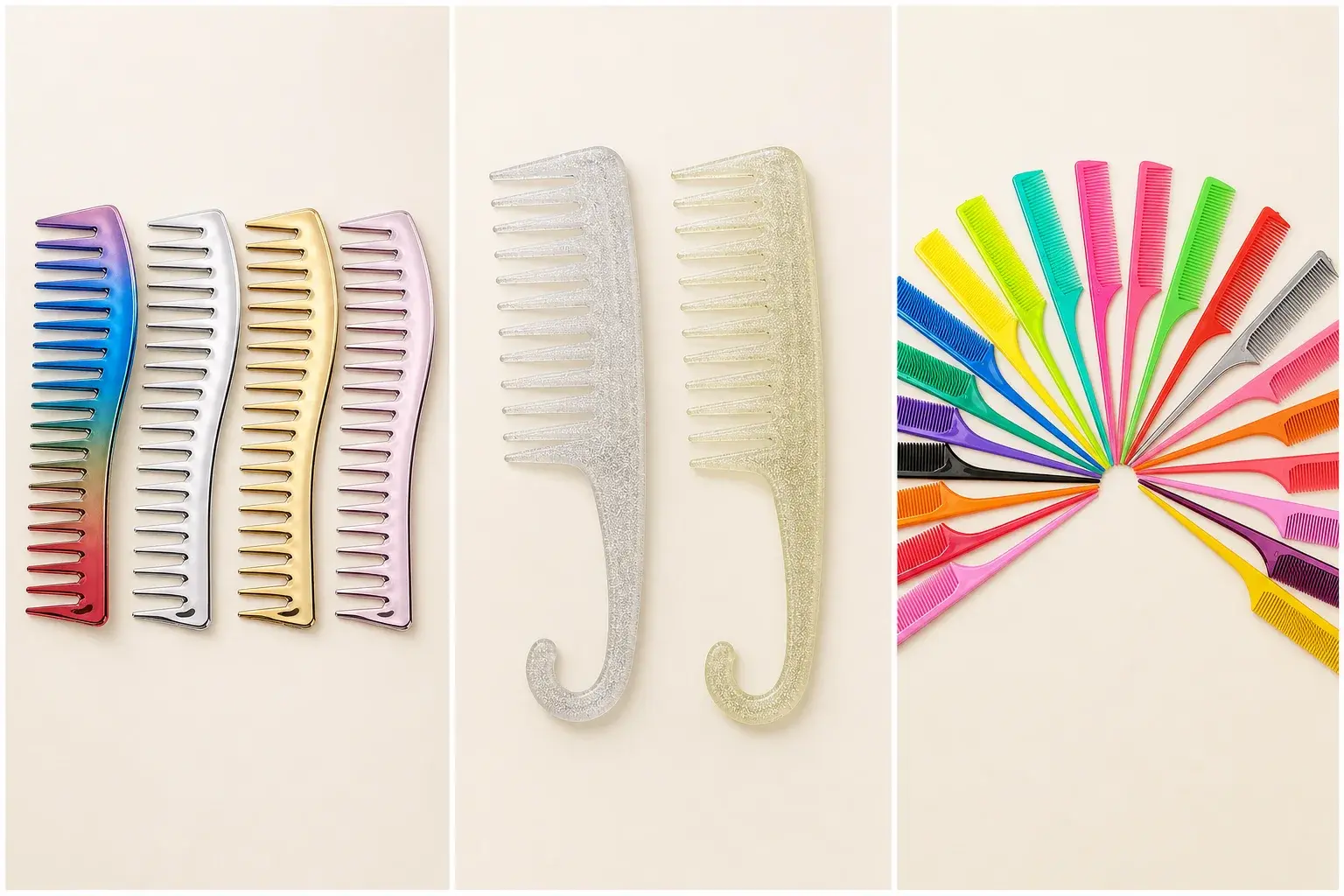
Ask what each sample proves
A resin swatch can show a material or color direction. A molded color plaque can show how that color appears on a particular material and surface. Neither one confirms the dimensions, tooth behavior, assembly, branding, or function of the finished comb.
A molded product sample lets the buyer inspect more of the finished comb. Review its material identification, drawing revision, dimensions, teeth, straightness, surface, color, logo, assembly, and pack where applicable. State which findings still need a separate test or document.
Keep the approved reference with the order. If the supplier later proposes another grade, color preparation, or process change, compare it with the reference and decide which approvals need to be repeated.
Request documents for a defined purpose
Start with the destination market, product use, age group where relevant, required standard, restricted substances, and report scope. Then state whether the evidence must apply to the raw resin, a molded sample, or the finished comb.
Available specifications, declarations, supplier records, and laboratory tests depend on the material, supplier, order, and requested scope. Testing can be arranged when required and confirmed after the brief is reviewed.
A generic request for every certificate does not state what the order must prove. Check the document identity, issuer, date, named material or product, test method, result, and relevance to the current order.
Use a resin selection worksheet
| Question | Buyer input | Confirmation method |
|---|---|---|
| Use | Product type and use condition | Brief and reference product |
| Geometry | Drawing, teeth, handle, assembly | Drawing and mold feasibility review |
| Behavior | Required rigidity, movement, or straightness | Molded sample and agreed action |
| Exposure | Heat, water, products, or cleaners | Project-specific material review or test |
| Appearance | Color, transparency, gloss, texture | Selected-grade color and surface sample |
| Branding | Method, artwork, position, durability | Branded sample and agreed check |
| Evidence | Market, standard, report scope | Relevant document or arranged test |
Complete the worksheet before asking the supplier to nominate a resin. The answers show which requirements can be checked on a molded sample and which need supporting documents or an agreed test.
Control resin changes after approval
Record the approved resin identification with the drawing, color, surface, logo, sample, and any test or document. This gives production and inspection one reference set.
A material substitution is a product change. Ask why it is proposed and which dimensions, appearance points, functions, or evidence may be affected. The answer determines whether a new sample, color approval, functional check, or document review is required.
Review the custom plastic comb development options and wider custom comb material range, then send the completed use, geometry, appearance, and evidence requirements with the drawing.