
“Please send all certificates” sounds like a short request. It leaves the supplier without the product version, material, destination, standard, sample, claim, or party that needs the evidence. A folder of unrelated files can arrive quickly and still answer none of the buyer's questions.
LuxoComb reviews available material specifications, declarations, supplier records, and testing requirements for each order. Availability depends on the material, supplier, finished product, destination, requested evidence, and agreed scope. Specific files and testing arrangements must be confirmed for the project.
The useful starting point is the decision the evidence must support. Once that is known, the buyer can name the item, choose a document or test, prepare the right sample, and keep the result tied to production.
Identify the decision the evidence must support
Ask who requested the evidence and what that party will do with it. The answer may support a material choice, importer review, retailer submission, customer specification, product claim, packaging artwork, restricted-substance request, or destination-market requirement.
Copy the request in its exact wording. Record the named standard, substance list, document type, report holder, language, issue-date limit, or other acceptance condition when the requester has supplied one. A paraphrase can quietly remove the detail that decides whether an existing record is acceptable.
Confirm the deadline and approval owner. The person who asks for the file may differ from the person who accepts its scope. Put both names or roles in the brief so a question can reach the right party before sampling or laboratory work begins.
Freeze the product, component, and version
Name the exact item being evaluated. Include the product name, model or drawing revision, material, grade where applicable, color, logo method, surface finish, assembly, accessories, and package version.
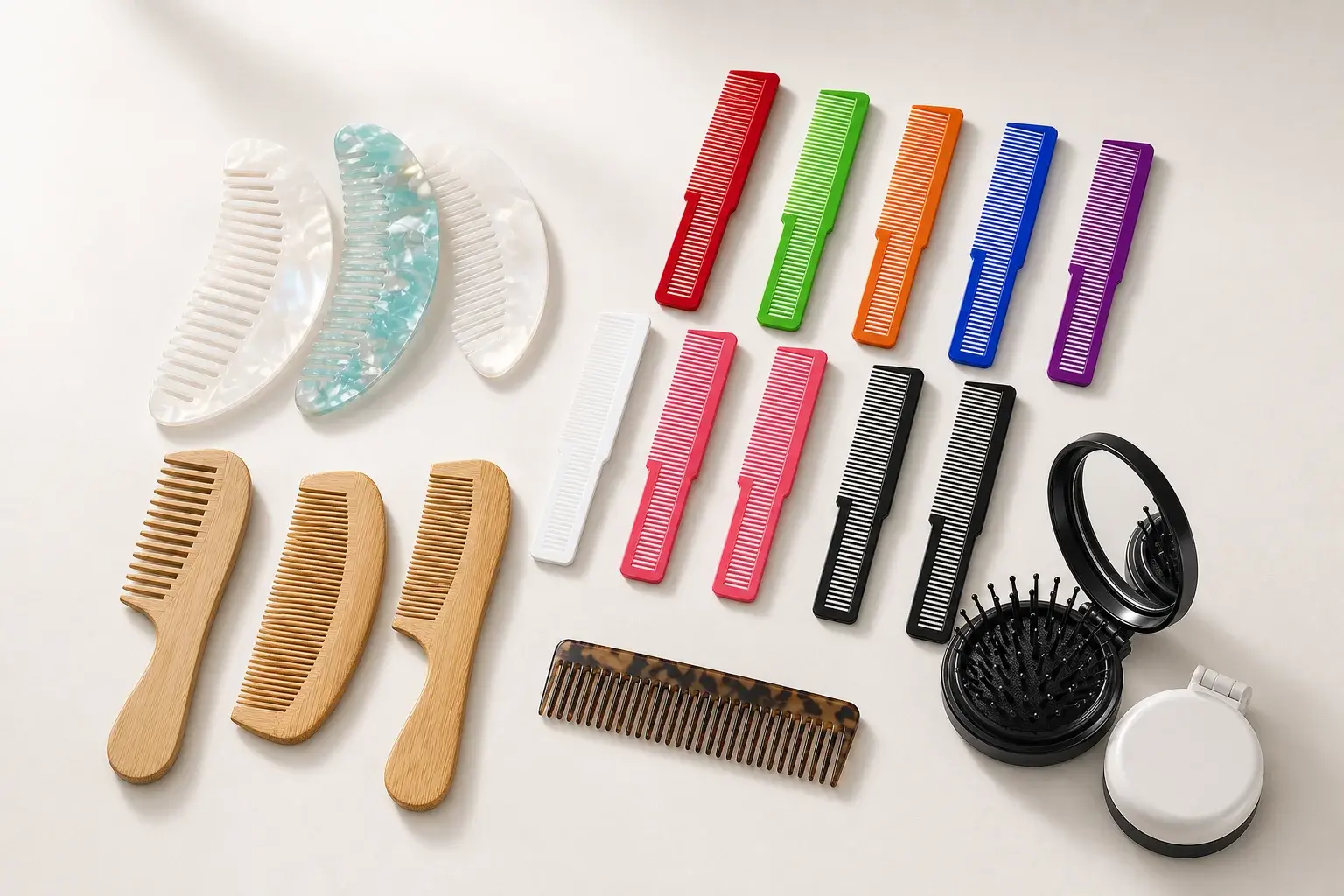
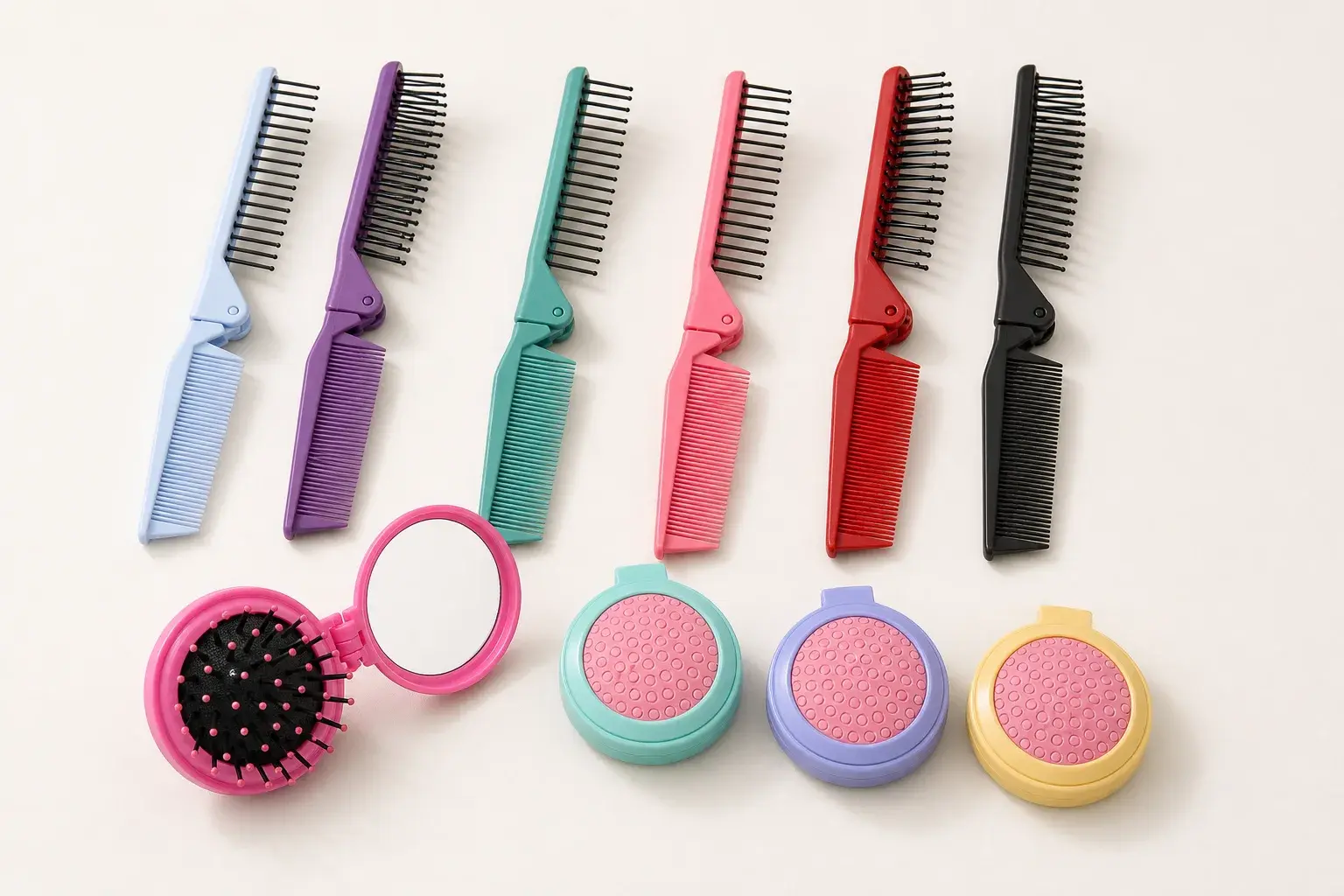
A custom comb may include raw resin or sheet, pigment, coating, printing ink, foil, adhesive, a mirror, pivot, brush pad, label, sleeve, pouch, or box. Build a component list when the construction contains several materials. Mark the component covered by each request.
The component list prevents one material record from being applied to unrelated parts. It also shows when the buyer needs a raw-material document, a declaration for a decorated part, a finished-product test, a packaging record, or several separate items.
Choose the record that answers the question
Document titles can sound interchangeable even when they answer different questions. Use the requested decision to select the evidence type, then read the scope of the actual file.
| Record | Question it may answer | Details to check |
|---|---|---|
| Material specification | What the input material is and which properties are listed | Producer, grade, revision, units, conditions, applicability |
| Supplier declaration | Which statement the issuer makes about a named item | Issuer, date, item, scope, basis, exclusions |
| Source or content record | Which origin or content statement is supported | Material, percentage where stated, parties, scope, validity |
| Test report | How the submitted sample performed under a named method | Laboratory, report number, sample, method, result, limitations |
| Inspection report | What an inspection found in a defined order or quantity | Order, product version, sample plan, criteria, findings, decision |
A document title alone does not establish relevance. Check the item and question named inside the record before adding it to an approval pack.
Separate input evidence from finished-product testing
Raw-material evidence can help during material selection. Forming, molding, cutting, polishing, coloring, printing, coating, assembly, and packaging can add materials or create a different evaluation need.
State whether the request applies to the input material, one component, a decorated component, the assembled comb, the unit pack, or the complete retail set. If it applies to several items, list each item and the evidence expected for it.
A report for one grade, color, model, or material combination may have a narrow scope. Ask the requester or responsible technical party whether the proposed production version falls within it. Keep that decision with the order record.
Write a complete test scope
A laboratory request needs enough information to identify both the question and the sample. Prepare the scope before a price or schedule is treated as confirmed.
- Product name, model, drawing revision, and product photographs
- Material, color, decoration, components, and packaging in scope
- Intended user and intended use where relevant
- Destination market and requesting party
- Named standard, method, or substance list supplied by the requester
- Sample quantity, production stage, identification, and dispatch route
- Raw material, component, finished product, or package scope
- Report language, holder, recipient, and required date
- Cost approval, result review, and decision owner
If third-party testing is required, confirm the laboratory, method, sample, timing, report arrangement, and responsible parties as part of the project. Testing availability, cost, and lead time depend on that confirmed scope.
Control the sample sent for testing
A report follows the sample submitted to the laboratory. Identify who selects that sample, who verifies it against the approved drawing and material, who labels it, who sends it, and who keeps the matching reference.
Record the model, drawing revision, material, grade, color, logo, component list, package, sample quantity, production stage, and dispatch date. Photographs can help show the submitted version, though they do not replace the sample description in the request and report.
Handle revisions carefully. If the material, pigment, coating, print, adhesive, component, or product construction changes after testing, ask whether the result still applies. The answer should come from the responsible requester, laboratory, or technical party for that requirement.
Read the whole report
Start with identity. Check the issuer or laboratory, report number, issue date, applicant or holder where shown, sample description, model, material, color, components, photographs, and dates received and tested.
Continue to the method and result. Confirm the named standard or procedure, edition where stated, condition, unit, limit, individual result, overall conclusion, comments, and any pages that define the sample or scope.
Read the limitations and notes before calling the file applicable. The word “pass” has meaning only for the submitted sample, named method, stated criteria, and report conditions. A familiar laboratory name cannot extend the result to another product version.
Link evidence to the approved production version
Keep a controlled reference set with the order. It can include the current drawing, component list, exact material identification, color, approved sample, artwork, packaging, applicable supplier records, test reports, and the buyer's acceptance decision.
Use that set during incoming, in-process, and final inspection. Incoming checks can confirm the specified material and relevant supplier record. Later checks can verify that the product, decoration, assembly, and package still match the version covered by the approval.
If the supplier, material, grade, color formulation, decoration, component, or package changes, review the evidence again. Record which document remains applicable, which question needs a new declaration, and which sample or test must be repeated.
Keep claims, artwork, and authorization together
A material, recycled-content, sourcing, or packaging claim should use wording supported by the applicable record. Link the approved wording to the correct supplier, material, component, production version, and document.
Review product and packaging statements separately. A material record for the comb body does not support paper, ink, coating, adhesive, or the complete pack. The packaging specification should identify any claim and the component it describes.
Certification marks and logos may have their own authorization and artwork conditions. Confirm the right to use a mark, the exact wording, placement, and evidence scope before approving artwork.
Plan cost, timing, and revisions
Document collection and testing can affect quotation and schedule. Ask which existing supplier records are available for the selected material, which new work is required, and when an approved production sample will be ready for any finished-product test.
Assign the costs before dispatch. Record who pays the laboratory, courier, extra samples, document translation, report changes, or retest. Also decide who reviews a draft sample description and who accepts the final result.
Plan for a result that needs action. The project record should state who reviews a finding, whether material or design work pauses, who approves a correction, and what evidence is required before production continues.
Prepare a request that can be reviewed
- Name the requester and the decision the evidence must support
- Attach the exact wording, standard, substance list, or claim requirement
- Identify the product, drawing, material, color, components, and package
- State whether raw material, component, finished product, or packaging is covered
- Name the document type, test method, issuer, laboratory, or report holder required
- Define the test sample, quantity, production stage, and dispatch responsibility
- Confirm cost, timing, result review, and approval owner
- Link the accepted evidence to the production version and artwork
Review LuxoComb's order-specific material and document boundaries, then send the complete requirement through the contact page before sampling or testing is scheduled.
Questions about documents and tests
Related guides and services
- Review order-specific sustainability and document boundaries
- Compare custom comb material options
- Define resin and evidence requirements together
- Build a custom comb quality inspection checklist
- Define evidence for a recycled-plastic claim
- Define professional-use conditions before requesting evidence