
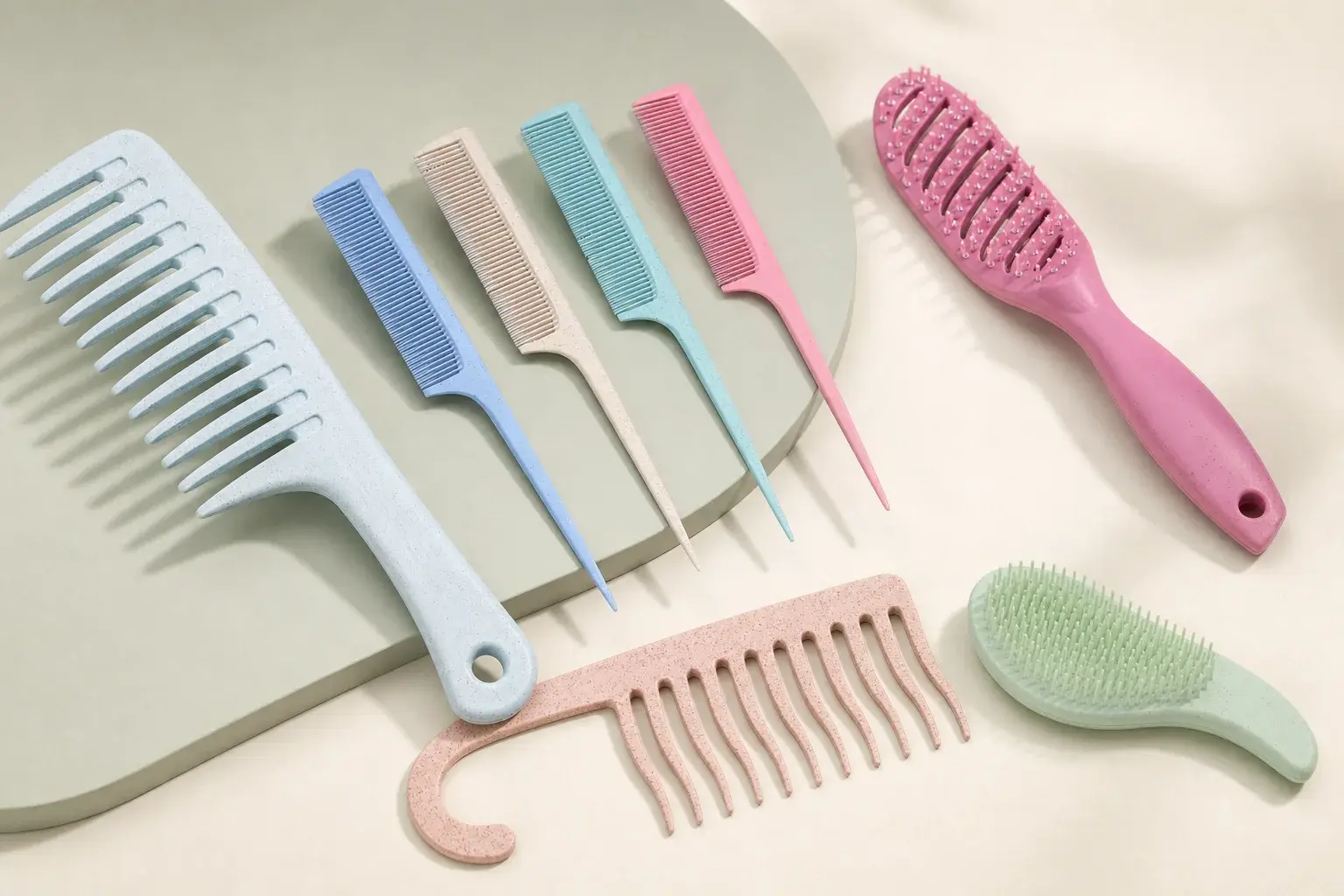
A purchase request can say “recycled plastic comb” and still leave every decision that matters open. It has not identified the base resin, source category, recycled-content percentage, component covered, color limits, evidence, or wording that will reach the customer.
LuxoComb lists selected recycled-plastic options for order-specific review. Availability depends on the material supply, comb shape, finish, color, quantity, and documents required for the project. Any recycled-content statement must match evidence for the material used in that order.
This creates two connected approvals. The material must suit the comb and its production route. The proposed claim must fit the scope of the available record. A good sample does not supply missing material evidence, and a material declaration cannot approve tooth finish or product function.
Write the claim before selecting material
Begin with the exact words the brand expects to publish. Record whether they will appear on the product page, retail package, sales sheet, tender document, or another customer-facing item. Add the destination market and the party that must accept the evidence.
Words that sound related can make different promises. Recycled content, recyclability, bio-based input, reduced packaging, and a broader environmental statement each need their own scope and support. Evidence for one term does not establish the others.
A useful claim brief identifies the following details.
- The proposed wording and every place it will appear
- The comb, component, material, or package covered
- The recycled-content percentage when one will be stated
- The source description required by the buyer
- The destination market and requesting party
- The declaration, record, test, or other evidence expected
Send this information before the material is quoted. The supplier can then check whether a suitable option and relevant documents are available for the same project.
Separate raw material, components, and packaging
A custom comb can contain more than the main body material. Depending on the design, it may also include a tail, pivot, mirror, coating, printing ink, foil, adhesive, label, sleeve, pouch, or box. The recycled-content request should name the item it covers.
A raw-material record applies within the scope written on that record. It does not establish the composition of added pigments, coatings, printed decoration, assembled parts, or packaging. Check those items separately when the buyer's requirement includes them.
Product wording should stay equally precise. A claim about the molded comb body should identify that body. A package statement should identify the relevant sleeve, card, pouch, box, or other pack component. This prevents a document for one item from being used to support the whole retail unit.
Record the material identity and source
The project still needs a base resin and grade that can be reviewed for the intended comb. Ask the supplier to record the material family, proposed grade, producer or source reference, recycled-input description, stated percentage and basis where applicable, and any lot or batch identification used for the order.
If the planned claim distinguishes source categories such as post-consumer and post-industrial input, include that distinction in the request. The supporting record should use a compatible description and identify the supply it covers.
Material availability also belongs in this discussion. Confirm the quantity available for sampling and production, supplier minimums, color preparation, expected ordering route, and what happens if the original supply cannot cover the order. A substitute needs review before it enters production.
Ask for evidence before sample approval
Request the document type and scope before sampling. Available specifications, declarations, supplier records, and test reports depend on the selected material and supplier. A file with an impressive title still has to match the order.
Read the whole record. Check the issuer, date, material name, grade or identifier, producer, recycled-content statement, calculation basis when stated, supply-chain scope, validity, exclusions, and the product or batch it can support.
Then connect the record to the proposed order. The drawing revision, material reference, color, production version, claim wording, and package artwork should point to the same approved choice. If third-party work is required, confirm the sample, method, laboratory, report holder, timing, cost, and acceptance requirement before placing it in the schedule.
Fit the material to the comb design
Recycled content does not replace product selection. The buyer still has to define the comb type, intended use, overall dimensions, tooth geometry, straightness, stiffness or movement, heat and product exposure, surface, branding, and any folding or assembly action.
Review the drawing and material together. Long fine teeth, wide teeth, mixed zones, tails, handles, openings, hinges, and thicker body sections create different requirements. Approval for one profile should not be carried into another profile without checking the changed geometry and finished sample.
Use the sample to examine tooth tips, roots, burrs, edges, straightness, surface, grip, logo result, and the agreed use action. Add any project-specific test with its method and acceptance rule.
Approve color and surface on a physical sample
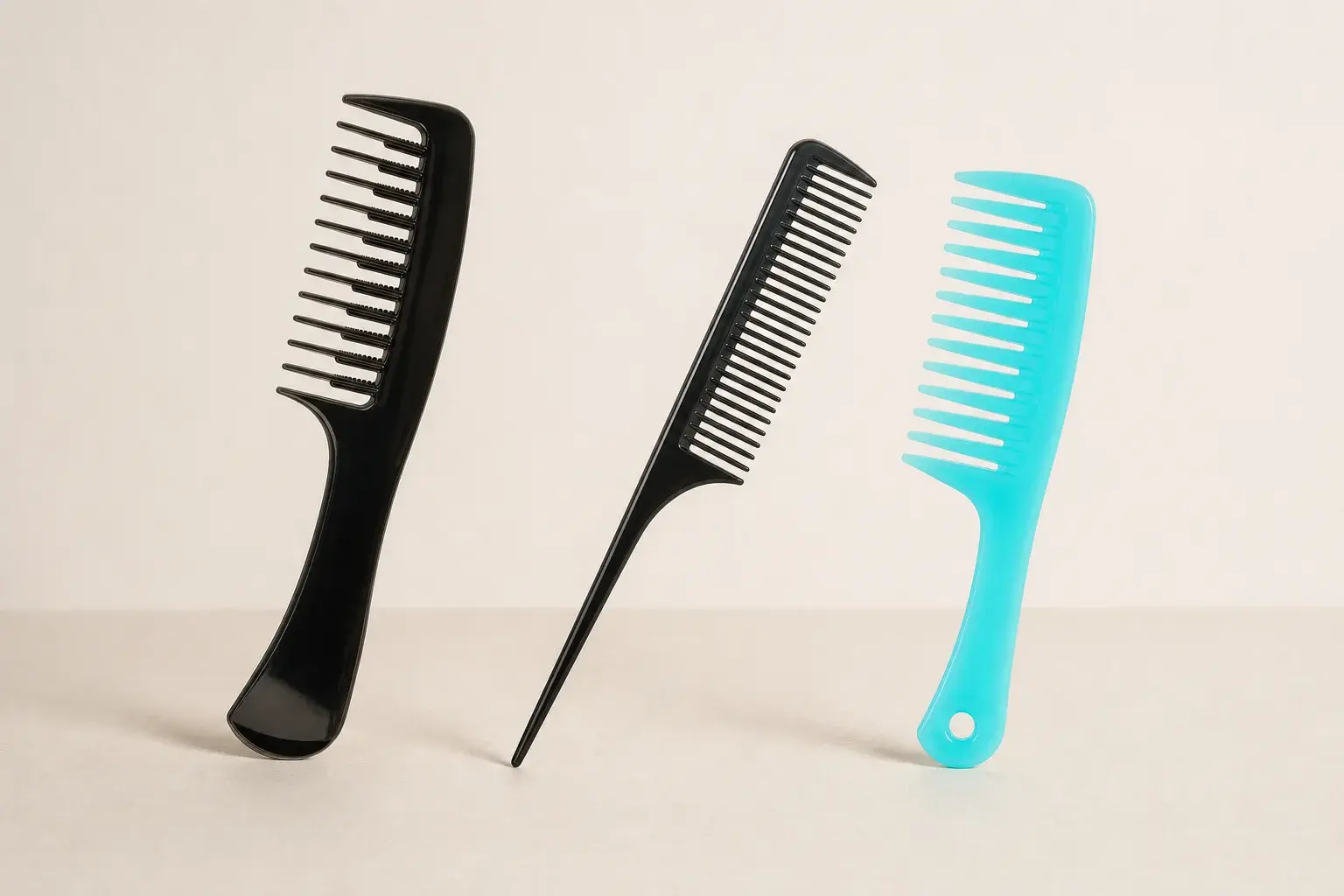
A screen color or general description cannot serve as the final appearance reference. Provide a physical standard or Pantone direction, then review what can be achieved with the selected material, formulation, mold surface, and finish.
Record the approved color, gloss, texture, visible inclusions, flow or surface marks, and any acceptable range. When visible variation is expected in the chosen supply, place representative limits beside the approved sample so production and inspection use the same reference.
A source, grade, content, formulation, or finish change can alter the result. Repeat the relevant color and appearance approval after a material change, even when the replacement carries a similar description.
Keep content evidence and product performance separate
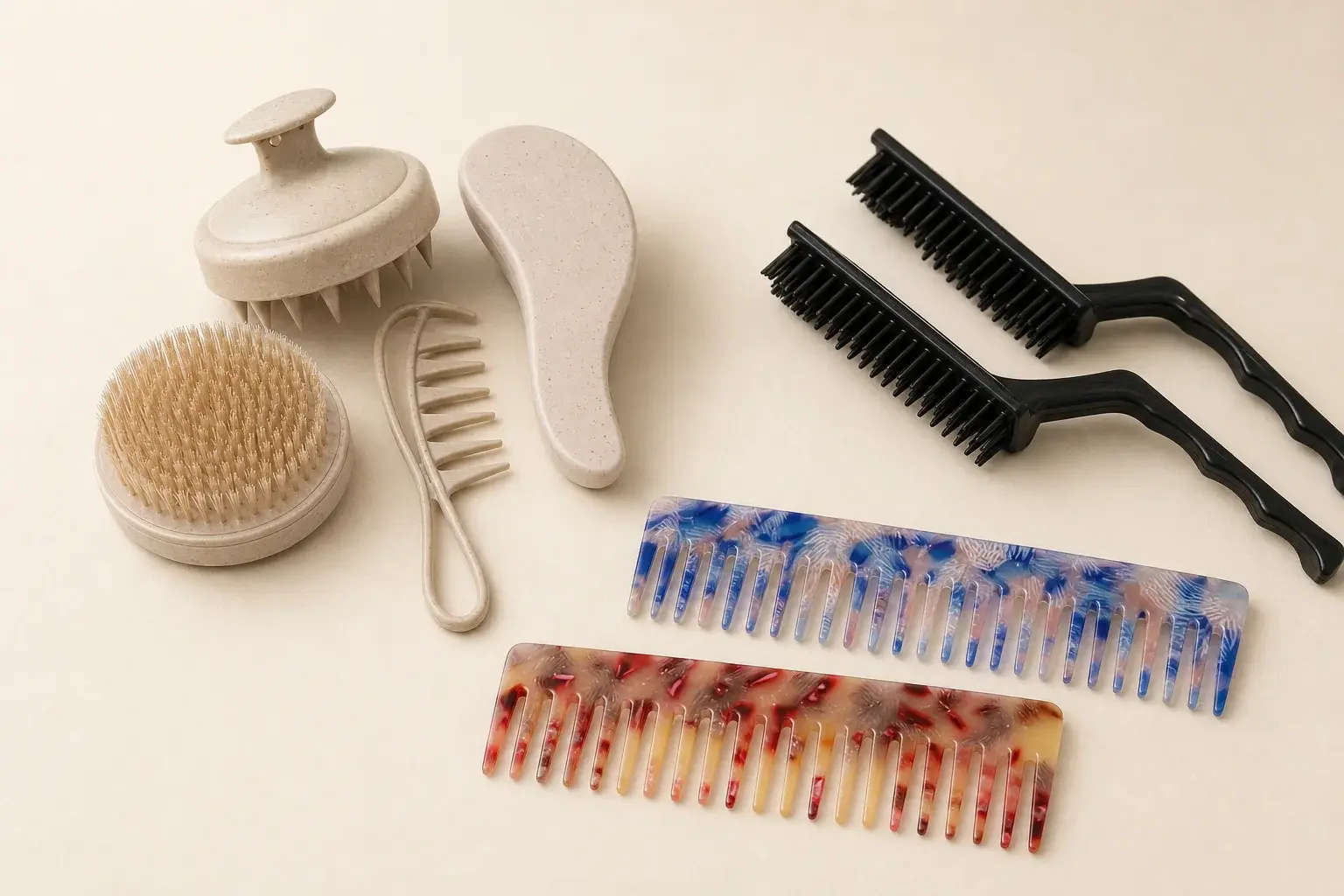
A recycled-content record answers a material or source question within its stated scope. Finished-comb checks answer questions about dimensions, tooth smoothness, straightness, movement, surface, logo, assembly, and packaging. Keep both sets of evidence in the approval file.
If the project needs heat, product-contact, cleaning, durability, restricted-substance, or other testing, define the exact requirement. State whether the test applies to raw material, a decorated component, or the finished product. Name the sample, method, condition, and acceptance rule.
The same separation helps when reviewing public claims. A passed functional check says nothing about recycled percentage. A source record says nothing about smooth tooth tips. Each record should be used for the question it was created to answer.
Carry the approved supply into production
Create one controlled reference set after approval. Include the drawing revision, exact material identification, recycled-content record, approved physical sample, color or appearance range, finish, artwork, packaging version, and inspection requirements.
Incoming inspection can confirm the material reference and relevant supplier record. In-process checks can follow the approved geometry, tooth work, surface, color, and branding. Final inspection can compare the completed comb and pack with the approved order references.
Record changes before the batch continues. A different source, grade, formulation, content statement, color preparation, or document may affect the claim, product result, or both. Identify which samples, checks, artwork, and records need fresh approval.
Review product and package claims separately
A recycled-plastic comb can be packed in a paper sleeve, pouch, card, or box. Each component has its own material description and evidence. Reduced packaging, recyclable packaging, recycled content, and certified paper sourcing describe different decisions.
Build a simple claim list for the retail unit. Put the comb body, added parts, labels, and each package component on separate lines. Beside each line, record the proposed words, supporting document, artwork location, and person responsible for approval.
Approve the packaging artwork after that check. Remove any percentage, source statement, or certification mark that lacks applicable evidence or confirmed authorization.
Prepare a request the supplier can answer
A clear request can be reviewed in one sequence.
- Send the comb type, drawing, intended use, quantity, and destination
- Write the exact recycled-content statement under consideration
- Name the product, component, or package covered by the statement
- State the required source category and percentage where applicable
- List color, surface, geometry, function, and testing requirements
- Name the document, issuer, scope, or buyer requirement that must be met
- Approve the material, physical sample, claim wording, and artwork
- Carry those references into purchasing, production, and inspection
LuxoComb's standard MOQ starts at 50 pieces. Published timing is 15 days for sampling and 28 days for production after sample approval. Recycled-material supply, supplier minimums, documentation, testing, revisions, packaging, and quantity can change the confirmed minimum and schedule.
Review the order-specific materials and packaging approach and wider custom material options before submitting the request.