
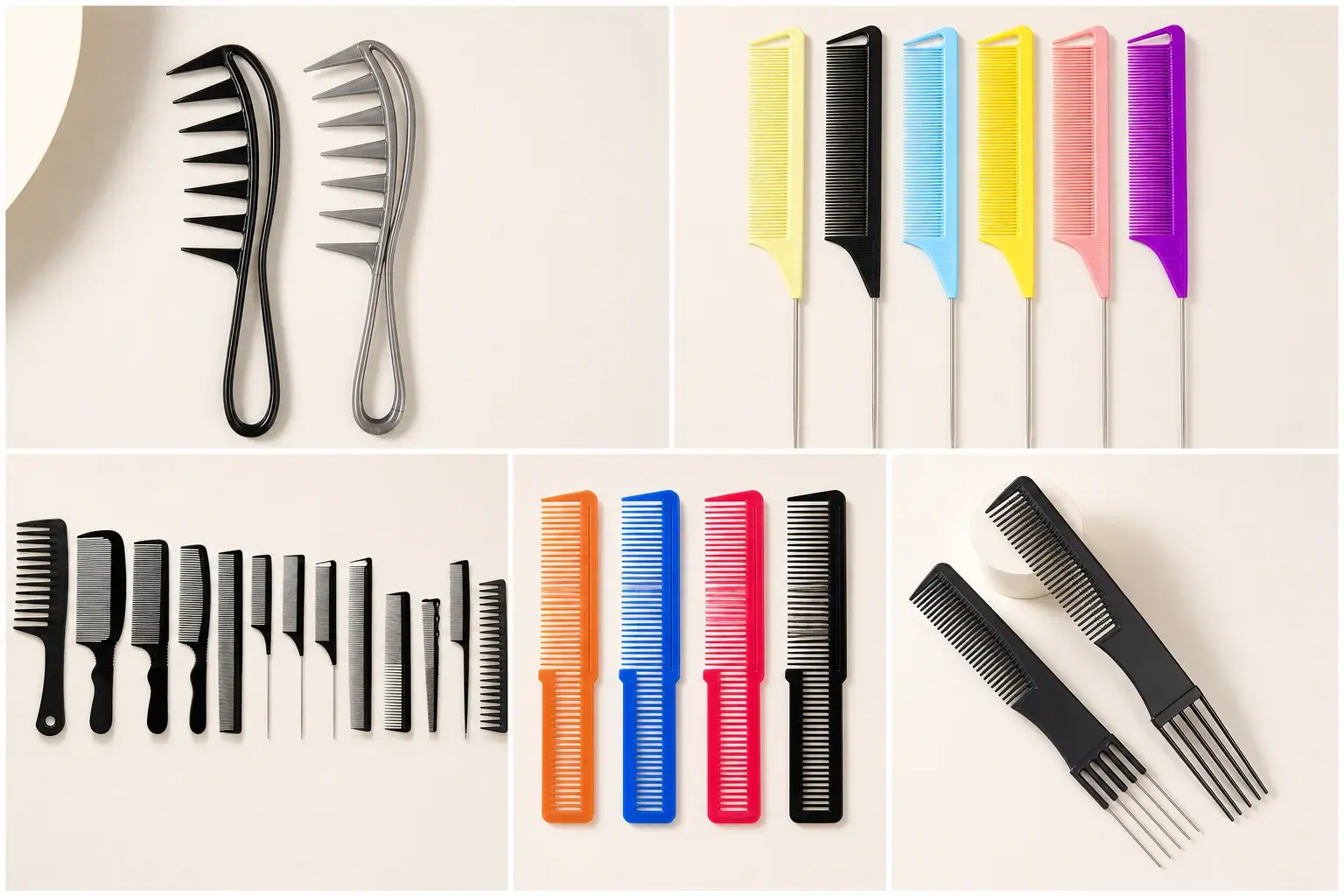
“Salon grade” sounds specific until a manufacturer has to build the comb. The phrase does not say whether the product is for scissor work, clipper work, sectioning, blow-drying, lifting, or finishing. It also leaves the teeth, straightness, heat exposure, surface, and cleaning conditions open.
Material choice becomes useful after those conditions are written down. A cutting comb, tail comb, and styling comb can share a brand and still need different geometry, handling, and sample checks.
LuxoComb can review plastic and other available material directions for professional comb projects. The exact material and grade must be confirmed with the drawing, use conditions, finish, and approved sample.
Name the professional task first
A cutting comb may be used for controlled sectioning and scissor or clipper work. Its brief can focus on overall straightness, length, fine and wide tooth zones, tooth consistency, grip, and the way the comb passes through hair.
A tail comb adds a separate sectioning tool to the product. Define the tail profile, length, straightness, material, transition into the handle, and the fine-tooth section. If the tail uses another component or material, identify the assembly and its required fit.
A styling comb can cover several professional profiles. The handle, tooth combination, lifting area, vent or opening where applicable, grip, and branding space need to follow the chosen design. Use the exact product name and task in the brief so “salon comb” does not stand in for the drawing.
Turn the task into working conditions
Describe what the stylist does with the comb. Record whether the product works on dry or wet hair where relevant, whether the hand changes position during use, which area must remain straight, which area may move, and what result will count as acceptable.
Then identify the conditions around that action. Record the heat source, distance, duration, repeated exposure, water, styling products, oils, and cleaners that belong to the intended use. Add storage conditions when the project has a specific requirement.
This gives the manufacturer a usable question. A request for a “professional material” or “high heat resistance” provides no product geometry and no pass condition.
Review tooth geometry with the material
Tooth length, spacing, thickness, root shape, and tip profile influence how the finished comb responds. Long fine teeth, mixed tooth zones, tapered profiles, tail structures, and ergonomic handles place different requirements on the drawing and material.
Mark the critical dimensions and measurement points. Terms such as fine tooth, wide tooth, and mixed tooth describe the layout, though the supplier still needs actual spacing, length, thickness, root, and transition details where they control function.
Approve the geometry on a physical sample. Inspect tooth tips, roots, burrs, and edges, then check straightness, surface, and the transition between tooth zones. A material approved for one profile still needs review when the tooth length, thickness, handle, or structure changes.
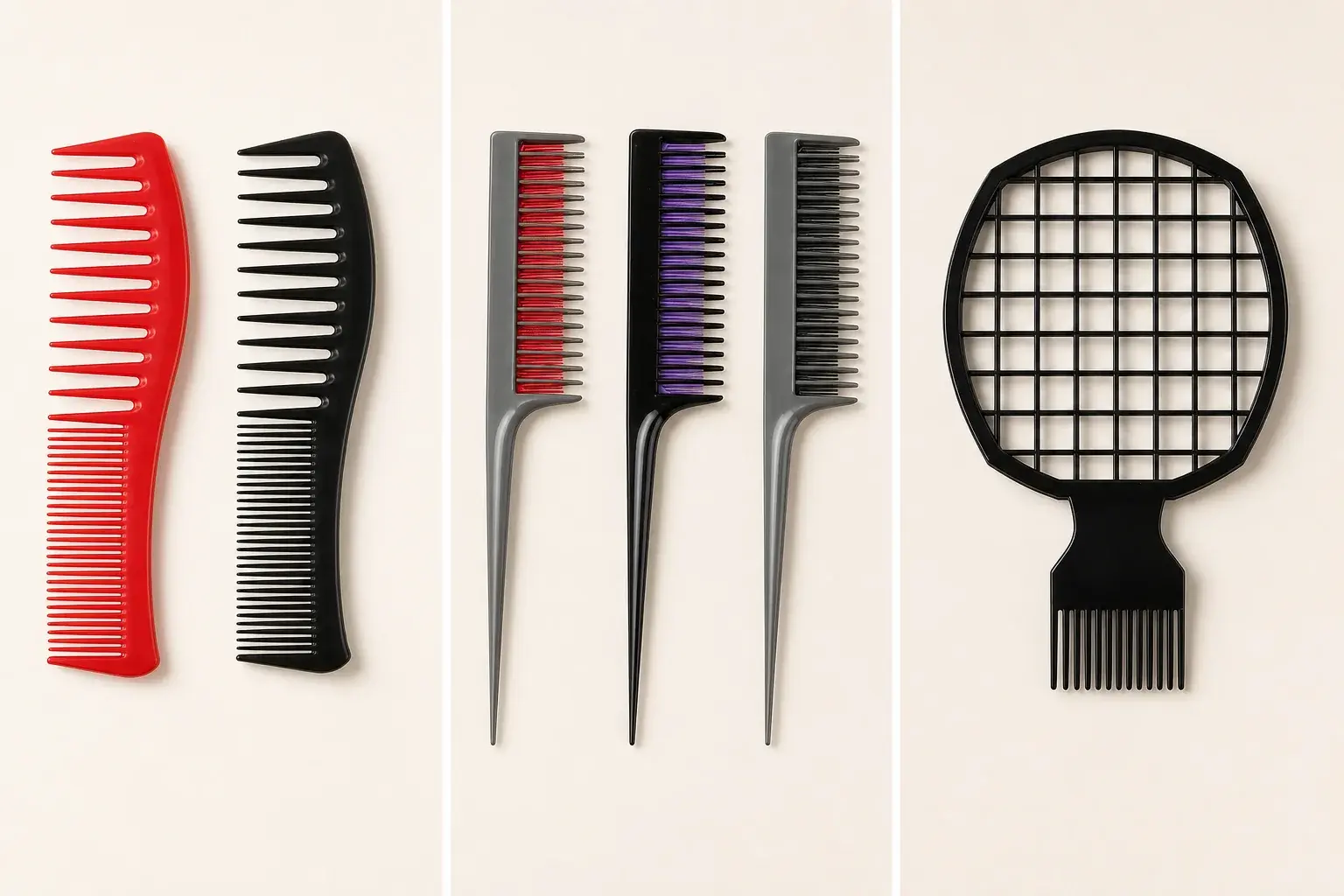
Describe rigidity and movement as actions
Rigidity and flexibility need a location and an action. A buyer can identify the spine, handle, tail, or tooth area involved, describe the movement expected during use, and state how the comb should return or remain straight afterward.
The material and geometry work together. Review the drawing, section thickness, proposed grade, mold, and sample together. Record the action used during approval so the expected movement is tied to the finished design.
If the project needs material data, confirm the exact grade, test method, sample type, and condition. Raw-material data and finished-comb behavior answer different questions.
Define heat, product contact, and cleaning
Some professional comb projects need heat-resistant material options reviewed. State where the heat comes from, the likely operating condition when known, duration, distance, and frequency. These details give the supplier a basis for material review and any requested test.
Name the products and cleaners that may contact the comb. A general request for chemical resistance does not identify the substance, contact time, repeated use, or cleaning method. The required review depends on the selected material and actual condition.
Material data or finished-product testing should identify the grade, sample, method, and condition. Testing availability and scope must be confirmed for the material, order, destination market, and stated requirement.
Approve grip, surface, and color together
Surface texture and finish can affect grip, cleaning, appearance, logo application, and how marks or residue can be seen. Define which areas the hand holds and which areas must remain smooth around hair and scalp.
Color can help distinguish products in a professional range, yet the direction belongs to the brief. Provide a Pantone or physical reference, specify gloss or texture, and approve the result on the selected material and molded surface.
Record every approved color version. One shared color name is too loose when several shades, materials, finishes, or product formats belong to the same range. Keep the material identification, color reference, finish, and sample together.
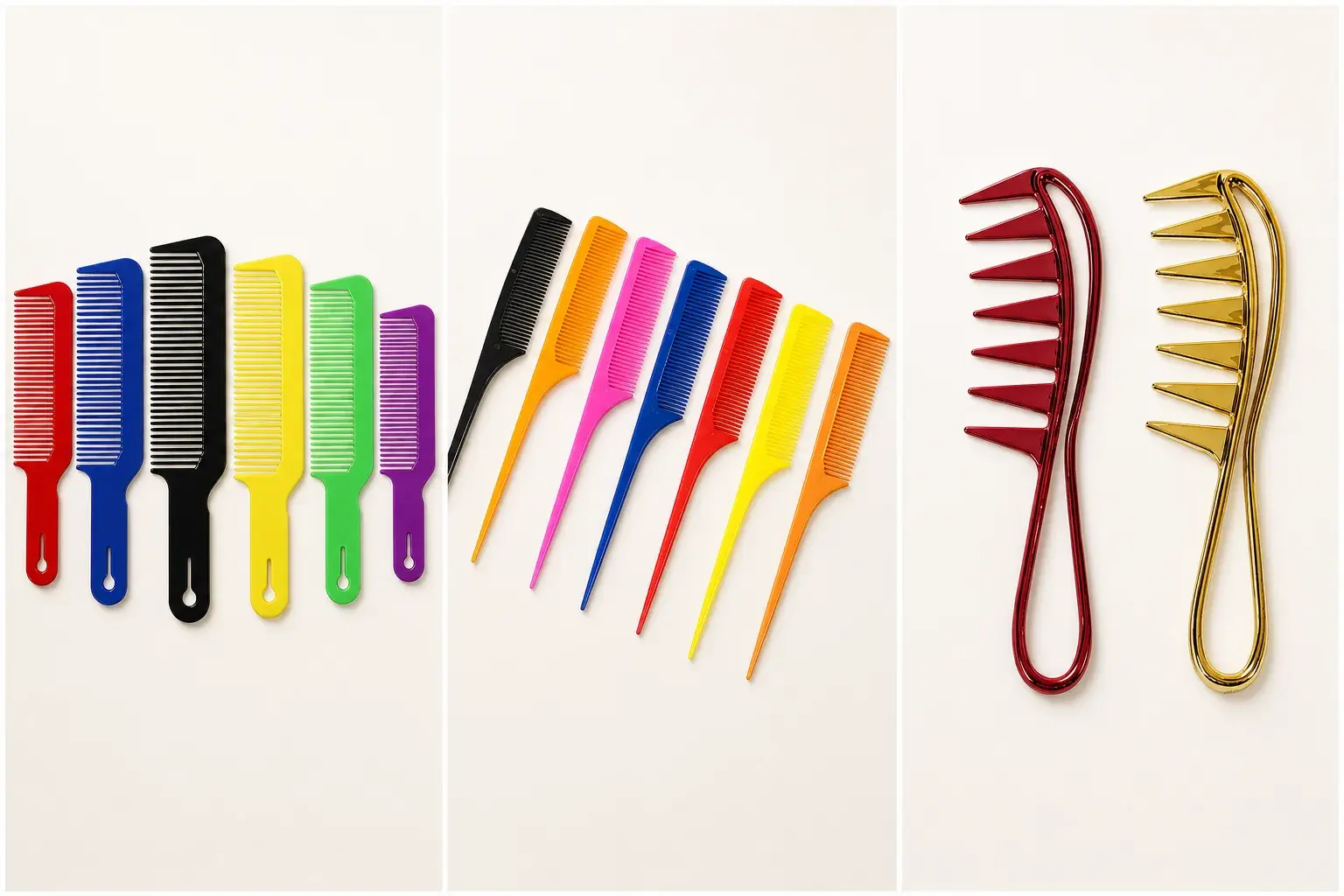
Place branding around the working areas
Choose the logo method after reviewing the material, surface, artwork, placement, and handling conditions. Printing, molded-in branding, foil, laser engraving, and other available methods need a relevant sample and method-specific review.
Mark the final size and position on the drawing. Keep the logo clear of teeth, grip areas, vents, openings, tail transitions, and other locations where it could interfere with use or become difficult to reproduce.
If appearance or durability testing is required, agree the method and acceptance rule before production. The approved artwork version and branded sample should stay with the order references.
Approve the finished comb in the right order
Begin sample review with identity. Confirm the material direction, grade where applicable, drawing revision, product type, color, artwork, and package version. Then move through the comb in the order a person handles and uses it.
- Measure the overall dimensions, straightness, handle, tail, and openings
- Check tooth-zone dimensions, spacing, roots, tips, and transitions
- Inspect burrs, edges, surface, texture, gloss, and color
- Perform the agreed rigidity, movement, grip, or use action
- Complete any agreed heat, product-contact, or cleaning check
- Review logo position, clarity, and method-specific result
- Check the unit pack and tooth protection
Write every accepted result into the approval record. A sample can show the comb in hand, while the drawing, method, and acceptance rule make the result repeatable.
Carry the approved material into production
For production inspection, use the approved drawing, sample, material identification, color, artwork, and packaging as one controlled reference set. Confirm project-specific tolerances, sampling levels, and tests before production.
If the material, grade, color preparation, geometry, finish, or logo method changes, review which approvals need to be repeated. A substitute that looks similar may still require dimension, surface, function, or document checks.
Compare the wider custom comb material range, then review the dedicated cutting, tail, and styling comb pages before sending the product brief.