

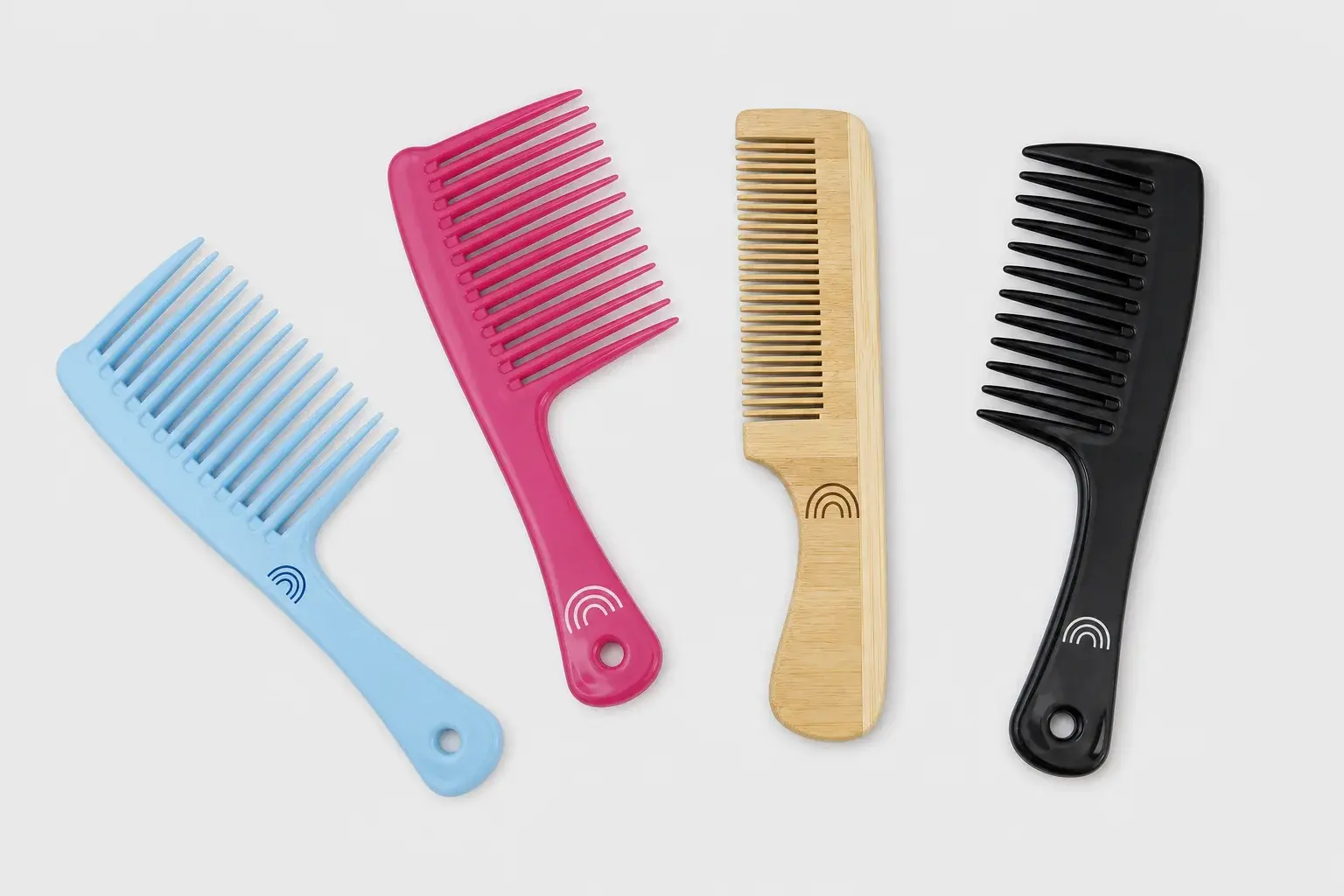
The same logo can become a bright surface color on one comb and a quiet material mark on another. Printing places ink or another reviewed color system on the surface. Laser engraving changes the surface and leaves the material to create the visible contrast, depth, and texture.
The choice begins with the finished appearance the brand needs. A defined color, white mark, or multi-color graphic points toward a suitable printing route. A material-led mark on confirmed wood, bamboo, or another tested surface may point toward engraving.
Method names settle only the first part of the decision. Material, finish, artwork detail, surface geometry, placement, handling, package contact, and the approved branded sample determine whether the chosen route works on the finished comb.
Start with the visible result the brand needs
Describe the logo as it should appear on the product. State whether the mark needs a defined color, several colors, solid coverage, fine detail, low contrast, visible depth, or a restrained appearance that follows the material.
Then place that expectation on the selected comb color and finish. A dark logo may disappear on a dark plastic. White ink may need enough opacity over a strong base color. An engraving that reads clearly on light bamboo may show a different contrast on dark wood or patterned acetate.
Include normal viewing distance and orientation. A retail logo may need to read while the comb sits in a pack. A salon mark may be viewed mainly in the hand. Folding and pocket products add open, closed, or sleeved views to the same decision.
Understand the printing routes before choosing printing
Logo printing covers several processes. Screen printing can be reviewed for suitable flat areas, strong simple marks, larger print zones, and limited-color artwork. Approval should cover ink color, coverage, position, and adhesion on the actual surface.
Pad printing can suit small artwork on curved or restricted product areas. Its usefulness depends on artwork size, surface geometry, ink, base color, fine detail, and required opacity.
UV printing can be reviewed for detailed or multi-color graphics on a compatible surface. Resolution, white-ink needs, adhesion, and abrasion expectations still belong in the sample plan. A request for printing should therefore name the required result and allow the route to follow the finished product.
Treat laser engraving as a material test
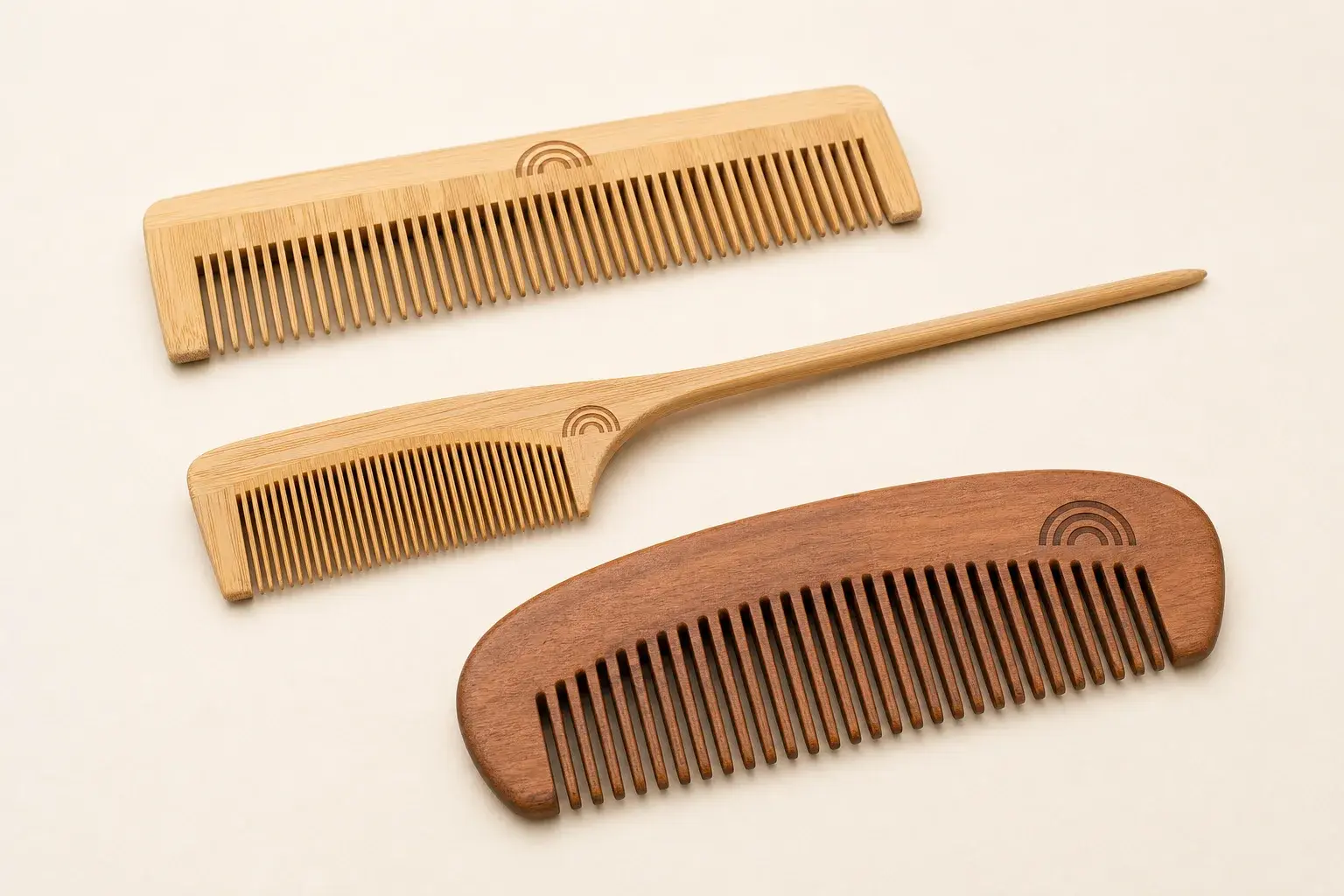
Laser engraving creates its visible result through the selected material and finish. It adds no Pantone ink color. Wood species, grain, tone, bamboo pattern, acetate color and pattern where tested, surface finish, artwork, depth, and process all affect the final mark.
Wood and bamboo are common candidates. Selected acetate surfaces or accessories need specific testing. Review contrast, depth, heat effect, edge quality, fine detail, and position on a sample made from the confirmed material and finish.
Natural and patterned materials can change from piece to piece. The approval should record the acceptable appearance range along with the selected reference sample. A single digital rendering cannot show that material response.
Compare the decision points for each route
| Decision | Printing | Laser engraving |
|---|---|---|
| Visible result | Applied color, coverage, and possible multi-color artwork | Material contrast, depth, and texture |
| Color control | Defined print color reviewed on the finished base surface | Appearance created by material, finish, and process response |
| Surface review | Ink fit, texture, curvature, opacity, registration, and adhesion | Compatibility, grain or pattern, depth, heat effect, and edge quality |
| Artwork review | Color separation, small detail, coverage, and print area | Legibility, line weight, filled areas, and available material contrast |
| Approval reference | Placement proof plus branded physical sample | Placement proof plus engraved material sample |
The table defines the review work. Exact compatibility, process settings, tolerances, durability checks, quantity, and timing remain specific to the order.
Match the method to the actual material and finish
A process that works on one flat plastic sample may behave differently on another resin, texture, coating, gloss level, or curved body. Printing therefore needs the selected material, surface, base color, artwork, and handling condition reviewed together.
Engraving carries the same need for specificity. Light wood, dark wood, natural bamboo, carbonized bamboo, and tested acetate surfaces can produce different contrast and edge character. Surface finish can change both appearance and the way the mark is judged.
Name the exact product material and finish in the artwork brief. If the material changes after logo approval, repeat the affected color, contrast, surface, and durability review.
Allow the surface geometry to influence the process
Mark the available logo area on the product drawing. Include its width, height, curvature, texture, nearby edges, holes, teeth, hinges, raised grips, seams, and assembled parts. The process needs a stable route into that area and a finished mark that remains clear.
A broad flat handle may offer several printing options. A small curved plastic surface may favor a reviewed pad-printing route. An engraved mark needs enough suitable material around its edges and enough visible contrast at the intended size.
Check the complete product state. A folding cover can hide or rotate a mark. A pocket sleeve can rub the logo during insertion. A hand can cover artwork placed in the grip. These relationships are easier to see on a physical sample than on isolated artwork.
Prepare artwork for the selected route
Send clean vector artwork with the target size, position, orientation, and approved color references. Add positive and reversed versions where useful. Identify the smallest text, line, opening, or enclosed space that must remain legible.
Printing may require color separation, stronger opacity, a revised white layer, or adjustment to detail that the selected area cannot reproduce. Engraving may require simpler shapes, heavier lines, or fewer small enclosed areas when material contrast and finished size limit readability.
Any adjustment to the original logo needs brand approval. Keep the accepted production file with its revision, physical dimensions, placement drawing, and branded sample.
Separate print color from engraved contrast
Printing can target an approved color reference. The applied result still interacts with the comb color, texture, gloss, opacity, coverage, and lighting. Review color and base product together on the branded sample.
Laser engraving follows another approval language. Record the expected contrast, depth, edge quality, and acceptable material variation. A Pantone reference cannot define the color of a mark created by grain, pattern, finish, and laser response.
Keep digital proofs in their proper role. They help approve artwork, size, orientation, position, and color separation. The finished surface carries the evidence for print appearance or engraved material contrast.
Place the mark in normal use, display, and packaging
Measure the logo from stable product edges, centers, holes, or other named geometry. Show its orientation while the comb is used and while it appears in the retail or amenity pack.
Keep the mark clear of teeth, contact edges, pivots, grips, and surface transitions unless the approved design calls for that relationship. Review open and closed views for folding products. Review comb and sleeve together for pocket or beard formats.
Package contact belongs in the placement decision. A pouch, tray, card, or insert can rub a printed surface, press an engraved area, hide the artwork, or make the displayed orientation confusing. Draw the branded product inside the proposed unit pack.
Define handling and durability through the real product
List the contacts the mark will face. These may include repeated hand contact, sleeve insertion, packaging rub, water, grooming products, cleaners, or another order-specific condition. Then agree on the sample scope, method, duration or repetition, and acceptance rule for the relevant check.
Durability follows the material, finish, preparation, marking process, placement, and use condition together. The words UV print or laser engraving cannot establish a universal result by themselves.
Keep promotional claims inside the evidence available for the order. A visual sample proves immediate appearance and basic handling. A repeated-use or chemical-resistance claim needs its own defined evaluation and record.
Approve the placement proof and physical sample separately
The placement proof should show the correct product view, logo revision, finished size, position, orientation, colors or separations, and clearances. It establishes where the artwork goes and which file production will use.
The physical sample confirms what the proof cannot carry. For printing, check color, opacity, coverage, clarity, registration, surface fit, position, and any agreed adhesion or handling result. For engraving, check contrast, depth, edge quality, heat effect, fine detail, position, and material variation.
Record both references with one written decision. The sample approval checklist helps separate approved points, conditions, and required changes before production.
Control production variation with the right references
Keep the production artwork, placement dimensions, approved colors, material and finish reference, branded sample, and agreed inspection points together. If the order contains several colors, logos, markets, or pack versions, give each combination a clear identifier.
Printed production can be reviewed for position, clarity, color, coverage, opacity, registration, and the agreed surface behavior. Engraved production can be reviewed for position, legibility, contrast range, depth, edge quality, and the allowed natural variation.
The logo placement and quality guide carries these criteria into sample and production inspection without treating print defects and engraving characteristics as the same thing.
Consider other branding routes when the product area is limited
Some projects fit a molded raised or recessed mark, foil on suitable packaging or accessories, embossing, debossing, a label, or branded pack better than either route in this comparison. Tooling, material, artwork, quantity, and surface geometry affect those options.
Moving complex color artwork to the package can preserve a simpler product mark. A product may also pair an engraved or single-color comb logo with a multi-color card, pouch, or box when both elements are approved as one branded presentation.
Prepare the logo method brief
Send the comb model, material, finish, product color, vector logo, target size, position, orientation, required print color or engraved appearance, quantity, package, destination, and expected handling.
Mark which points are fixed and which remain open for process review. Include any approved brand rules and the acceptance needs that matter to the order. This gives printing and engraving proposals the same product context before sampling begins.