
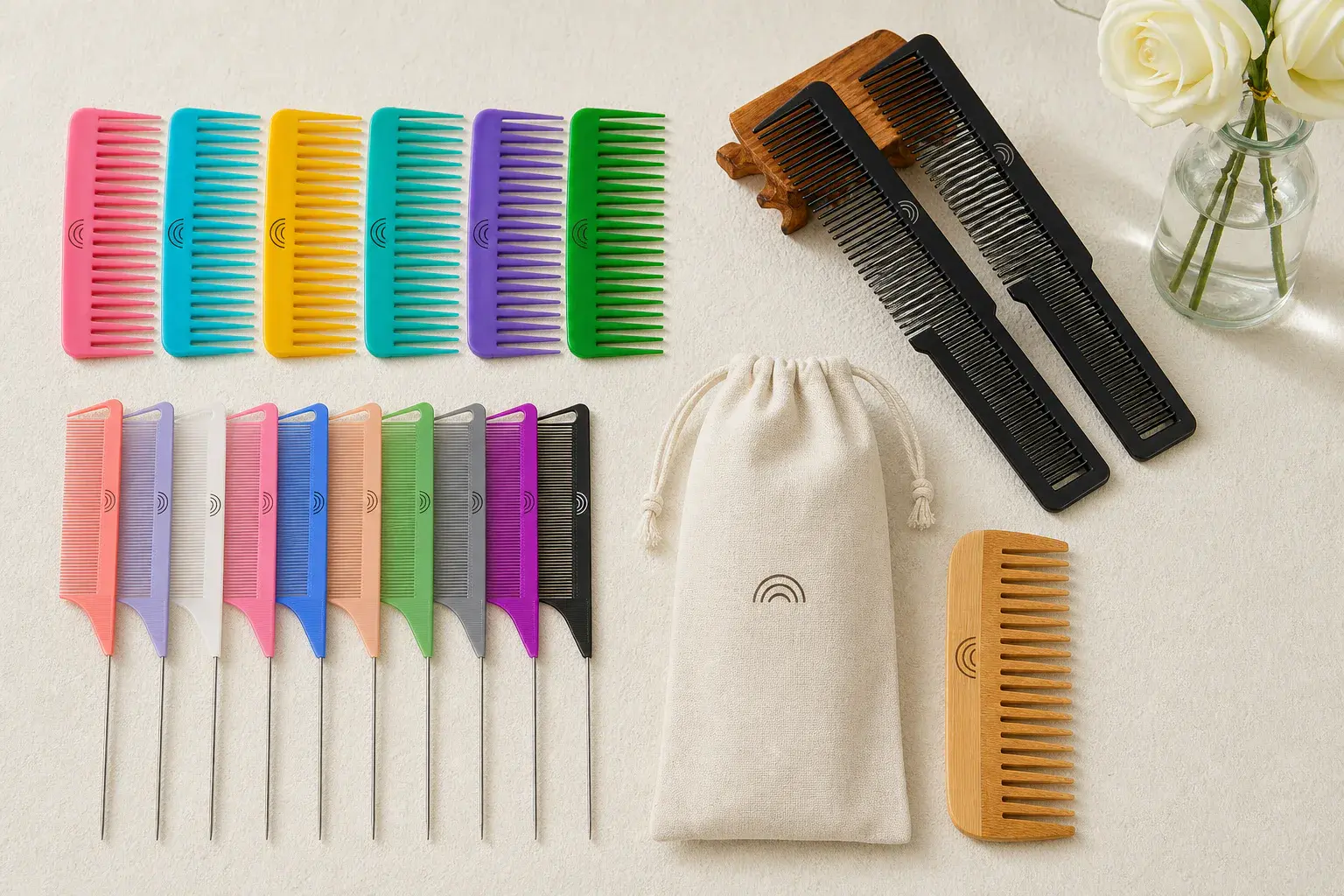
A logo can be perfectly centered in a PDF and still land badly on a comb. The printed mark may sit under the user's hand, drift toward a curved edge, lose a thin line or turn dull against the product color. None of those problems can be judged from the logo file alone.
A reliable comb logo quality check uses three references together. The production artwork identifies the correct design. The placement drawing says where it belongs and how large it should be. The approved branded sample shows what the chosen process looks like on the actual material and finish. Inspection becomes much clearer once each reference has a defined job.
Build one controlled reference set
Collect the current references before looking at the logo on the comb. The set should include the final production artwork, its revision, approved color references, finished logo dimensions, a dimensioned placement drawing, the selected marking method and the approved physical sample. Add the product material, body color, texture and finish because these conditions affect the result.
Give the set one clear identity. A screenshot in an email can help explain a comment, though it does not identify the vector file that production should use. If the artwork is still being prepared, finish the custom comb logo artwork review first. Inspection should never ask an operator or reviewer to choose between two files with similar names.
Separate the placement proof from the physical sample
The placement proof controls the product view, logo revision, finished size, orientation, color separation and position. It can show clearances from edges, teeth, holes, pivots and other features. That makes it the useful reference for answering where the logo belongs.
The physical sample answers another set of questions. It shows real color, opacity, coverage, line clarity, registration, engraved contrast and interaction with texture or grain. A proof may show a crisp white mark on black plastic. The sample reveals whether the selected process produces enough coverage and whether the polished surface creates distracting highlights. Keep both references because neither carries the whole decision.
Measure placement from stable product geometry
Describe logo position from named, repeatable product features. These may be a straight outside edge, the center of a handle, a hole, a spine or another stable point shown on the product drawing. Record the finished logo width and height along with the distances that locate it.
A vague note such as centered on handle leaves room for several interpretations when the handle curves, tapers or includes a hanging hole. A dimensioned callout gives production and inspection the same starting point. The exact placement tolerance remains specific to the design, material and marking process, so it belongs in the approved drawing or inspection plan.
Judge placement in the way the comb is used
Look at orientation while the product is held, displayed and packed. On a handled comb, check whether the hand covers or repeatedly rubs the mark. On a folding comb, review the artwork with the comb open and closed. A logo can read correctly in one position and appear upside down or partly hidden in the other.
Slide a pocket comb into its sleeve and remove it. Check whether the package hides the logo, changes the intended display direction or rubs the printed area. Keep artwork clear of teeth, pivots, grips and abrupt surface transitions unless the approved design deliberately uses that relationship.
Check finished size, lines and open spaces
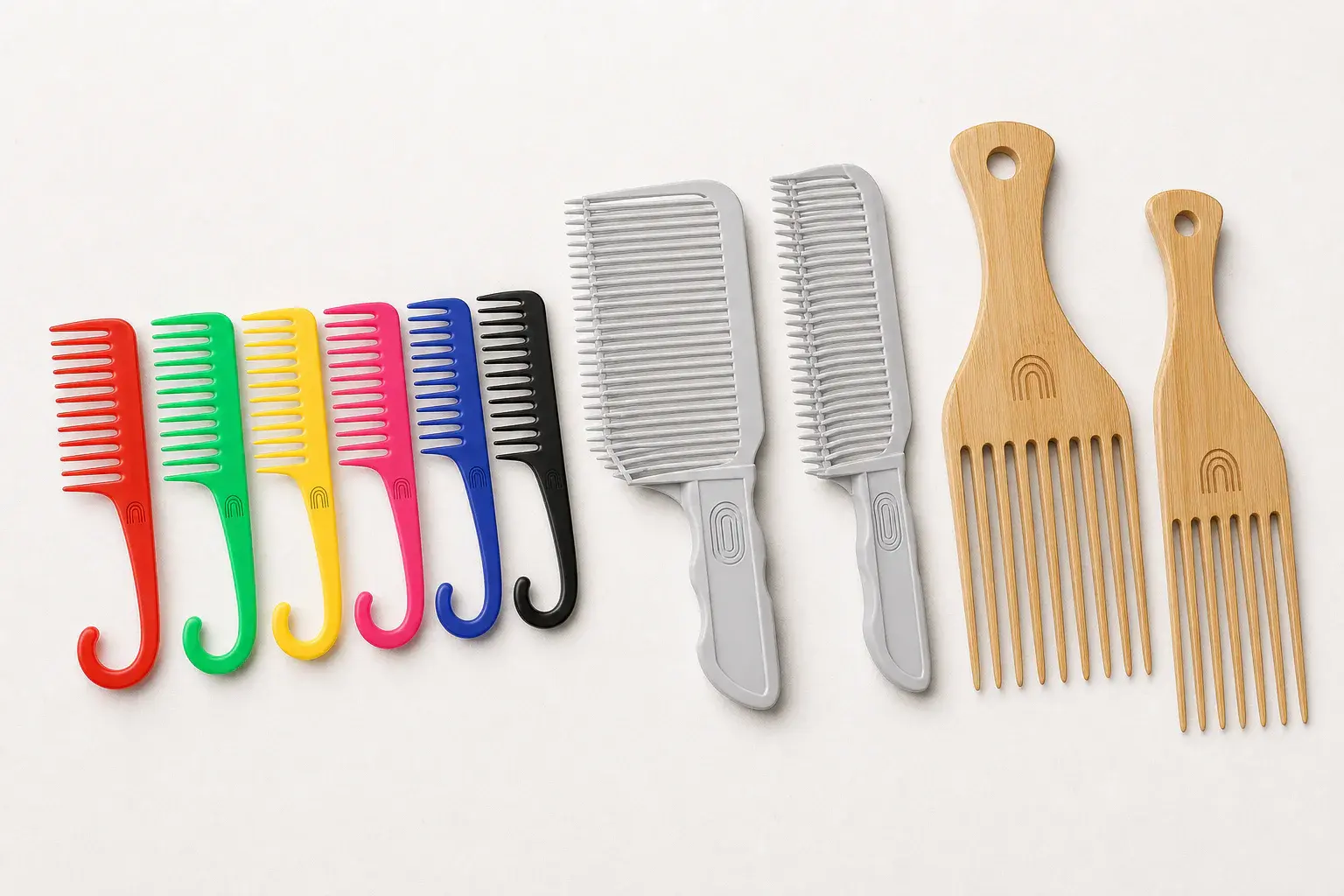
Compare the applied mark with the approved finished width and height. Then look inside the logo. Small text, trademark symbols, thin strokes, narrow gaps and enclosed spaces often reveal a process limit before the overall outline does. A line may break, two details may merge or a small opening may fill.
Use the production artwork for identity and the branded sample for achievable appearance. If a line needs to be thickened or a detail simplified, treat that as an artwork revision and send it through brand approval. A manufacturing adjustment should not quietly become a new version of the logo.
Review print color, opacity, coverage and registration
Compare printed color with the approved physical reference under the agreed viewing condition. Check the comb and logo together because the base color affects contrast and perceived ink color. Dark, transparent or patterned bodies can change how a printed mark reads even when the same color direction was supplied.
Inspect solid areas for even coverage and the intended opacity. Where artwork uses several colors, check the relationship between separations and look for visible registration shift. Review fine edges for feathering, bleeding or gaps. A glossy highlight can look like a missing area at one angle, so turn the product and confirm whether the mark itself is complete.
Let the material and finish shape the expectation
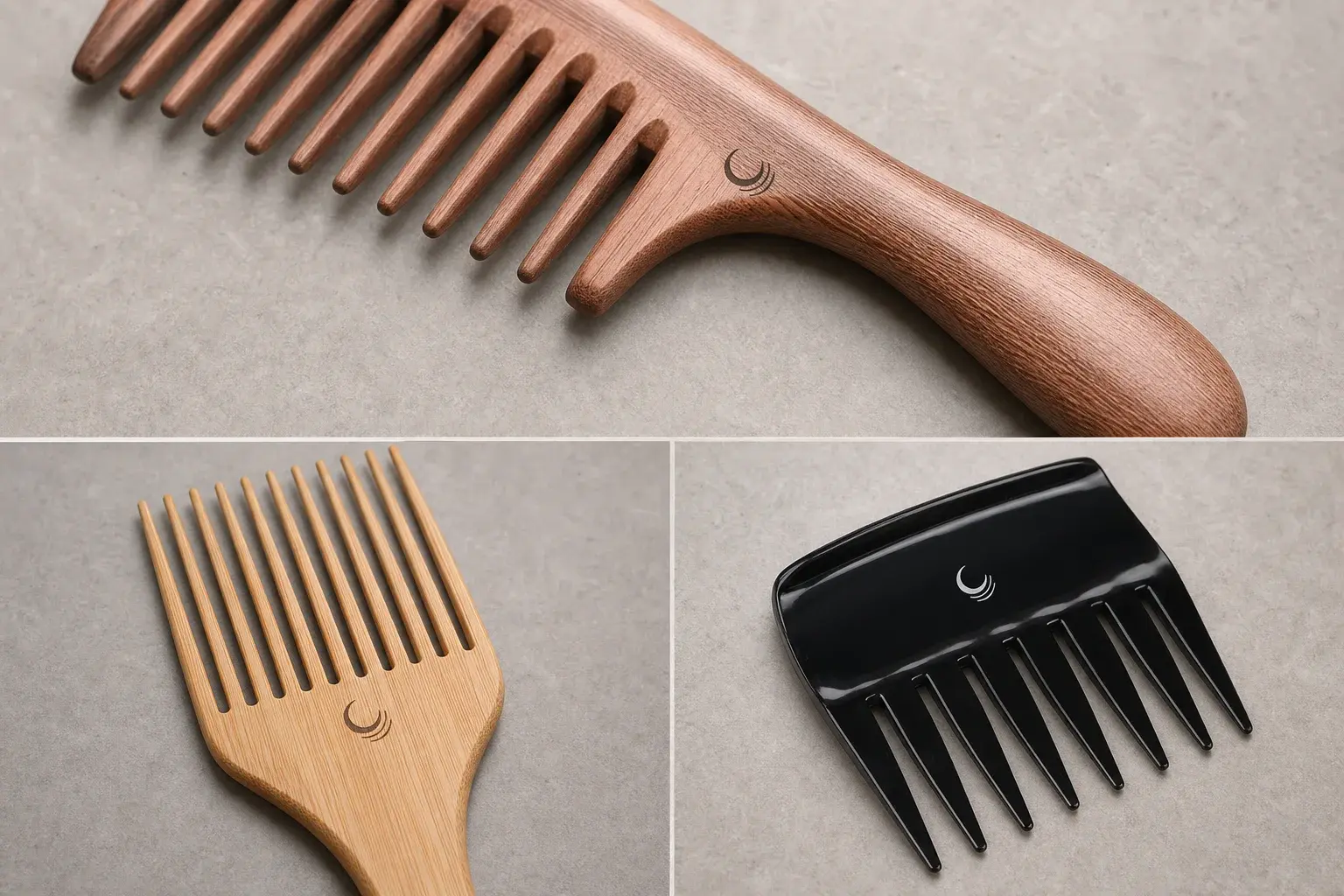
Flat plastic, curved plastic, textured resin, polished acetate, coated wood and natural bamboo do not present the same surface. The same artwork can show different edge character, contrast and coverage across them. Review the mark on the selected production material with the selected finish.
Pattern and grain need sensible boundaries. A logo placed over tortoiseshell acetate may cross light and dark areas. Engraving on bamboo can meet visible grain variation. Record the accepted appearance on representative samples, then distinguish normal material character from a misplaced, incomplete or damaged mark.
Inspect print defects with clear language
Terms such as logo bad or print unclear are hard to act on. Name the visible condition and its location. Useful print observations may include a smear, pinhole, missing area, uneven coverage, overspray, edge lift, scratch, contamination, registration shift or unintended mark on the surrounding surface.
Connect every finding to the approved reference and acceptance rule. A small isolated mark and a repeated defect across a production version do not create the same decision. The project inspection plan should state the sampling method, acceptance limits and action after a failure. Those details cannot be inferred from a photograph of one unit.
Evaluate engraving with its own criteria
Laser engraving changes the surface and creates contrast through the material, finish and process response. It does not apply a Pantone ink color. Check the finished mark for position, legibility, contrast, depth, edge quality, fine detail and any acceptable variation caused by grain or pattern.
Print language should stay with printing. Opacity and ink registration have little use in an engraving check. Engraving may need attention to heat effect, darkening, exposed material and uneven contrast. The printing and engraving comparison helps define which reference and defect terms belong to each route.
Define durability from real contact
Start with what the mark will touch. Common contacts can include a hand, a sleeve, a pouch, a tray, water, grooming products or an agreed cleaning routine. The marking method, surface preparation and placement all influence how the logo behaves.
Choose a check that represents the project requirement, then record the method, duration or repetition and acceptance rule. A brief manual rub may support a basic handling review. It does not prove every abrasion, chemical or repeated use claim. Words such as permanent, scratch proof and never fades need evidence that directly supports that promise.
Move from sample approval to production inspection
At sample stage, approve the logo method, artwork revision, size, position, orientation, visible appearance and any agreed handling check. Record the decision with the placement drawing and the identified branded physical sample.
Production inspection should return to those same references. Confirm the current product and artwork version before judging appearance. Check position, clarity, color or engraved contrast, surface fit and the agreed durability behavior. If a production change affects material, finish, colorant, coating, fixture or marking process, decide whether the branded sample needs fresh approval.
Control every logo, color and market version
One order may contain several comb colors, logo colors, languages, regional marks or packaging combinations. Give each ordered combination a clear identifier. A logo that reads well on cream plastic may lose contrast on pale pink, and a regional artwork file may carry a small text change that is easy to miss.
List every combination on the approval and inspection record. Keep the relevant proof and sample with that line. Combined order quantity does not turn several versions into one visual standard. Production and packing also need a way to keep approved variants from being mixed.
Record the finding and the decision
A useful finding identifies the order, product, artwork revision, color version, marking method, location and condition observed. Add a photograph that shows enough of the comb to locate the issue, followed by a closer view when detail matters. A crop of one blurry letter without the product identity is difficult to trace.
Record what happens next. The decision may call for approval, correction, sorting, replacement, another inspection or authorized acceptance of a known deviation. Name the person responsible and keep the final decision with the production record. This gives a repeat order a usable history and keeps an informal message from becoming the only evidence.
Create a practical logo inspection sheet
Build the inspection sheet around questions that can be answered from a named reference. The exact measurement method, tolerance, sampling level and durability parameters remain specific to the order.
| Inspection point | Reference | What to examine |
|---|---|---|
| Identity | Production artwork and order version | Correct logo, color separation and product combination |
| Placement | Dimensioned placement drawing | Size, position, orientation, alignment and clearances |
| Print appearance | Approved branded sample and color reference | Clarity, color, opacity, coverage and registration |
| Engraved appearance | Approved engraved sample | Legibility, contrast, depth, edges and material variation |
| Surface behavior | Agreed project check | Relevant adhesion, rub or handling result |
| Release decision | Order inspection plan | Finding, quantity reviewed, action and approval |
LuxoComb's custom logo printing options can be reviewed against the available product area, material and artwork. Keep the approved proof, physical sample and inspection sheet connected through the sample to production process.