
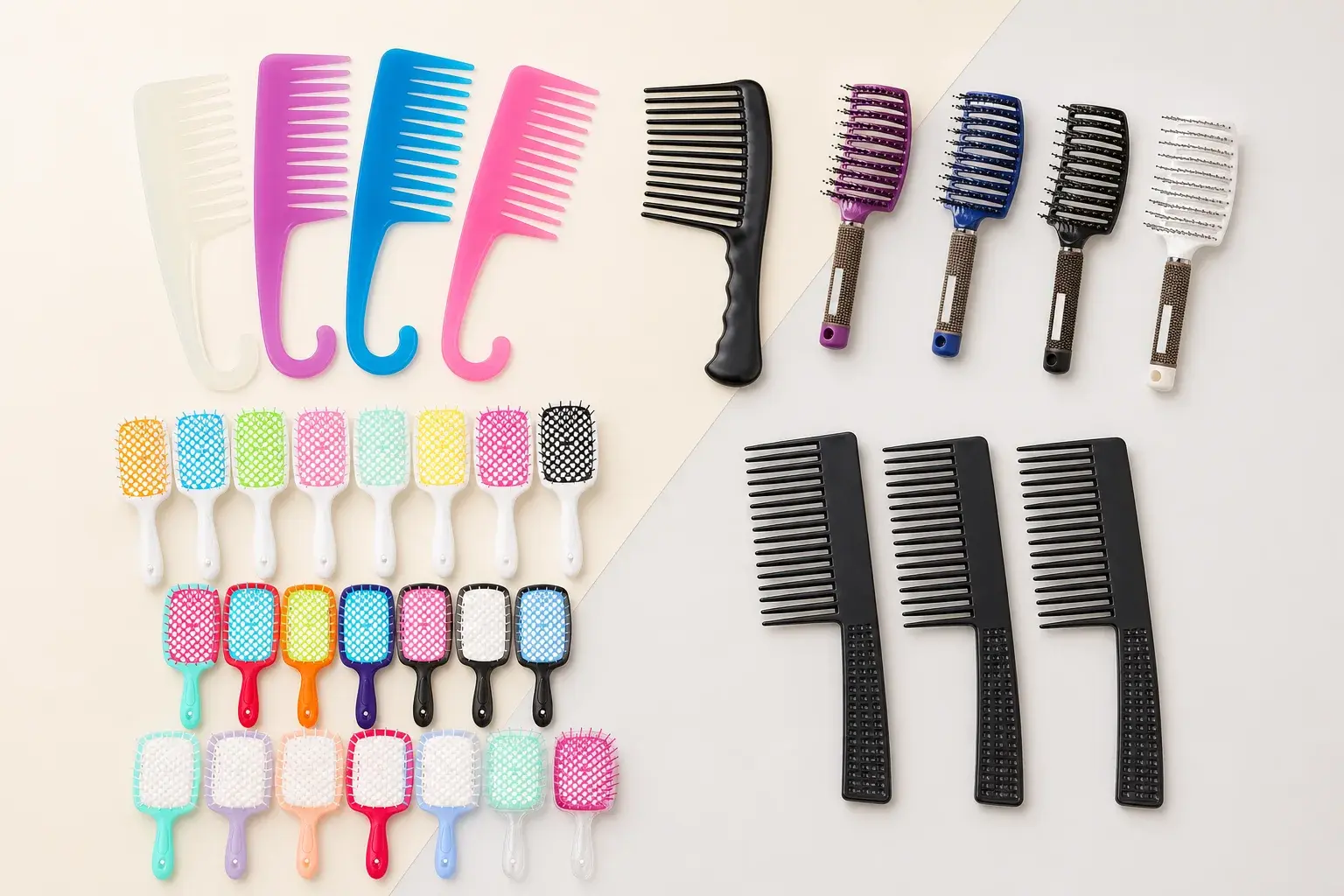
A product photograph can make this choice look easy. One comb has large open gaps between its teeth. Another has a curved handle, a flexible body, or several rows of contact points. The label under the image may say wide-tooth or detangling, yet the label gives a buyer very little information about how the product should be drawn, sampled, and checked.
A wide-tooth brief usually begins with the tooth zone. A detangling brief begins with the grooming routine and then works back through the tooth layout, hand position, body curve, material response, and storage condition. The finished products can overlap. A wide-tooth comb may be developed for detangling, and a detangling product may use wide-set teeth.
The useful question is which decisions need to control the project. Once that is clear, the category name becomes a convenient description and the drawing carries the specification.
Start with the grooming routine
Write down what the user will do with the product. State whether the intended routine involves dry hair, wet hair, curly hair, shower use, product application, broad separation, or another defined task. Add the working direction, where the comb is held, and how it will be stored after use.
This first description changes the rest of the brief. A compact handleless comb allocates most of its length to the tooth zone and may need a sleeve. A handled product gives the hand a defined position and uses part of the overall length for grip. A curved body changes how teeth meet the hair. Openings or vents may affect handling, cleaning, decoration, and packaging.
Keep performance promises outside the brief until the project has evidence for them. Terms such as pain-free, snag-free, or zero breakage require a suitable test and supported result. A sample can be reviewed for its agreed handling action without turning that review into a universal claim.
Compare the two project briefs
The difference is easiest to see in the questions each brief must answer.
| Decision | Wide-tooth brief | Detangling brief |
|---|---|---|
| Starting point | A defined wide tooth zone | A defined grooming routine |
| Drawing focus | Gap, pitch, tooth width, length, taper, tips, and body | Tooth layout plus grip, curve, contact path, and moving areas |
| Material question | Support for the approved tooth and body geometry | Response of the complete structure during the intended action |
| Sample focus | Dimensions, tooth finish, grip, and overall form | Those points plus the agreed handling and use condition |
| Common gap in the brief | The word wide appears without a measurement convention | The product name is treated as proof of performance |
Many projects will contain elements from both columns. Choose the left side when tooth spacing and a straightforward body carry most of the decision. Use the fuller detangling brief when hand position, curve, material movement, and use condition need equal attention.
Draw the complete tooth zone
The word wide has no production value until the drawing defines it. Mark whether the dimension means a clear gap, center-to-center pitch, tooth width, or another stated convention. Show the reference line because a tapered tooth can produce a different opening near its tip and root.
Add tooth length, thickness, taper, root shape, tip profile, tooth count where useful, zone length, end margins, and the transition into the body. The tooth spacing guide explains how these dimensions work together. The finished structure depends on their relationship, so an overall length and a photo leave too much open.
A detangling concept still needs this drawing discipline. Wider spacing alone cannot show how the teeth contact hair, whether separate rows move together, or how the body supports them. Put every tooth zone on the same controlled revision.
Decide how the product is held
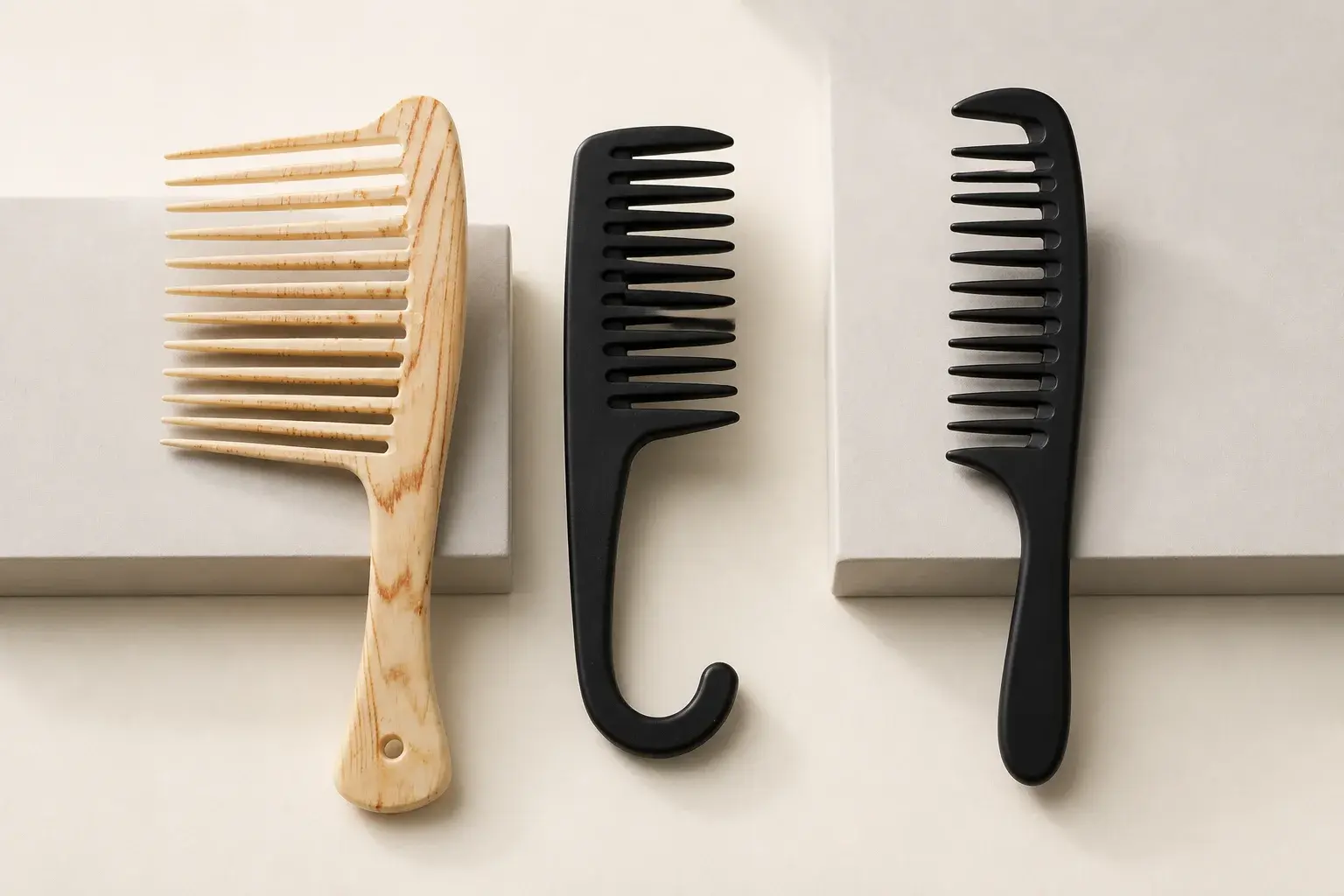
A handle is part of the working geometry. Mark the grip area, hand orientation, working direction, and surfaces that fingers contact. A straight handle, curved handle, hook end, open loop, paddle form, and handleless body all allocate space differently.
Wide-tooth projects often keep the body simple because the tooth zone is the main feature. Detangling projects may give the handle and body curve more responsibility. The sample should show whether the hand position suits the stated routine and whether edges, holes, joins, and transitions follow the approved finish.
Use the word ergonomic only after the team has identified the dimensions and physical sample that support it. A broad claim adds little to a drawing. Grip length, width, thickness, curve, orientation, and contact surfaces give the supplier something to develop and the buyer something to review.
Specify flex by location and action
Requests for flexible plastic often arrive without a location. The body, handle, individual teeth, joined tooth rows, or a narrow neck can move in different ways. Mark the intended area and direction on the drawing. State the use condition, expected movement, and recovery requirement through an approved sample or agreed method.
Material and geometry create the response together. Resin family alone does not decide it. Thickness, length, ribs, openings, curves, transitions, and tooth proportions all affect how a part behaves. A material that suits a rigid wide-tooth profile may need a different structure for a product designed to move during use.
Feasibility review should happen before a buyer approves the appearance. A thinner section or deeper opening may create the desired movement and may also change molding, finishing, durability review, logo space, or package support.
State wet or dry use clearly
Wet and dry routines place the complete product in different conditions. Record which one belongs to the project and whether shower-area storage, applied hair product, rinsing, or another condition needs review. These details can affect material selection, surface, grip, openings, cleaning, branding, and the pack.
The category name cannot answer this choice. A wide-tooth comb may be designed for wet use, and a detangling product may be intended for dry hair. The brief should connect the condition to a physical sample check and any required material or packaging evidence.
Words such as shower-ready also need a defined meaning. Hanging format, drainage, pack construction, closure, storage position, and any water-related claim should be reviewed separately. A pouch or card should not acquire a waterproof promise through association with the comb.
Match material to geometry and finish
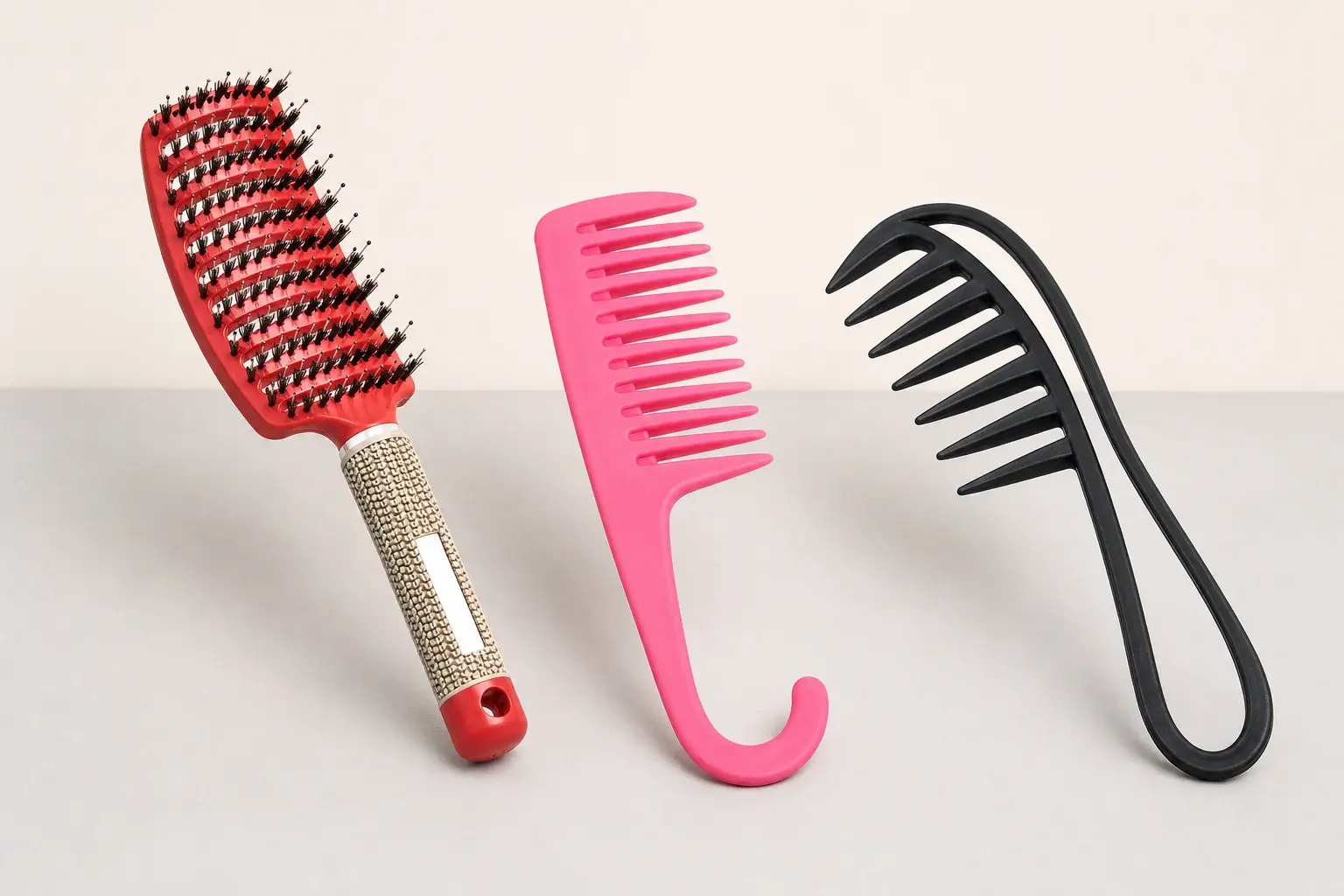
LuxoComb reviews selected plastics, cellulose acetate, wood, and bamboo for custom comb projects. Each route reaches the finished shape differently. Molded plastic can support suitable integrated bodies, ribs, openings, handles, and tooth layouts. Cellulose acetate starts from sheet and receives cut, shaped, sanded, and polished edges. Wood and bamboo require a geometry and finish that respect the selected material.
Choose the exact material with the product structure, stiffness, appearance, surface, branding method, and required documents in view. The custom materials page gives the main families and approval evidence. Availability and suitability still need confirmation for the order.
One detangling shape cannot be copied across every material and expected to behave the same way. Review thin teeth, long teeth, curved sections, narrow joins, and openings against the proposed route. Approve natural grain, acetate pattern, molded texture, or polished finish with the correct physical reference.
Build the functional sample review
Both formats need dimensional, visual, tactile, and functional review. Confirm the overall size, tooth zone, tip and root finish, body curve, grip, edge condition, material appearance, logo position, and package fit. Use the approved drawing and sample together.
A detangling claim calls for a clearer functional record. Define the hair or test condition, preparation, working direction, handling action, area of the product being observed, and result that counts as accepted. Pressure, number of passes, or repeated operation belong in the method only when the project has agreed to control them.
Photos can document shape and visible findings. Video can show movement. The physical sample carries grip, surface feel, stiffness, flex, fit, and other handling details that remote evidence may miss. The sample approval checklist helps keep each decision tied to the correct version.
Place branding and packaging after the use decisions
Mark logo size, method, orientation, and distance from teeth, edges, holes, curves, and the grip. A technically available space can still be a poor branding area if the hand covers it or if the surface changes the print or engraving result.
Packaging should hold the finished product in its intended orientation and protect the teeth, polished surfaces, flexible areas, and any curved body. Check whether sleeves, cards, pouches, trays, ties, or closures press on working parts. Handleless wide-tooth combs, hook-ended designs, loop handles, and vented bodies may each require different holding points.
Review the product and pack together. A package approved from a flat artwork file has not yet proved product fit, tooth clearance, opening, closure, or storage behavior.
Choose the brief with two controlled concepts
When the category still feels unclear, prepare two concepts for the same user and routine. Keep the material direction, quantity, branding needs, packaging goal, and destination consistent. Let the tooth layout, handle, body curve, and flex strategy show the real difference.
Compare both concepts through the drawing and sample plan. One may offer a simpler wide-tooth construction with a clear grip. The other may require a more involved detangling structure and a fuller functional check. Cost, tooling, timing, finish, and pack can then be reviewed against two defined products.
This exercise often resolves the naming debate quickly. The brief should follow the concept that carries the required use with the fewest unresolved assumptions.
Prepare the request for quotation
Send the intended routine, user, wet or dry condition, tooth drawing, overall dimensions, grip and orientation, body curve, material preference, named flex areas, quantity, artwork, packaging, destination, and required documents. Mark dimensions and features as fixed, preferred, or open for feasibility review.
State which path you are considering. A custom wide-tooth comb request should make the tooth zone easy to quote and inspect. A custom detangling comb request should also explain the routine and complete handling response that the sample must demonstrate.